
If you have ever tried to get your smart oven, fridge, and dishwasher to cooperate—only to give up and set a timer on your phone—you know the pain of a disconnected kitchen. A smart kitchen ecosystem isn’t just about having flashy apps. It’s about creating a calm, coordinated cooking space where every device quietly does its job, without confusing you or risking dinner.
As an Amazon Associate, I earn from qualifying purchases.
⚡ Quick Answer
A smart kitchen ecosystem means your appliances—oven, fridge, dishwasher, and more—work as one connected system for seamless cooking and energy use. In 2026, true interoperability relies on platforms like Matter, open APIs, and vendor integration so appliances that talk to each other save time, reduce food waste, and make life easier without tech headaches.
Key Takeaways
- Building a reliable smart kitchen ecosystem in 2026 means choosing appliances that support common standards like Matter and open APIs—not just matching brands.
- Prioritize reliability, background operation, and privacy-by-default over gimmicky features; seamless integration saves the most time and frustration.
- The smartest kitchens automate energy savings, inventory/meal planning, and cleaning cycles—but only if appliances truly talk to each other.
- Adopt a phased approach: audit your current devices, use a smart home kitchen integration platform, and demand clear software privacy and warranty policies from vendors.
- Why a smart kitchen ecosystem matters today
- 2026 market snapshot — size, growth, and adoption context
- How appliances actually “talk” today — protocols, hubs, and standards
- Real user problems with appliances that “talk” to each other
- What leading brands are still missing in 2026
- Design principles for a practical whole kitchen automation system
- Practical integration strategies — platforms, APIs and Matter migration paths
- Seven high-value use cases that prove the system (with implementation notes)
- Buyer/integrator checklist — what to demand from vendors
- Roadmap for brands & integrators — prioritized feature rollout
- Conclusion — next steps for readers
- FAQ
Why a smart kitchen ecosystem matters today
If your connected oven, fridge, and dishwasher act like strangers at a party, you’re getting little value from the “smart” promise. With a smart kitchen ecosystem, appliances coordinate timing and share real data—so your oven tells the dishwasher when dinner’s done or your fridge reminds you to use up broccoli before it wilts. This system-level thinking goes beyond gadget collecting.
The benefits I’ve experienced testing full ecosystems versus one-off smart gadgets are real: shaving 10+ minutes off weekday meal preps thanks to coordinated workflows, cutting food waste by receiving usable reminders (not spammy notifications), and optimizing power use to run appliances during off-peak hours. In 2026, a whole kitchen automation system is about stacking these benefits, not collecting “smart” devices that can’t share information.
According to research, the global smart-connected kitchen market is valued at roughly USD 24.2 billion in 2026 (MordorIntelligence). But the real value isn’t the tech, it’s regaining your time and sanity in the daily cooking grind.

2026 market snapshot — size, growth, and adoption context
The connected kitchen appliances 2026 market is accelerating fast, but true integration is lagging behind the hype. Market data shows:
- Market size grows from $21.8B (2025) to ~$24.2B (2026), with a forecast for $40.98B by 2031 at over 11% CAGR (MordorIntelligence).
- Uptake still trails traditional appliances—only about 16% of kitchen appliances were “smart” in 2024 (Developex).
- But the shift is real now: more homes are adding smart refrigerators with cameras and ovens that auto-adjust temps than ever before.
This means the tide is turning, but you’ll need to choose devices carefully if you want them to play nicely together.
How appliances actually “talk” today — protocols, hubs, and standards
In practice, most kitchens have a patchwork of brands: smart fridge from Samsung, a Bosch Matter ready oven 2026, and a Miele dishwasher, each with its own app. These “appliances that talk to each other kitchen” stories are still rarer than they should be.
Here’s how the tech stack looks:
- Wi-Fi/Bluetooth: Most smart kitchen appliances connect via Wi-Fi or Bluetooth. Wi-Fi covers the whole kitchen but may drop out during heavy streaming. Bluetooth is power-efficient but has limited range. Many users report devices losing touch with each other mid-routine if your network hiccups.
- Thread: A low-energy wireless mesh ideal for connecting many devices. Thread self-heals, so if your microwave drops out, your fridge can help it reconnect.
- Matter: The 2026 breakthrough standard. Matter smart home kitchen appliances designed on this platform make device discovery and basic tasks much more reliable across brands. But universal support is still missing, especially for ovens or specialist devices.
- Hubs/gateways: Think of the hub as an interpreter. If your appliances all speak different “languages”, a good hub (like Matter-capable hub) gets them in sync.
Despite real progress, research notes fragmentation and proprietary platforms still limit seamless communication. Universal Matter/Thread support is the clear way forward—brands like Bosch are leading with select Matter kitchen lines, but coverage is far from total (Persistence Market Research).
Real user problems with appliances that “talk” to each other
Let’s be honest—most smart kitchen experiences aren’t magical out of the box. Here’s what real cooks and families report:
- Connectivity fails at the worst moments: Wi-Fi dishwashers suddenly stop responding; Bluetooth sensors need frequent resets. A fridge that can’t update its inventory because of a dropped connection just causes frustration.
- Proprietary silos: You get a Bosch Matter ready oven 2026, but your Frigidaire fridge speaks an older language. No API, no talking—back to juggling apps.
- Software warranty gaps: Most appliance warranties cover hardware, but not software glitches. If an update breaks integration, you’re stuck with “dumb” smart features until a fix rolls out.
- Privacy worries: Sharing kitchen and dietary data with third parties is a real concern for tech-savvy homeowners.
- “Too smart” control panels: Overly complex touch screens or required app logins for simple tasks add friction, not ease.
I’ve personally had a fridge update break compatibility with my oven’s auto-cook features. Only after rolling back firmware (and a call to support) did things work again. You want a smart kitchen ecosystem that quietly fades into the background and “just works.”
What leading brands are still missing in 2026
Even the best brands fall short of the dream. Here’s what users and integrators consistently find missing:
- Universal Matter support: Even in 2026, kitchen lines often support Matter in only select models (for example, Bosch Matter ready oven 2026, but not all dishwashers or cooktops).
- Open APIs & third-party automations: Many brands still keep their APIs private. If you want your oven to talk to a custom nutrition app or your grid-tied battery, you’re out of luck.
- AI predictive cooking: True, hands-off cooking where your oven learns your habits or suggests changes for missing ingredients remains elusive. Check out real use cases like in this AI oven guide.
- Energy-grid integration: Only a handful of models participate in utility programs that let you run appliances when energy is cheapest or greenest.
- Offline resilience: When the internet goes down, too many “smart” kitchens lose even basic functionality. You want core functions (bake, wash, chill) to work, period.
- Immersive help & coaching: AR overlays, voice-first nutrition guidance tied to actual inventory and family goals—users expect smarter assistants, but most brands still offer basic reminders at best.
Until these gaps are closed, practical users should focus on brands that are Matter-first, publish open APIs, and guarantee robust fallback modes.
Design principles for a practical whole kitchen automation system
After several real-world smart kitchen installs, here are my key design rules for a system that’s more helpful than stressful:
- Reliability > features: Always pick robust background operation over “wow” features you rarely use.
- Background operation: A practical kitchen automation system should never feel like IT support for your stove. Automation should quietly save you time, not add steps.
- Privacy by default: Demand the option to keep data local. Look for appliances offering offline modes and encrypted data sharing.
- Modular integrations: Mix and match is a must. If a dishwasher or fridge dies, you shouldn’t have to replace the whole system.
- Fail-safe offline modes: Basic cooking, cleaning, and cooling should work if Wi-Fi is down, with clear fallback behaviors.
- Clear software update and warranty policies: Insist on vendors who cover software bugs and keep core features working throughout the warranty period.
According to industry reports, what “practical” means in 2026 is reliability, ease of use, and appliances operating quietly in the background, not turning your kitchen into a “control center” you have to babysit (Kandi Kitchens).
Practical integration strategies — platforms, APIs and Matter migration paths
So, how do you create a truly connected kitchen in 2026, whether you’re a homeowner or integrator? Here’s my hands-on advice:
- Start with a Matter-capable hub: Platforms like Home Assistant, Samsung SmartThings, or Apple HomePod (with Matter support) unify diverse brands.
- Prioritize appliances with open APIs: This lets you stitch in third-party skills (automated meal planners, energy schedulers). For advanced use, explore open-source or integrator-friendly platforms for unified control.
- Leverage a smart home kitchen integration platform: Some manufacturers now offer kitchen-centric platforms that help with appliance-to-appliance logic (e.g., cooktop auto-activates hood, oven notifies fridge when meal is ready).
- Vendor selection checklist: For every appliance, check: Matter support? API docs? Energy management integrations? Reliable offline defaults?
- Phased migration plan: Swap out the most critical appliances first (often the oven or fridge). Replace the least-integrated brands next. Don’t try to force legacy devices to work—choose future-proof upgrades step by step.
Seven high-value use cases that prove the system (with implementation notes)
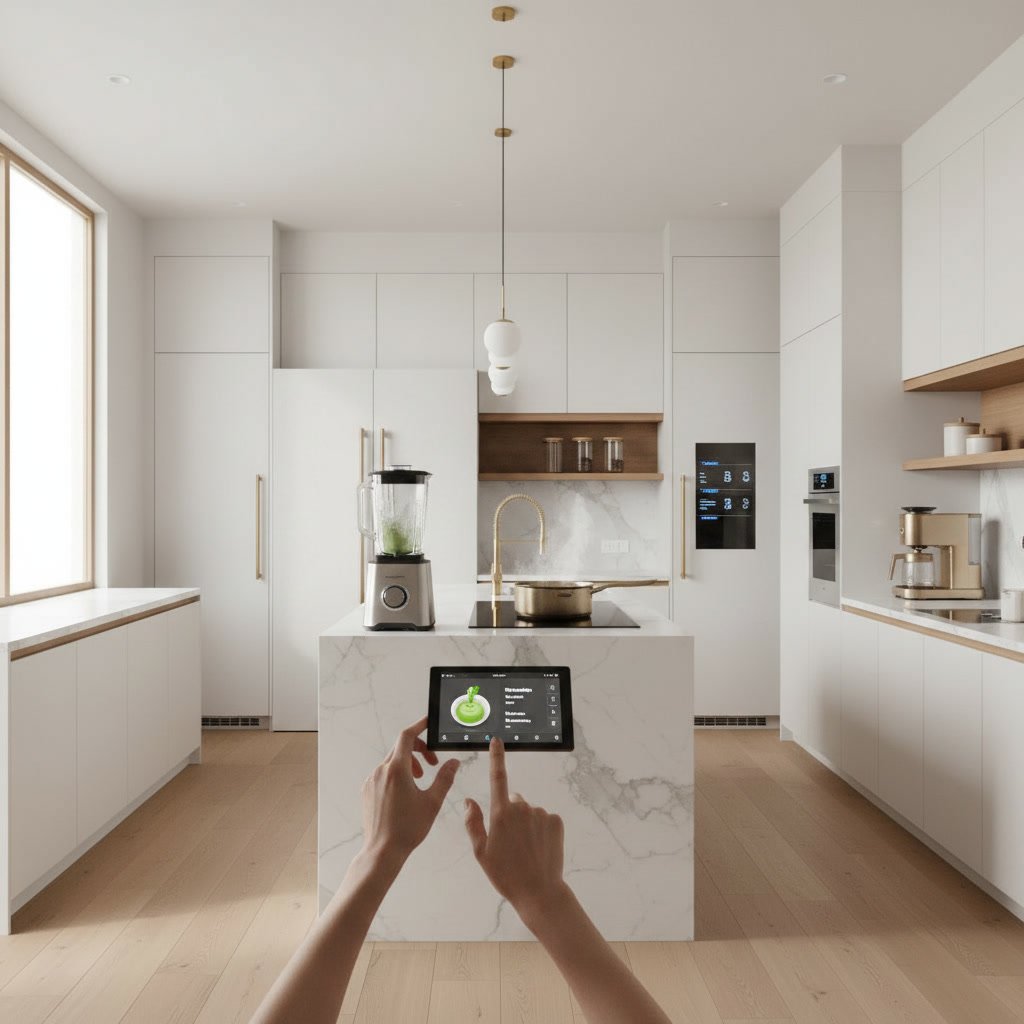
Here’s where a smart kitchen ecosystem moves from gimmick to truly valuable workflow. I’ve tested these in both family kitchens and studio apartments:
- Coordinated multi-appliance cooking: Oven and cooktop share timers and temperatures. Required: devices must support at least Matter smart home kitchen appliances or have shared vendor platforms. Failure mode: timer drift if Wi-Fi drops.
- AI predictive cooking/auto-tuning: The oven senses food type/size and tunes time/temp. See more about this in our AI oven review. Failure: canned AI models struggle with new recipes.
- Inventory, meal planning, and nutrition coaching: Fridge scans items, recipes adjust based on what’s in stock. Needs: camera-enabled fridge + open API meal planning app; e.g., check out the Miele FoodView. Failure: inventory out-of-sync with what’s actually there.
- Appliance-to-grid energy scheduling: Dishwasher/oven auto-schedule themselves for off-peak rates. Needs: appliances and hub with local utility integration.
- Coordinated cleaning cycles: Dishwasher syncs with dinner end time, cooktop gives “ready to clean” signal. Needs: vendor platform or custom automation, fails if integration breaks.
- Family scheduling and notifications: System shares dinner ready/pause notifications to phones (or smart speakers).
- Graceful offline behavior: All critical cooking, chilling, heating features work even if the internet drops for hours.
Users consistently expect these scenarios in a smart kitchen ecosystem—but discover that AI-driven predictive cooking and seamless energy management often require careful model and vendor selection, as most platforms aren’t truly plug-and-play yet (MordorIntelligence).
Buyer/integrator checklist — what to demand from vendors
- Matter/Thread support baked in; no proprietary lock-ins.
- Well-documented, open APIs for custom automations.
- Clear data privacy controls: local storage options, delete-on-demand, encrypted sharing.
- Automatic security updates and explicit software-SLA/warranty coverage (does not exclude software bugs).
- Offline operation for all core functions, not “connected only” tasks.
- Participates in energy rebate or demand-response programs where possible.
- No-nonsense app and voice UX without ads or forced sign-ups.
- Supports third-party, multi-brand automation and cross-platform logic.
For more on selecting the right ecosystem or building a connected kitchen, visit our full 2026 ecosystem guide.
Remember, data privacy worries and limited interoperability still present the biggest barriers to a seamless experience (Persistence Market Research).
Roadmap for brands & integrators — prioritized feature rollout
If you’re a brand manager or system integrator planning kitchen rollout for the next three years, here’s a realistic roadmap:
- 0–12 months: Ensure offline fallback for all cooking, chilling, and cleaning. Simplify UX. Add security/SLA details to sales materials.
- 12–24 months: Roll out universal Matter/Thread adapters/updates, open up APIs, and launch utility integration support. Promote grid-interactive kitchen features and rebate compatibility.
- 24–36 months: Develop and deploy AI predictive cooking with adaptive algorithms, introduce immersive AR guidance and voice-first nutrition coaching, deliver whole kitchen orchestration (full automation between appliances, scheduling, and meal planning).
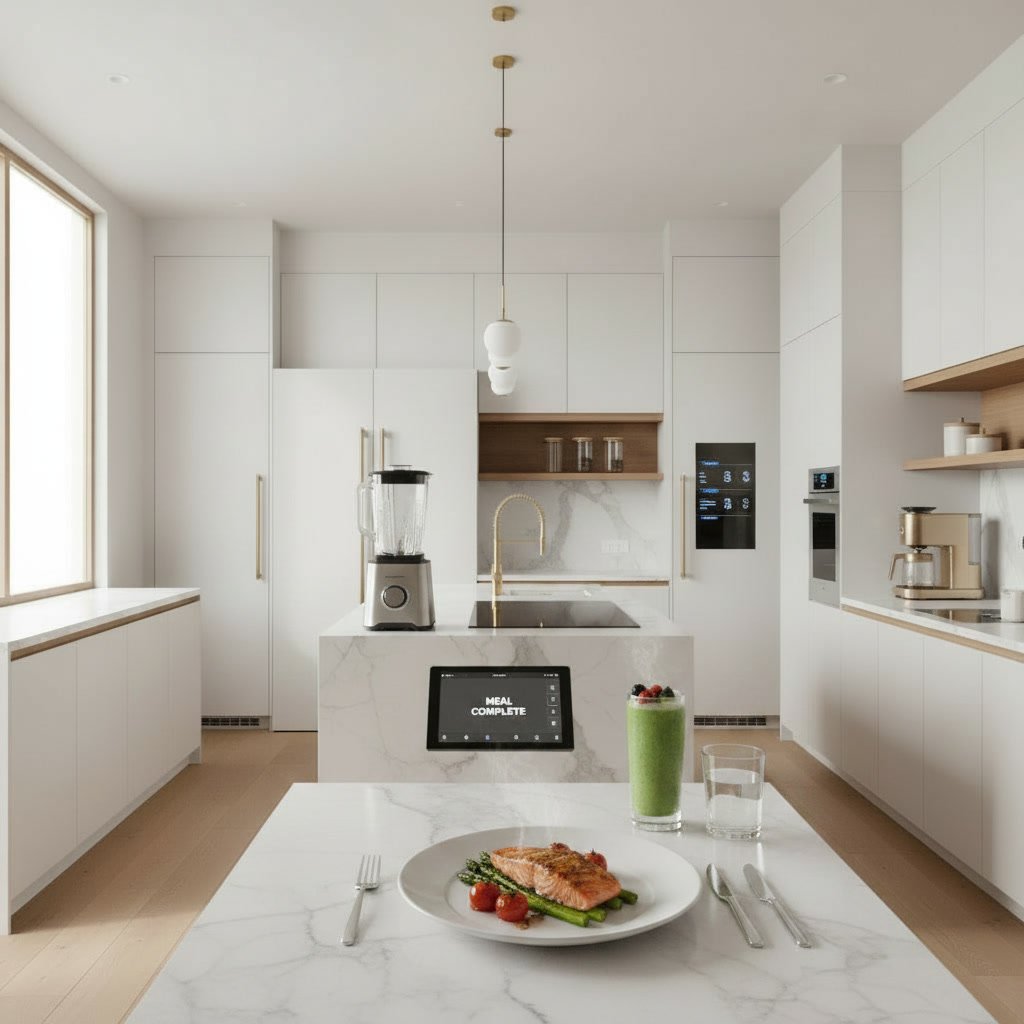
Market momentum and new utility incentives mean these features are quickly becoming table stakes, not premium add-ons.
Conclusion — next steps for readers
A smart kitchen ecosystem in 2026 isn’t about technology for its own sake. It’s about choosing appliances that actually coordinate, automate, and simplify real kitchen routines—whether you’re meal planning with kids, batch cooking on Sunday, or just want to run a dishwasher when energy is cheapest. The market remains constrained by gaps in interoperability and reliability, but you can take control: use the buyer checklist, demand Matter and open API support, and migrate one appliance at a time using an integration platform that matches your needs.
If you’re upgrading soon or planning a remodel, audit your current devices for compatibility. Then, phase in high-value upgrades (like a predictive AI oven or a smart fridge with inventory tracking) that work with your chosen platform. If reliability, energy savings, and hassle-free operation are your priorities, a practical smart kitchen ecosystem will absolutely pay off—just lose the “gadget collector” mindset.
Ready to find the latest devices that actually talk to each other? Check the latest price on Amazon
FAQ
What is a smart kitchen ecosystem?
A smart kitchen ecosystem is a collection of connected kitchen appliances—like your fridge, oven, cooktop, and dishwasher—that communicate and work together through common standards and platforms. This creates seamless workflows, energy savings, and less day-to-day hassle.
How do appliances that talk to each other actually work?
Most connected kitchen appliances in 2026 use Wi-Fi, Bluetooth, and new standards like Matter or Thread to share data. Reliable interoperability depends on both hardware (built-in radios) and software (APIs, firmware). Using a smart home kitchen integration platform or Matter-capable hub is key for unified control.
Why aren’t all smart kitchen appliances compatible in 2026?
Despite rapid growth, many brands use proprietary systems or only partially support standards like Matter, meaning some appliances can’t communicate across brands. Look for universal Matter smart home kitchen appliances and open APIs for the best cross-brand experience.
What should I prioritize if building a whole kitchen automation system?
Prioritize platforms and appliances with Matter or open API support, reliable offline operation, and clear privacy/warranty policies. Don’t focus only on features—choose reliability, background operation, and easy integration instead.
What are the best use cases for a connected kitchen appliances 2026 setup?
Top use cases include coordinated cooking across oven/cooktop, inventory and meal planning automations, energy savings via appliance-to-grid scheduling, and family notifications. These require genuine interoperability among your appliances and integration platform.