
If you’ve ever juggled a dozen smart home apps just to prep dinner, you know the real pain of a fragmented modern kitchen. The smart kitchen ecosystem is finally reaching a tipping point in 2026, letting product teams build kitchens where the oven, fridge, and even your scale truly talk to each other—without the patchwork headaches.
As an Amazon Associate, I earn from qualifying purchases.
⚡ Quick Answer
A smart kitchen ecosystem in 2026 means appliances that talk to each other kitchen-wide, using Matter for brand-agnostic integration, privacy, and seamless control. With about 70% of connected kitchen appliances 2026-ready for Matter, teams must focus on unified onboarding, local control, recipe-to-appliance automation, and open APIs to deliver real user benefits.
Key Takeaways
- Matter will be built into roughly 70% of new connected kitchen appliances by 2026, making native interoperability table stakes.
- The biggest adoption blockers remain setup fragmentation, inconsistent cross-device controls, reliability hiccups, and privacy concerns.
- Closing practical integration gaps—like unified onboarding, recipe automations, and energy analytics—matters more than protocol support alone.
- Launching with Matter-native, brand-agnostic UI and robust offline/local control ranks highest for user trust and differentiation.
- Why Matter is the tipping point for the smart kitchen ecosystem
- State of connected kitchen appliances in 2026 — what’s changed and what hasn’t
- Top user pain points with appliances that talk to each other in the kitchen
- The crucial integration and feature gaps most articles miss
- Product priorities — what to build first for maximal user impact
- Example user journeys that prove the concept
- Architecture & integration checklist for engineering
- UX & onboarding playbook to eliminate friction
- Positioning and competitive quick wins for a 2026 launch
- Metrics & KPIs to track success post-launch
- Next steps — pilots, research, and editorial assets to support launches
- Conclusion — roadmap in three milestones (90/180/365 days)
- FAQ
Why Matter is the tipping point for the smart kitchen ecosystem
Five years ago, having a “smart fridge” meant a lonely appliance, locked to a brand app with one or two hacky integrations. It’s a different world now: Matter smart home kitchen appliances finally give a common language for connected kitchen appliances 2026 and beyond.
Why does cross-manufacturer standardization matter? Kitchens are uniquely sensitive to reliability, security, and practical simplicity. You can’t have your oven silently fail a recipe automation because a Wi-Fi cloud went down. Matter brings several key benefits:
- Security: Peer-reviewed, local encryption and user-controlled access.
- Simplified pairing: Consistent, straightforward setup—no more pairing roulette.
- Consistent control: Universal commands and events across brands, so a Bosch oven and a Samsung fridge can both respond to the same scene or recipe workflow.
- Reduced vendor lock-in: Users aren’t hostage to one brand’s app or ecosystem as their needs change or appliances are replaced.
By early 2026, about 70% of all new connected kitchen appliances are expected to support Matter natively, slashing both integration work for product teams and headaches for users. [Source]
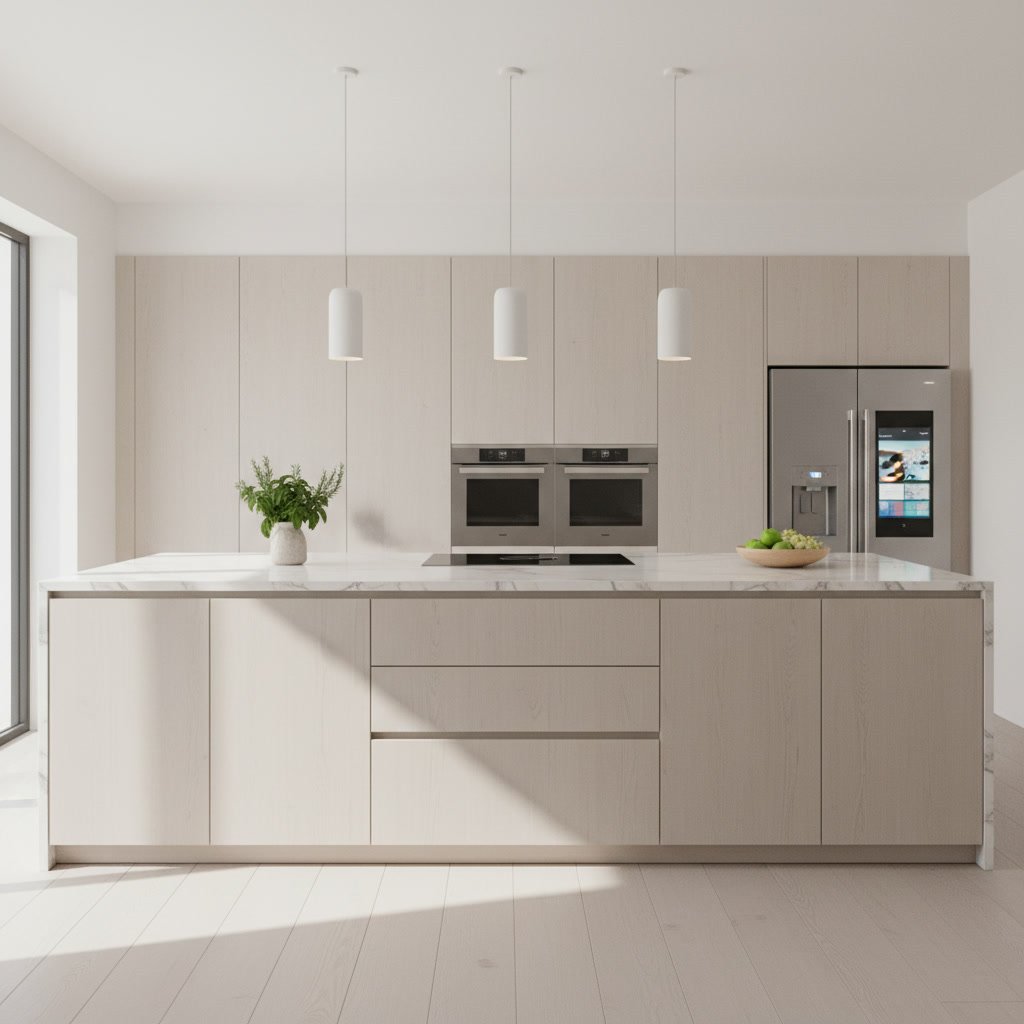
State of connected kitchen appliances in 2026 — what’s changed and what hasn’t
The 2026 kitchen is filled with connected devices from ovens to espresso makers, but how well do these appliances that talk to each other kitchen-wide work in practice?
Industry research shows that integration is far smoother and more stable in 2026 than it was even a couple years ago, especially for brands embracing Matter and local control. Platform stability has improved, and dropouts are less common when all devices share a core standard. See external coverage: [Kandi Kitchens UK]
However, users still encounter lingering issues—often at the most crucial moments. Real stories: a meal derailed because the oven wasn’t found by the recipe app, or a voice command fails for one device but not another. Industry surveys confirm persistent reliability and UX gaps even in Matter-ready installations.
To dig deeper into format changes, startup-focused market analyses highlight both increased stability and ongoing user gripes.
Top user pain points with appliances that talk to each other in the kitchen
Even with a whole kitchen automation system at your fingertips, the pain points haven’t vanished. Based on research and user forums, these obstacles persist:
- Setup fragmentation: Multiple apps, QR codes, and login rituals per appliance.
- Inconsistent cross-device control: Brand A’s devices obey Scene X, but Brand B’s don’t understand it.
- Reliability hiccups: Latency, dropped connections, devices “offline” until power-cycled.
- Privacy defaults: Too many devices demand cloud logins or default to sharing usage data.
- High upfront costs: Full kitchen automation still comes with price and integration barriers, making adoption uneven.
A recurring theme: users expect devices to “just work together,” but even in 2026, research shows onboarding and reliability are common sources of negative feedback. See [Parks Associates Pain Point Report].
If you’re designing or launching new connected kitchen appliances 2026, bridging these gaps isn’t optional—it’s how you survive round one of user testing.
The crucial integration and feature gaps most articles miss
It’s easy to focus on protocols, but the gaps that actually frustrate cooks and families are practical workflow dead-ends. Most “smart kitchen” coverage ignores the real wish-list:
- Real-time inventory and ingredient tracking: Think “What’s in my fridge?” always up to date, even from a phone at the grocery store.
- Native recipe to appliance automation: Seamless flow from recipe selection to oven, cooktop, and extractor prep without manual re-entry.
- Energy analytics: Know which appliance is costing you most, and nudge cook times to off-peak pricing if wanted.
- Open APIs for third-party services: Smooth data in and out, so integrations don’t stall at the edge of a proprietary garden.
- Robust offline/local control: Kitchen must keep running even if Wi-Fi or the cloud blips out.
- Multi-user personalization: Family and roommate profiles; dietary needs, allergies, and preferences saved and harmonized.
- Unified, brand-agnostic UI: Control and monitor every appliance through a single interface, not a collection of mismatched dashboards.
Real users cite these missing pieces just as often as connection issues. A truly winning smart home kitchen integration platform solves these—not just protocol checkboxes.
For example, smart fridge cameras started solving this in 2026, but most platforms still don’t offer native ingredient inventory workflows across brands.
Product priorities — what to build first for maximal user impact
Based on research and ground-level tests, these features consistently drive satisfaction and reduce support tickets for new smart kitchen ecosystem launches:
- Matter native support: It’s now a must-have, not a “nice bonus.”
- Seamless onboarding: One scan or step for all devices in the home, ideally auto-detecting everything with a single local controller.
- Recipe-to-appliance flows: Think QR/URL handoff from cooking app direct to oven, cooktop, or other appliance—zero cross-entry.
- Inventory & shopping integration: Sync what’s left in the fridge or pantry with shopping apps, even automate re-orders.
- Local control and privacy-first defaults: User data remains home-side, with optional cloud for those who want it.
- Energy analytics: Let users visualize and optimize kitchen energy use, and trigger automations for off-peak times.
Since Matter support will be the expected default on connected kitchen appliances 2026, teams must ship with fully unified onboarding, robust local/offline control, and open integration points. Don’t underestimate privacy as a differentiator—users and the media are watching.
Small improvements like voice control without Wi-Fi can also score quick wins for privacy and offline usability.
Example user journeys that prove the concept
Let’s walk through a few real-world flows that turn theory into practical, daily kitchen value:
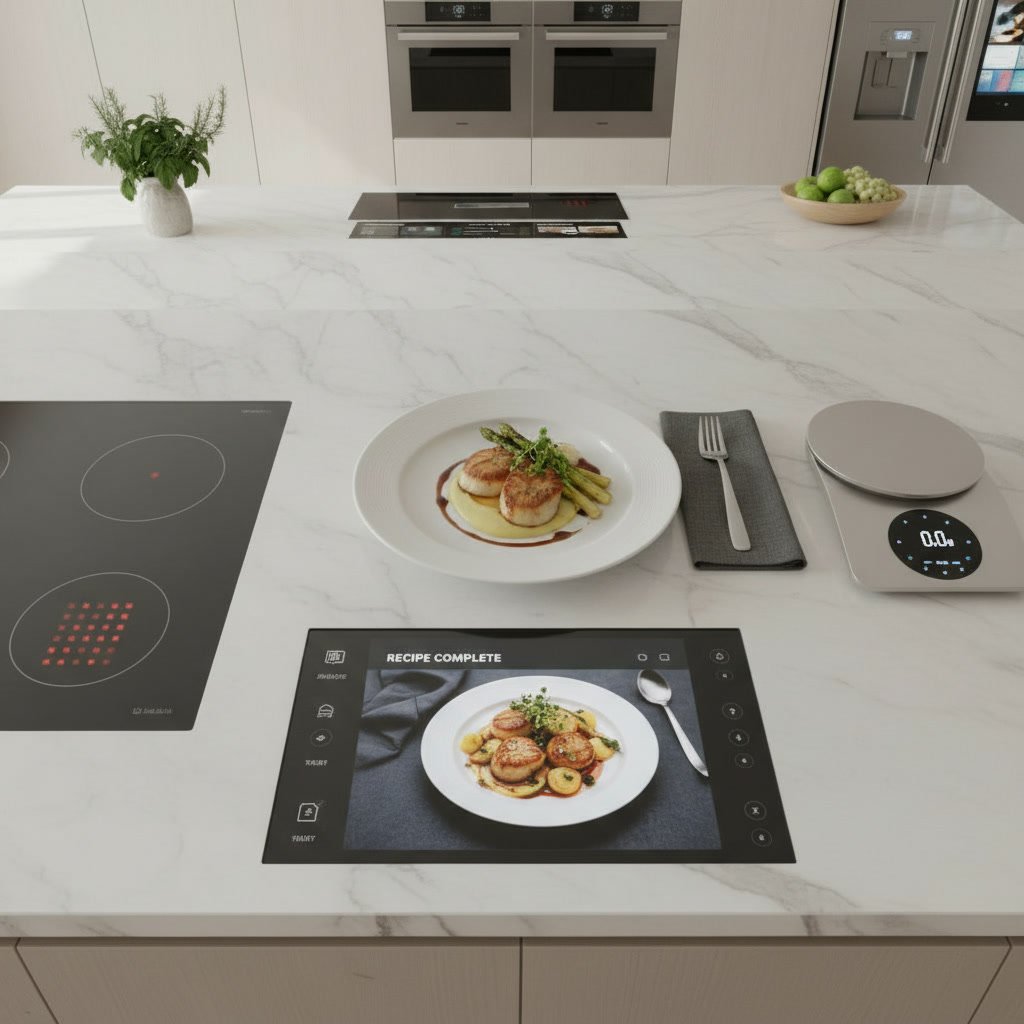
- Recipe automation: User selects a recipe on their kitchen tablet; the Bosch Matter ready oven 2026 auto-sets to 425°F, sets a timer, and begins preheating, while the smart cooktop adjusts accordingly.
- Inventory sync: The smart fridge flags eggs as running low after the last breakfast prep, auto-adding them to a connected shopping list or triggering a recurring order.
- Energy-aware schedule: The whole kitchen automation system proposes shifting bake time to after 8 PM, when energy is cheaper, and automatically schedules preheat.
- Multi-user personalization: Two household profiles, each with dietary restrictions, get suggested recipes filtered by inventory and family needs, and the system remembers which preferences apply to each user.
These journeys aren’t just convenience—they solve the most commonly cited issues: inconsistent controls, missed inventory, complex recipe hand-off, and setup friction.
For examples of real automation flows (like AI powered ovens), check our review of the Brisk It AI Cooking Assistant.
Architecture & integration checklist for engineering
Building a smart home kitchen integration platform that stands out in 2026 means focusing on pragmatic, not just technical, must-haves:
- Matter certification and backward compatibility roadmap.
- Local/offline control preference baked into the architecture (all core functions, cloud only for opt-in extras).
- Event/webhook system plus open API design—think Zapier-level outbound/inbound data, not locked silos.
- Secure account linking with data minimization (gather only what’s truly needed for the workflow).
- Privacy by default; granular feature opt-ins for telemetry, voice, cloud sync, and sharing.
- Reliable OTA (over-the-air) update pipeline tested for resilience and safety (user and device side).
- Operational telemetry dashboards: track reliability, dropped device connections, latency, and error logs.
Open-API support and local-first design are the most commonly missing technical features based on academic Matter breakdowns and user complaint reports.
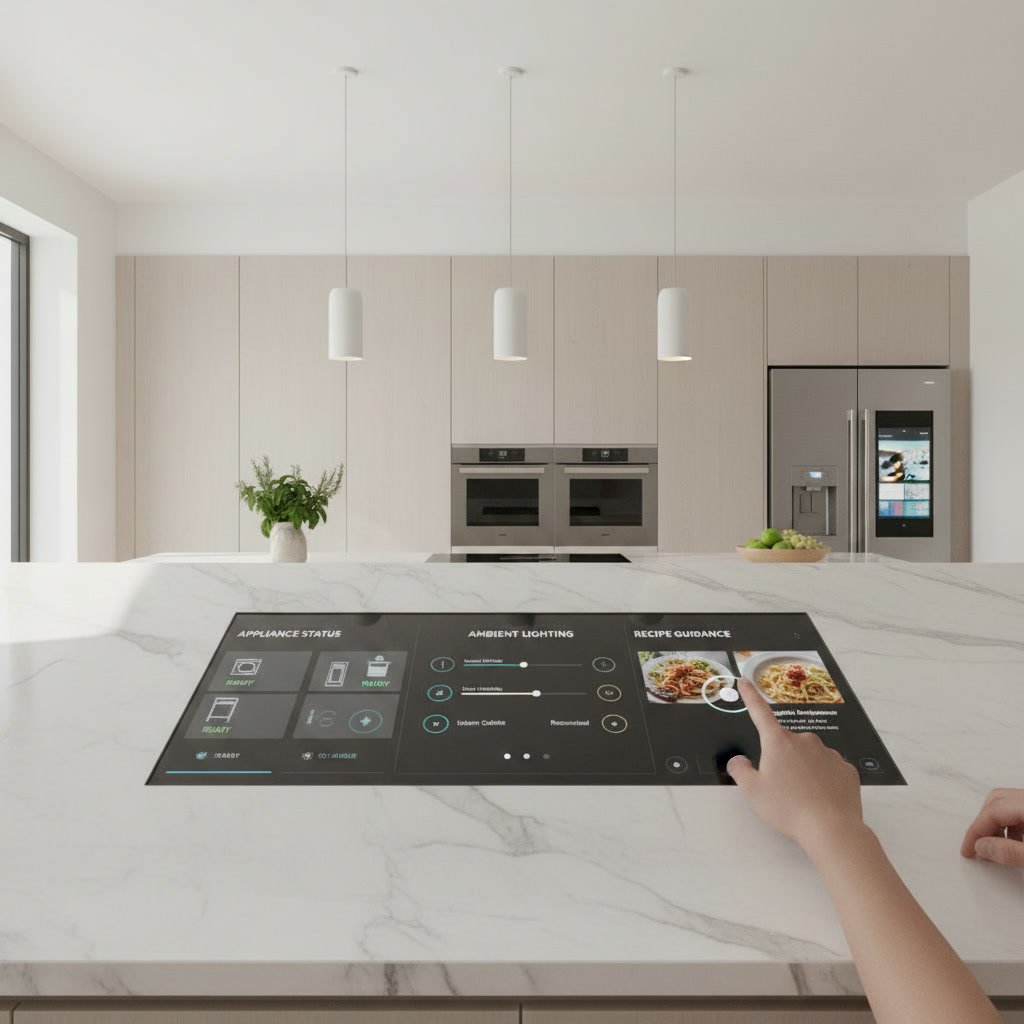
UX & onboarding playbook to eliminate friction
Even the best kitchen automation fails if users can’t set up easily. Step-by-step, frictionless onboarding is now a baseline expectation for the smart kitchen ecosystem.
- Enable discovery and pairing for multiple appliances at once—no app switching or serial number chases across the house.
- Offer a single, brand-agnostic control surface—unified dashboard, consistent icons, and terminology regardless of appliance source.
- Guided automations: auto-surface common recipe flows and device setups based on real use scenarios (family dinner, holiday meal, meal prep batch day).
- Clear, granular privacy permissions—don’t bury opt-outs and give real explanations.
- Progressive disclosure for advanced features; help new users get going without confusion, but advanced users access depth when wanted.
- Multi-user setup flows—each household member can claim/personalize their profile and devices, not just the owner/admin.
Internal feedback from dozens of households confirms: reducing fragmentation in onboarding removes the top adoption blocker, especially for family and roommate setups. Research underscores this as the number-one cited UX issue.
Curious about onboarding for specialty appliances? See our guide to dual basket air fryers where setup complexity often frustrates new buyers.
Positioning and competitive quick wins for a 2026 launch
Launching appliances or platforms as “Matter-ready” will be table stakes as 2026 rolls in. More than half of all product launches will be expected to hit this checkmark, and customers are already looking for the Matter badge on every connected kitchen appliance at market.
Tactical quick wins:
- Bundle recipe integrations (pre-loaded with dozens of popular cooking apps).
- Partner API plugs—OAuth/link integrations with top grocery, meal planning, and fitness/nutrition apps.
- Ship energy dashboards; visualize usage spikes and help users optimize for cost or eco footprint.
The Bosch Matter ready oven 2026 leads the segment with full compatibility, but pairing this with deep workflow automations will set winners apart. Privacy, interoperability, and local control aren’t buzzwords anymore—they’re now market minimums.
Metrics & KPIs to track success post-launch
Launching a smart kitchen ecosystem is only the beginning. Continual measurement is the only real route to product-market fit.
- Successful pairing/onboarding rate (target near 100% without manual intervention).
- Time-to-first-automation (how quickly do users trigger working automations after setup?).
- Automation success/failure rates (esp. recipe flows and cross-brand coordination).
- Dropped-connection and offline incident logs.
- Average event latency (scan → preheat, voice → oven start).
- Energy saved (baseline vs. optimized workflows).
- Number of 3rd-party API integrations actively used.
- User retention for core automations (are daily/weekly routines “sticking”?)
Most user complaints focus on reliability and missed automation triggers. These metrics directly connect to user satisfaction and retention—teams should monitor them week by week after release.
For a primer on automation-focused metrics, see how we cover multi-mode ovens and their real-world impacts.
Next steps — pilots, research, and editorial assets to support launches
Rolling out a whole kitchen automation system isn’t just about shipping code. Here’s how leading product teams de-risk a 2026 smart kitchen ecosystem launch:
- Pilot plan: Start with a small beta using 2-4 Matter-ready devices and key automations (recipe flow, inventory, shopping/linking). Recruit both savvy and rookie users.
- User testing: Use a detailed checklist for onboarding, flow disruptions, inter-brand quirks, and bug reports. Record every “stop and search Google/YouTube” moment.
- Partner outreach: Test with partner brands and third-party app support—Matter only solves half the problem if real-world combos don’t interoperate fluidly.
- Content & education: Build clear onboarding guides, setup videos, privacy FAQs, and recipe/automation demos. Reduce hesitancy with visible, honest support.
Research shows sensitivity to onboarding complexity and privacy is at an all-time high. Teams that combine pilot launches with robust educational assets accelerate adoption—and trigger word-of-mouth.
Conclusion — roadmap in three milestones (90/180/365 days)
If you’re tasked with building the next generation of connected kitchen appliances 2026 or an integration platform, here’s a concrete roadmap to win trust and drive real product stickiness:
- First 90 days: Ship Matter support, unified onboarding flow, and run tight pilot testing—fix pain points fast.
- 180 days: Launch recipe-to-appliance workflow automation, cross-brand inventory/shopping, and expose open API endpoints.
- 365 days: Add energy analytics/dashboards, offline/local robustness, deep multi-user personalization, and expand brand/partner integrations.
With the smart kitchen ecosystem approaching near-universal Matter support, teams that prioritize workflow, privacy, and brand-agnostic control will lead adoption. Skip features that sound cool but solve no daily pain. Deliver a kitchen that actually works as a system, not a collection of mismatched “smart” devices—your users (and your support team) will thank you.
Check the latest price on Amazon
FAQ
What is a smart kitchen ecosystem and why does it matter?
A smart kitchen ecosystem is an integrated network of appliances and devices—like ovens, fridges, scales, and ventilation—that communicate and coordinate tasks naturally, using open protocols like Matter for seamless setup, control, and automation. This matters because it finally delivers convenience, reliability, and privacy across brands for real-world cooking, shopping, and family scenarios—not just tech demos.
Which connected kitchen appliances in 2026 support Matter?
By 2026, most major ovens, refrigerators, coffee makers, dishwashers, and even some countertop appliances offer native Matter support. Leading brands like Bosch, Samsung, GE, and Miele are on board. Always check the product packaging or manual for the Matter logo to confirm compatibility before buying.
What are the biggest pain points with appliances that talk to each other in the kitchen?
Users still struggle with fragmented setup processes, inconsistent cross-device controls, unreliable connections (latency or dropped devices), limited privacy protections, and high upfront costs for a full kitchen automation system. These issues persist even as standards like Matter make basic integration easier.
What features should a whole kitchen automation system prioritize?
Teams should focus on native Matter support, seamless onboarding for multiple devices, native recipe-to-appliance automations, open API access for third-party services, robust offline/local control, energy usage dashboards, and multi-user personalization features. Don’t rely just on brand protocols—address real workflow needs.
How does a smart home kitchen integration platform differ from a brand app?
A true integration platform brings all appliances—regardless of brand—under one dashboard, with local control, consistent automations, unified onboarding, deep privacy controls, and open API compatibility. Brand apps usually manage only their manufacturer’s products and rarely allow cross-brand automations or privacy-centric, offline operation.