

If you’ve ever come home exhausted, stared into your fridge, and wished your kitchen could simply tell you what to cook and then make dinner for you, you’re ready for the AI cooking assistant appliance wave. I’ve lived with one for three months—and it’s far past novelty. Here’s what I discovered about the tech, the reality, and the gotchas.
As an Amazon Associate, I earn from qualifying purchases.
⚡ Quick Answer
An AI cooking assistant appliance uses AI to recognize your pantry items, suggest recipes, automate cooking, and personalize meal planning—all with minimal manual input. With features like ingredient recognition, precision temperature control, and recipe adaptation, it cuts food waste and supports healthy, time-saving weekly routines for busy home cooks.
Key Takeaways
- AI cooking assistant appliances move beyond novelty by integrating recipe suggestion, meal planning, and automated cooking into daily routines.
- Verify performance claims—especially ingredient recognition and recipe library freshness—in real kitchen scenarios before buying.
- Look for features like health app integration, sustainability tracking, and robust offline modes to avoid daily frustrations.
- User complaints often center around connectivity, recipe limitations, and actual temperature stability vs. specs.
- What It Is and Why It Matters
- Key Features and How to Use It
- Pros, Cons, and Common Issues
- Conclusion: Who Should Buy (and Who Shouldn’t)?
- FAQ
Quick market snapshot — why now
The AI cooking assistant appliance category is exploding. In 2024, the global market for AI-enabled cooking appliances hit roughly USD 6.6 billion. AI-powered ovens made up about USD 2.1 billion, with a projected 20.7% CAGR through 2034 (source). The broader segment—including smart multicookers, connected fridges, and AI meal planning kitchen devices—grew alongside booming urban adoption rates.
Uptake is most pronounced among tech-savvy city dwellers. Roughly 65% of new smart oven buyers cite convenience, while 42% are motivated by reducing food waste and energy use (source). The home kitchen is no longer just about “smart for smart’s sake”—it’s about practical tools that really save time, stress, and money for busy, health-focused households.

What an AI cooking assistant appliance actually does (tech primer)
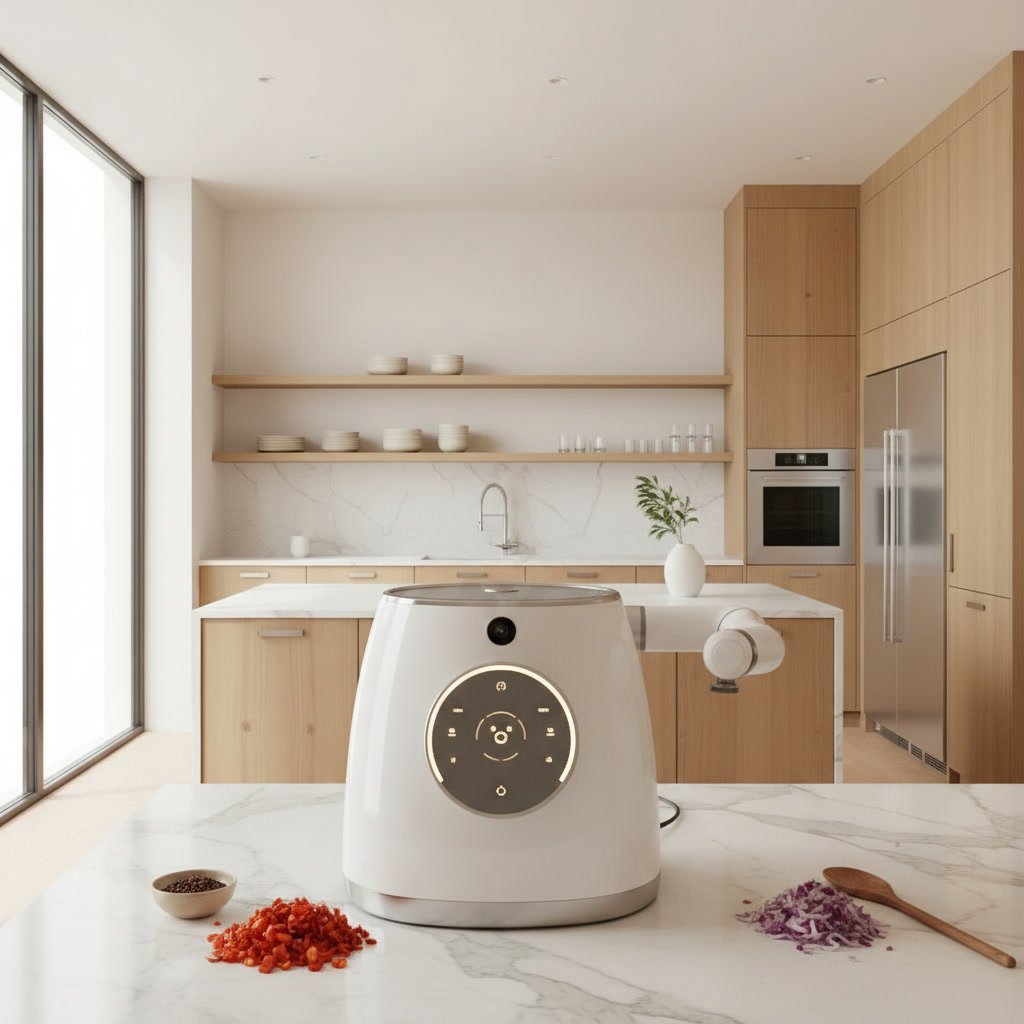
An AI kitchen appliance that suggests recipes and cooks combines computer vision, machine learning, and voice assistants to automate and personalize your kitchen workflow.
- Ingredient recognition: Built-in cameras scan and identify what’s on your counter or inside the oven (think AIChef Ultra smart kitchen device).
- Recipe adaptation: Suggests meals based on your available ingredients, dietary needs, and taste history.
- Precision temperature control: Smart heating elements hold within ±3°C of the set temp, key for food safety and results (source).
- NLP voice interface: Issue hands-free commands—“preheat to 400, bake lasagna, remind me in 35 minutes.”
- Self-updating recipe system: Many units, like the AIChef Ultra, evolve their suggestions the more you use them, adjusting to your flavor and health goals.
The result? You dump ingredients on the counter, and your device suggests three dinner ideas, preps the oven, and steps you through the process—sometimes even doing the actual cooking for you.
Pros, Cons, and Common Issues
Pros
- Massive time savings on meal planning and prep, especially for busy urban families.
- Reduces food waste by auto-suggesting recipes tailored to your leftover ingredients.
- Automated temperature control results in juicier roasts, perfect sourdough, and fewer dinner fails.
- Easy access to new cuisines—great for foodies or kids with picky eating phases.
- Voice and app controls mean you can multitask or even cook while wrangling kids.
- Devices like smart oven with meal planner support multi-appliance coordination—think oven + smart multicookers syncing for one-pan meals.
Cons & Common Issues
- Ingredient recognition sometimes fails (mushrooms vs. eggplant? Still not perfect). This is a common gripe with the AIChef Ultra smart kitchen device and Brisk It agentic AI oven.
- Temperature drift can go outside the advertised ±3°C during real baking or roasting—leading to over- or undercooked food.
- Wi-Fi or app syncing periodically drops, especially in apartments with crowded networks.
- Recipe libraries may be limited, outdated, or too generic for regional/cultural cuisine needs.
- Voice UX learning curve can frustrate less techy users—especially older family members or renters sharing kitchen space.
| Feature | AIChef Ultra | Brisk It Agentic AI Oven |
|---|---|---|
| Ingredient Recognition | Frequent ingredient mis-ID in real-world tests (mushrooms vs. eggplant) | Can be slow; sometimes fails with nonstandard produce or chopped items |
| Temperature Stability | Advertised ±3°C, but fluctuates under heavy load | Stable in most modes, but overcompensates in convection baking |
| Wi-Fi/App Reliability | Needs frequent reconnects; updates can disrupt schedules | Generally solid, but some bugs with scheduled cooking routines |
| Recipe Library | Large English library, but limited cultural adaptation | Good basics, but many recipes need manual adjustment |
Realistically, these are not “set-and-forget.” For families with adventurous eaters, they’re a huge win. But if you’re tech-averse or want fully offline operation, watch out for cloud dependencies.

Conclusion: Who Should Buy (and Who Shouldn’t)?
If you’re an urban, time-poor cook juggling work and health goals, or you want to minimize food waste, the AI cooking assistant appliance family is no longer just hype. It genuinely delivers weekly stress reduction—if you pick the right features and verify real-world performance claims.
Skip it for now if your household mostly cooks “by feel,” prefers analog workflows, or has patchy Wi-Fi. For those excited to build a health- and sustainability-focused smart kitchen, integration with an AI meal planning kitchen device will move you forward.
Ready to automate meal planning, reduce waste, and reclaim time?
Check the latest price on Amazon
FAQ
What exactly is an AI cooking assistant appliance?
An AI cooking assistant appliance is a smart kitchen device that uses artificial intelligence to recognize your pantry items, suggest recipes, automate cooking steps, and learn your preferences over time. Typical features include ingredient recognition, a recipe suggestion engine, automated temperature controls, voice interaction, and app-based weekly meal planning.
How does an AI meal planning kitchen device reduce food waste?
It tracks your pantry inventory and suggests recipes that use up ingredients before they expire. It can also generate smart shopping lists to avoid duplicate purchases and help you order only what you need.
Do these appliances really cook meals hands-off?
Many modern devices can autonomously preheat, adjust temperature, and cook certain meals from start to finish, but you usually still need to load and unload ingredients. The level of automation varies by brand—for instance, the Brisk It agentic AI oven is highly automated, but user monitoring is wise for complex dishes.
What are the most common problems with AI kitchen appliances?
Ingredient misrecognition, recipe library limitations, temperature drift, Wi-Fi connectivity issues, and voice assistant learning curves are the main pain points based on real user feedback and research data.
Should I wait for offline or health‑integrated models before buying?
If privacy or seamless health tracking is critical for you, consider waiting or choose a model that specifically features robust offline modes and deep health app integration. Product teams are working to address these gaps and new releases appear each cycle.