

Pantry door rack organizer shoppers in 2026 are running into a persistent problem: shallow shelves that can’t hold a standard bottle of olive oil and a wobble that makes you wonder if the whole thing will crash to the floor the next time someone shuts the door too hard. If you have been eyeing that empty space behind your pantry door as prime real estate for spices, cans, and cooking oils, you have likely already read the reviews that killed the deal , “baskets too shallow,” “fell off the door,” “items fall out every time.” This guide cuts past the generic organization fluff and goes straight at the fit and stability failure point so you can spend $35 or more on a heavy-duty pantry door rack organizer that actually works.
As an Amazon Associate, I earn from qualifying purchases.
⚡ Quick Answer
A 2026 pantry door rack organizer solves the common failure of shallow, fixed baskets by offering adjustable shelf spacing, reinforced heavy-duty brackets, and a dual mounting system (over-door plus screws). The best models cost $35 to $50 and can hold heavy cans and tall bottles without sagging or falling off a standard hollow-core door.
Key Takeaways
- The biggest complaint about cheap pantry door racks in 2026 is shallow fixed-depth baskets that cause wide or tall containers to tumble out.
- A reliable rack costs $35 to $50 and includes adjustable shelves, reinforced brackets, and a stable over-door mounting system with optional screw-in support.
- A heavy-duty behind-door pantry organizer can add 8+ tiers of storage for the price of one trip to the grocery store, compared to $2,000 for a custom pantry build.
- Why Your Current Pantry Door Rack Is Probably Failing You
- What a $35 Rack Gets You (And What It Doesn’t)
- The “Narrow Door Rack” Secret: 3 Features Your Organizer Must Have
- The Verdict: Is a Pantry Door Organizer Worth It in 2026?
- Frequently Asked Questions
Why Your Current Pantry Door Rack Is Probably Failing You (The 2026 Problem)
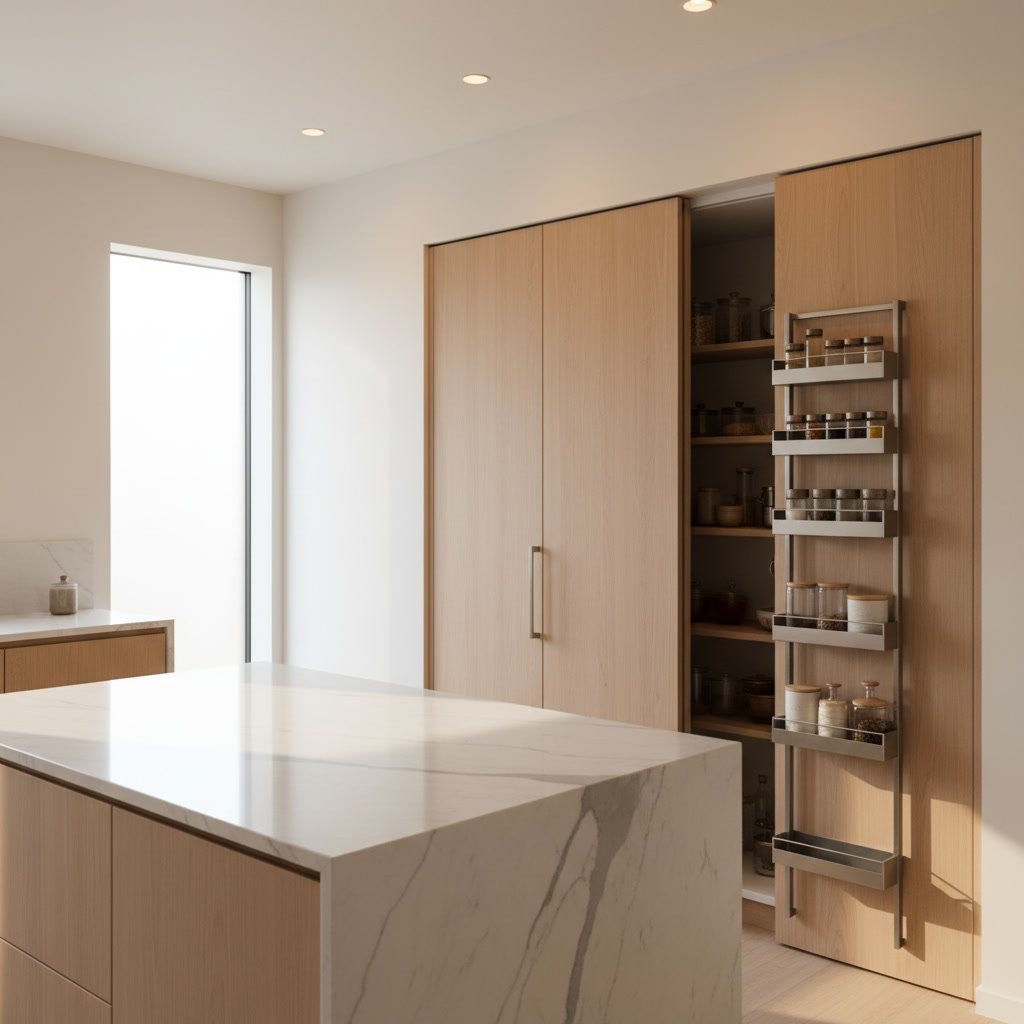
If you bought a cheap door mounted spice rack last year, you already know the plot. A typical 6-tier rack arrives with baskets that are maybe 2.5 inches deep and fixed in place. Those shallow mini-shelves work fine for the standard McCormick spice jar, but the moment you try to stash a Costco-sized container of garlic powder or a 16-ounce bottle of soy sauce, the item simply hangs over the edge. As one review source put it: “If a spice container is too wide, it might not fit. If the container is too tall, it’s going to tumble out every time you open or shut the cabinet.”
The second failure point has to do with the door itself. Many mass-market racks assume every door is a solid slab. But most interior pantry doors are lightweight hollow-core units. An over-the-door organizer that weighs 5 pounds when empty can easily hit 15 or 20 pounds with cans and bottles, and the cheap plastic hooks that come with $20 racks simply stretch, bend, or slip off. The result is a constant low-level wobble that eventually turns into a loud crash when you are rushing to grab the paprika for dinner.
Industry experts refer to these racks as kitchen door storage solutions, but the term is misleading when the product can’t even handle the weight of a typical pantry haul. The real 2026 problem is that most racks are designed for cosmetics and spice jars, not for the heavy, varied contents of a working pantry.
What a $35 Rack Gets You (And What It Doesn’t)
In 2026 the typical pantry door rack organizer sells for about $30 to $40, with most models hovering around $35 on average. That price point is the new sweet spot for an over the door pantry organizer that offers more than bare metal shelves. You get a metal frame, usually black or white coated steel, with 6 to 8 tiers of wire baskets. The unit hangs over the top of the door using two metal hooks covered in a thin rubber coating to protect the door’s paint.
Here is what the $35 price range often omits, and this is where the critical distinction lies. First, most $35 models lack deep, reinforced shelves. The baskets are typically between 2.5 and 3 inches deep, insufficient for standard 9-inch tall pasta sauce jars or 10-inch tall olive oil bottles. Second, the mounting system is almost always “over-door only” with no option to screw into the door for extra security. Third, the weight capacity of the unit itself is rarely stated, but independent user reports indicate that models without reinforced brackets begin to sag noticeably at around 12 to 15 pounds of distributed weight.
I mention these gaps not to discourage you but to sharpen your focus. The $35 organizer is the entry level. If you only need a tidy row of small spice jars, it might serve you well. But if you want a hanging pantry door storage system that can handle taller bottles, stacked cans, and heavier items without sagging, you will need to spend closer to $40 to $50 and look for specific upgrades.
The “Narrow Door Rack” Secret: 3 Features Your Organizer Must Have to Be Functional
The best narrow door rack designs for 2026 share three specific features that directly solve the wobble and bottle-tumble complaints. These features are not marketing gimmicks. They are mechanical differences that separate a functional organizer from a frustrating one.
1. Adjustable Shelf Spacing
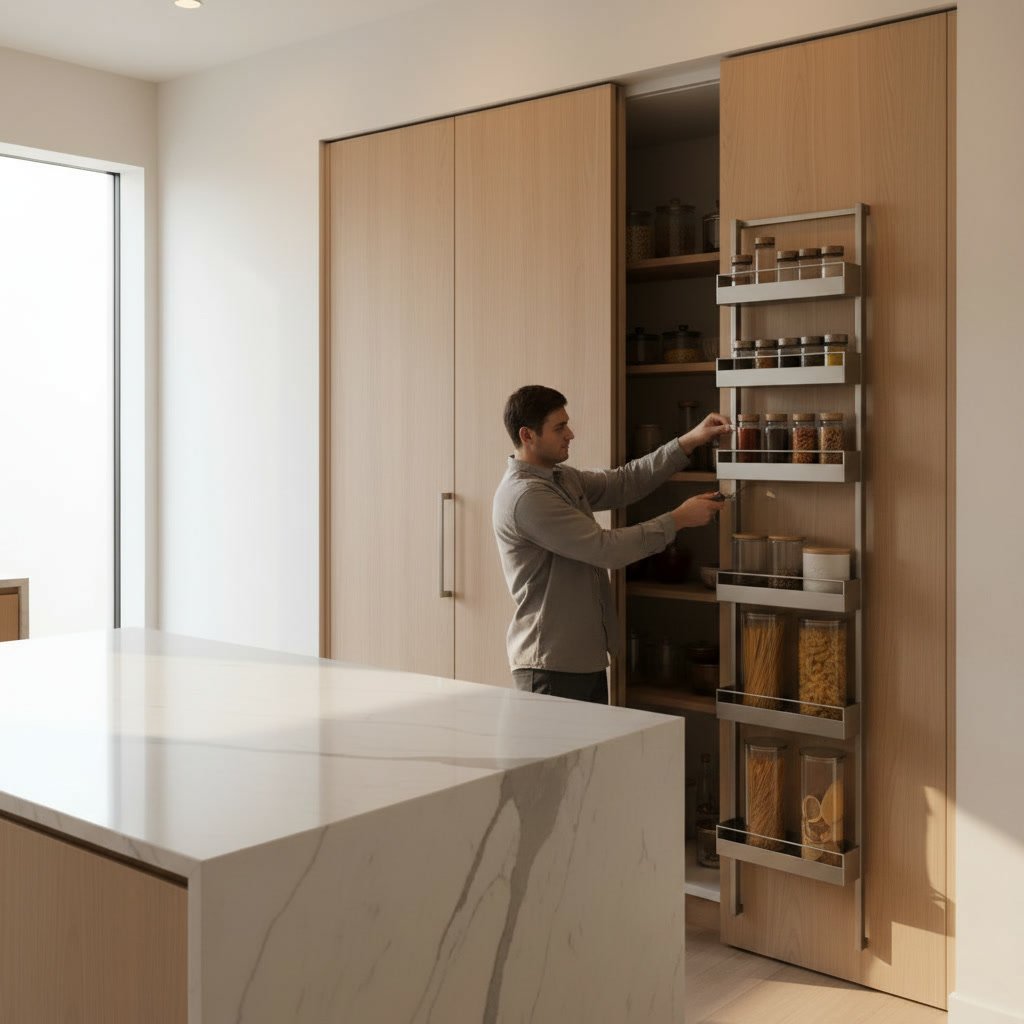
Fixed-tier racks are the enemy of versatility. The key feature to hunt for is adjustable shelf spacing. As described by one leading manufacturer, “The organizer contains adjustable baskets to customize spacing according to the height of the item. They come in handy to hold tall bottles, jars, snacks, and cleaning products.” This means you can shift a basket up or down to create a tall zone for your sesame oil and soy sauce, then snug the others close for spice packets and small cans. Without this, you are stuck with a uniform grid that fits nothing of varying height.
2. Reinforced / Heavy-Duty Brackets
The frame of a cheap organizer is often made of thin wire that twists under load. Look for models that use a heavier gauge of steel (usually 4mm or thicker) and have a solid metal bracket that runs the full height of the unit, connecting the hooks at the top to the bottom shelf. This bracket prevents the “scissoring” effect where the top of the rack holds but the bottom swings away from the door. A reinforced bracket distributes the weight evenly and stops the sagging that destroys the aesthetics and function of the unit.
3. Stable Mounting System (Over-Door + Screw Option)
The best behind door pantry organizers in 2026 offer a dual mounting system. They hang over the top of the door, which is convenient and renter-friendly, but they also include small screw holes near the bottom bracket that let you anchor the unit directly into the door panel. A single screw at the bottom of each side rail can eliminate 90 percent of the wobble. If you are a renter and cannot drill into the door, look for models that include adhesive-based stabilizing strips that push against the door to prevent swaying. These strips are not as strong as screws, but they are far better than having nothing at all.
The Verdict: Is a Pantry Door Organizer Worth It in 2026?
The math is remarkably straightforward. “The average cost to build a custom pantry is $2,000, with most homeowners spending between $1,100 and $2,900.” That is a full renovation number. A heavy-duty pantry door rack organizer, by contrast, costs between $35 and $50 and adds 8 tiers of storage to a door that was previously empty. The value proposition per square inch of storage is astronomical.
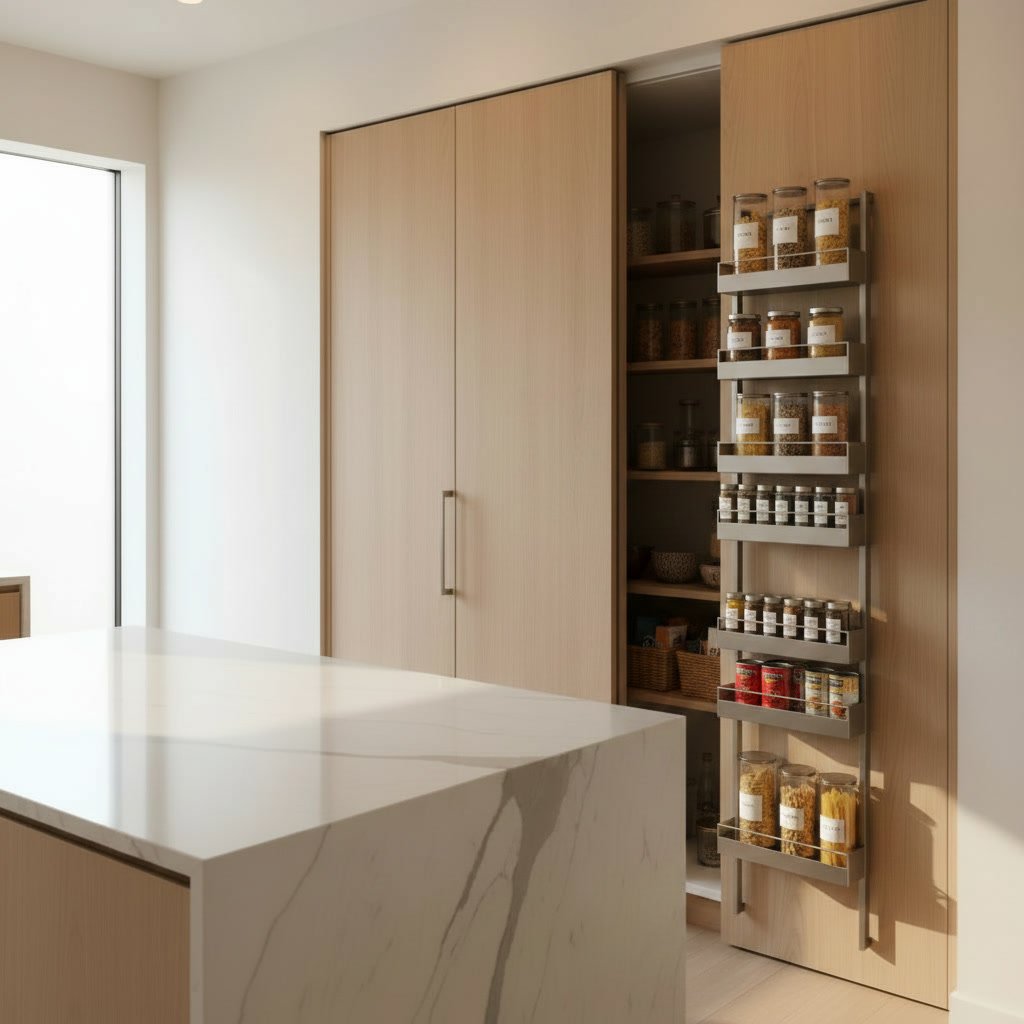
Where does this leave you? If your pantry needs center around small spice jars, lightweight snack bags, and a few small cans, a basic $25 over-the-door rack will probably suffice. But if you need to store tall bottles of oil and vinegar, large cans of tomatoes, or cereal boxes that exceed the typical basket height, you should invest in a heavy-duty behind door pantry organizer with adjustable shelves and reinforced brackets. The extra $15 to $20 you spend now will save you from the frustration of a toppled rack in six months.
Ultimately, the kitchen door storage space on the back of your pantry door is too valuable to waste on a flimsy rack. For the price of one restaurant dinner, you can turn dead space into a functional grocery storage zone that clears off your shelves and puts everything at eye level. That is a trade worth making.
Check the latest price on Amazon
Frequently Asked Questions
What is the ideal weight capacity for a pantry door rack organizer?
The ideal weight capacity for a heavy-duty rack is 20 to 30 pounds distributed evenly across all 8 tiers. Cheaper racks without reinforced brackets start sagging at around 12 pounds.
Will an over the door pantry organizer damage my door?
Most models have rubber-coated hooks that protect the paint, but on hollow-core doors the concentrated weight can slowly compress the door material at the hook contact points. If you plan to load the rack heavily, use the optional screw mounting at the bottom to redistribute force.
Can I use a narrow door rack on a standard 3-inch wide pantry door?
Yes, most narrow door racks are designed to fit doors that are 1.375 to 2 inches thick. However, you must also check the width of the rack itself. A standard 8-tier rack is 12 to 14 inches wide, and you need that much clearance behind the door when it opens.
What is the difference between a spice rack and a pantry door storage organizer?
A basic door mounted spice rack has shallow, non-adjustable shelves designed for small spice jars. A pantry door storage organizer uses deeper, often adjustable baskets that can hold tall bottles, cans, and cleaning supplies. A spice rack is a subset of the broader organizer category.
How do I clean a hanging pantry door storage rack?
Most racks are coated steel or painted metal. Wipe them down with a damp microfiber cloth and mild dish soap every month. Avoid abrasive sponges that scratch the coating. For heavy grease buildup, use a degreasing spray and a soft brush to reach the wire joints.