

If you’ve ever tried piecing together an outdoor kitchen only to discover the kit price didn’t cover your actual grill or the appliances weren’t built for rough weather, you know true frustration. Modular outdoor kitchen systems in 2026 promise seamless design, phased upgrades, and smart convenience—but there are pitfalls (and hidden costs) that catch even savvy homeowners. Here’s how to design, buy, and install a modular outdoor kitchen that fits your backyard, your budget, and won’t let you down after the first summer rain.
As an Amazon Associate, I earn from qualifying purchases.
⚡ Quick Answer
A modular outdoor kitchen combines prefab cabinets, weatherproof appliances, and built-in components for a custom look, typically starting at $5,000–$7,000 for the shell and reaching $15,000–$20,000 with quality grill, fridge, and countertops. Smart features, phased add-ons, and clear service access define the best outdoor kitchen system built-in options in 2026.
Key Takeaways
- Modular outdoor kitchens cost 30–50% less upfront than custom builds, but real totals (with appliances) usually run $6,000–$15,000.
- Focus on smart, weatherproof outdoor kitchen appliances and leave service access in your plan to prevent costly headaches.
- Common traps: advertised kit prices without appliances, poor layout planning, and water intrusion around built-ins. Always triple-check what’s included.
- Miele Dreams and AI grill tech are leading 2026, but phased modular upgrades are perfect for hands-on homeowners wanting future flexibility.
- Why choose a modular outdoor kitchen in 2026
- 2026 price tiers — what you’ll pay and what you get
- Built-in components: must-haves, cost ranges and sizing tips
- Common user problems with outdoor kitchen built-ins — and how to prevent them
- 2026 trends shaping modular outdoor kitchens (smart, material, and design)
- Design & layout strategies for modular systems
- Installation realities — DIY vs pro, timeline and hidden costs
- Maintenance, warranties and longevity
- Budgeted example builds (starter, mid, and aspirational) with line-item breakdowns
- Product spec checklist & buying guide
- Next steps — planning template and questions to ask vendors
- FAQ
Why choose a modular outdoor kitchen in 2026
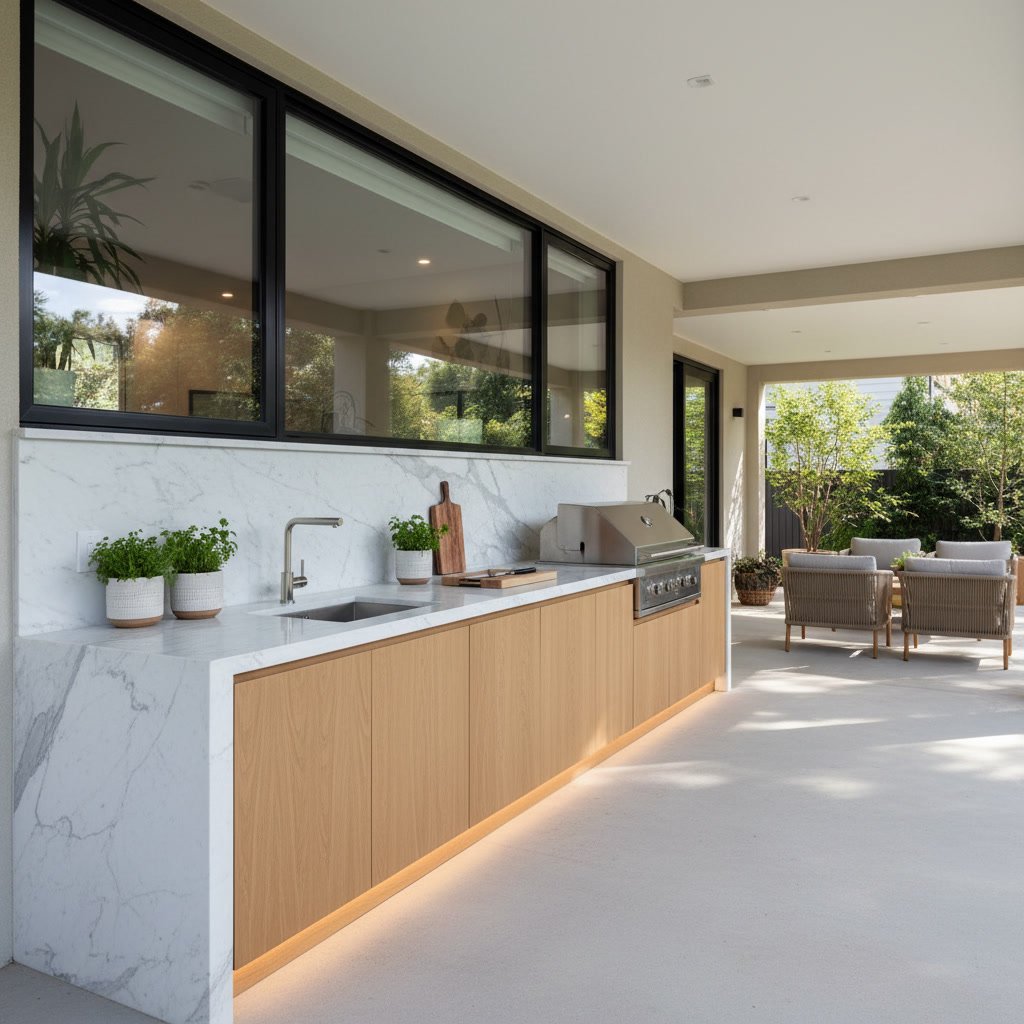
A modular outdoor kitchen bridges the gap between clunky grill carts and full custom brick builds. It uses factory-made modules—cabinet frames, panel kits, and outdoor kitchen system built-in appliances—that snap together on site. You get a clean built-in look, expand in phases, and sidestep months of contractor chaos.
According to industry research, modular/prefab setups cost 30–50% less upfront than custom builds. While you might see kits advertised at $3,000–$10,000, those usually do not include the grill, fridge, sink, or other weatherproof outdoor kitchen appliances. The “real” cost with quality gear is often $6,000–$15,000 [3]. The big win? You can start with just the shell and core wiring, add a pizza oven next season, and finally integrate a pro fridge when your budget (or ambition) grows.
If you’re handy and want design flexibility, modular lets you swap components or upgrade without tearing everything out—unlike bespoke masonry islands, which are permanent. That means less risk of buyer’s remorse and smoother resale if your style (or needs) change.
2026 price tiers — what you’ll pay and what you get
The 2026 modular outdoor kitchen scene breaks down into three main price bands. Here’s what you get at each tier:
| Tier | Typical Cost | What’s Included |
|---|---|---|
| Starter Shell | $5,000–$7,000 | Modular framework, basic weatherproof panels, no appliances |
| Midrange Integrated | $6,500–$15,000 | Cabinetry, countertop, grill, fridge, sometimes sink or pizza oven |
| Premium Custom Modular | $12,000–$25,000+ | Full suite, premium finishes, smart appliances, custom built-ins like Miele Dreams |
Nationally, the average spend is $13,180, but expect your project to sit in the $5,060–$17,280 range depending on appliances, finishes, and custom features.
Nearly all kits—even at the higher price point—require you to supply the main grill, pizza oven, fridge, and other appliances separately. Budget for built-in outdoor kitchen island components upfront, not as a surprise after the fact.
Built-in components: must-haves, cost ranges and sizing tips
Choosing the right built-in outdoor kitchen island components is where costs and headaches spike or flatten. Here’s what you’re likely to need for a strong 2026 setup:
- Grill (built-in): $1,500–$10,000+ for top-tier models. If you want an AI outdoor grill with smart temperature control, expect to pay toward the upper end.
- Under-counter refrigerator: $1,199–$5,000.
- Pizza oven: $2,100–$5,000 for modular outdoor kitchen with pizza oven and grill. Portable or countertop units are less.
- Sink and faucet: $300–$3,000.
- Ice maker: $2,100–$5,000.
- Side burners, trash cabinets, or storage drawers: $400–$2,400+ per component.
- Countertops: $35–$80 per square foot (granite, modular concrete, or composite favored in 2026).
- Cabinets: $1,700–$2,400 per module (see value in brands using HDPE or modular concrete blocks).
SIZING TIPS: Always check the cutout specs for a “built-in” fit—grills and appliances require extra clearance for ventilation and servicing. Standard grill cabinets start at 30″ wide, but measure your specific appliance’s “envelope” (including hinges and handles).
If you want seamless integration, prioritize appliances from the same ecosystem or brand, especially in premium suites like Miele Dreams outdoor kitchen 2026.
Common user problems with outdoor kitchen built-ins — and how to prevent them
Even premium modular outdoor kitchens are not immune to headaches. The most frequent complaints I see (and have encountered first-hand) include:
- Not enough layout flexibility: after market appliances often don’t fit pre-cut modules, leading to forced compromises or ugly gaps
- Water intrusion around built-ins and under-counter refrigeration, especially when weatherproof gaskets or J-channel flashings are skipped
- Service panels blocked by cabinet walls or grills, making repairs a pain
- DIY users struggling with finish alignment and levelness, making the island look less “designer” and more “weekend project”
To avoid these traps:
- Measure twice: confirm both appliance AND island cutout dimensions, including any required ventilation.
- Use real outdoor kitchen system built-in modules with dedicated removable service panels—not just generic indoor cabinets.
- Seal between every module with weatherproof gaskets and J-channel flashing, even if the instructions say it’s optional.
- Account for sufficient rear and side clearances—outdoor fridges and grills run hotter and need airflow.
For a deep-dive on built-in appliance fit and under-counter solutions, see our built-in ice maker guide.
2026 trends shaping modular outdoor kitchens (smart, material, and design)
Three trends absolutely dominate the modular outdoor kitchen market in 2026:
- Smart, Connected Cooking: AI outdoor grill smart temperature control means Wi-Fi-enabled grills, app-synced fridges, and voice-activated lighting are now common. Look for grill self-monitoring, remote preheat, and sensor alerts tied into your home platform. [5]
- Modular, Sustainable Materials: HDPE (high-density polyethylene) and modular concrete blocks lead the pack for cabinet shells, being weatherproof, easy to cut, and color-stable. Systems like Miele Dreams outdoor kitchen 2026 set the aesthetic standard—panel-ready fronts, hidden hinges, and matte textures that look like luxury indoor kitchens brought outside.
- Integrated Weather Protection: Automated or louvered canopy systems keep your appliances safe in rain or snow, letting you grill year-round or host in true four-season comfort. Some smarter canopies even auto-close when sensors detect weather.
Smart modular systems support phased upgrades—start basic, then add app-controllable pizza oven modules or AI grill retrofits later. That means you won’t outgrow your layout or regret choosing modular over bespoke.
Design & layout strategies for modular systems (flow, expansion, and serviceability)
Anyone who cooks for family dinners or backyard parties knows flow is everything. Here’s how to nail the layout in your modular outdoor kitchen so you’re not pacing back and forth with platters all night:
- Create distinct zones: Landing (for trays), prep, cooking (grill/pizza oven), and serving. Keep them adjacent.
- Place the grill and pizza oven: Downwind from main seating, with a minimum of 24” clearance between cooktops and vertical surfaces. Ovens and grills should never crowd the fridge—keep hot and cold separate for appliance longevity.
- Plan expansion: Leave at least one “phased add-on” zone in your island design, capped with a dummy panel, for future extra burners or refrigeration.
- Service first: All built-in outdoor kitchen island components should be accessible from the front or sides. Removable panels for electrical, gas, or plumbing are a non-negotiable.
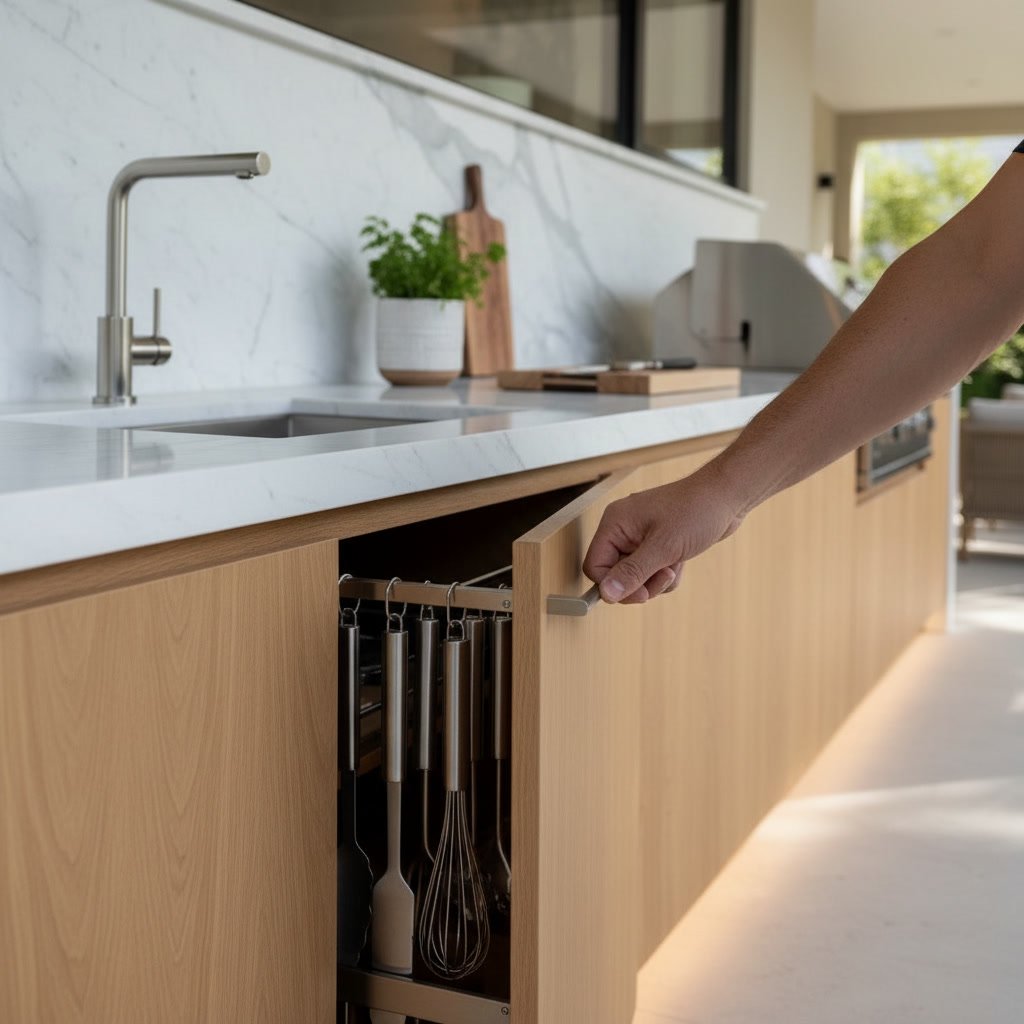
Reliable hosting depends on prepping ingredients, grilling, and plating—ideally with less than three steps between each zone. For examples and advanced storage ideas, see our cabinet pull-out shelves guide.
Installation realities — DIY vs pro, timeline and hidden costs
Modular outdoor kitchens are pitched as DIY-friendly, but there’s nuance. While factory modules click together with basic tools, the real complexity starts with utilities:
- Gas: Always hire a pro for gas line installs or conversions. Even “plug and cook” propane modules should be pressure-tested by a licensed plumber.
- Electrical: Anything beyond plug-in outlets (fridges, lighting, smart controls) usually needs a pro. Expect $250–$2,000 for wiring depending on distance and load.
- Plumbing: Outdoor sinks and ice makers need lines—and proper winterization if you live in a freezing zone.
- Venting and hoods: Built-in grills may need vent hoods for covered patios, especially for Miele Dreams-grade installations.
Timelines are typically fast: prefab modular shells assemble in 1–4 weeks, with pro appliance installs adding 1–2 weeks. Custom labor (masonry, full custom concrete) can stretch to 12 weeks or more, often costing $5,000–$12,000 extra [1].
Don’t forget the hidden costs beyond your Amazon cart: trim kits, countertop fabrication, insulating jackets (required for some grills near combustible modules), and delivery fees can add thousands. Always get every cost in writing from vendors.
Maintenance, warranties and longevity (what to look for)
The difference between a backyard showpiece and an expensive regret is how well your modular outdoor kitchen stands up to heat, rain, and snow over time. Prioritize these specs:
- Weatherproof all the way: Only buy outdoor kitchen system built-in appliances rated for exterior use (look for outdoor-rated IP numbers or stainless finishes).
- Warranty length: Outdoor-rated grills/fridges should include a 3–5 year warranty. Ask about replaceable gaskets, service coverage, and finish coatings (powder-coat, UV-stabilized HDPE, or solid stainless).
- Sealed electronics: Select smart components with proper sealing against condensation or water spray. The most common failures I see in DIY builds are cooktop controls or fridge panels shorting out during storms.
- Maintenance schedule: Inspect gaskets annually. Reseal joints and flashings after winter. Clean under-counter fridge coils quarterly to avoid early compressor failures.
For truly trouble-free operation, choose weatherproof outdoor kitchen appliances, install all modules with slope and overhangs for water runoff, and treat your outdoor gear like hard-working indoor equipment.
Budgeted example builds (starter, mid, and aspirational) with line-item breakdowns
Want a concrete sense of what modular outdoor kitchen price tiers really buy? Here are three 2026-ready builds with line-item guidance:
- Starter shell ($5,000–$7,000): 6–8 ft modular base, no appliances included. Add a built-in propane grill ($1,800), basic sink ($350), and butcher block counter ($600) for a total around $8,000–$10,000.
- Midrange integrated ($6,000–$15,000): 10–12 ft base with integrated countertop, high-quality built-in grill ($3,500), outdoor-rated fridge ($1,400), pizza oven module ($2,500), sink/faucet ($1,000). Typical home spend here: $13,000, close to the national average.
- Aspirational/Miele Dreams smart suite ($18,000–$25,000+): Up to 15 ft with modular concrete or HDPE blocks, built-in AI grill with smart temperature control ($7,500), premium fridge/freezer ($4,200), pizza oven add-on ($4,000), side burners, outdoor dishwasher, integrated louvered roof.
Where can you save? Opt for slab-style countertops over thick-edge, skip premium handle sets, or buy an off-brand fridge. But don’t cheap on waterproofing, core framework, or electrical—downgrades here always bite back.
Product spec checklist & buying guide (quick one-page checklist)
- Openings: Measure rough opening width, depth, and height for all built-in outdoor kitchen island components (including swing clearance for grill, fridge, and drawers).
- Ventilation/Access: Ensure each module has at least one accessible service panel. Built-in refrigeration needs airflow at back and sides.
- Outdoor rating: Confirm appliances and electronics are designed for full exposure (look for IP or outdoor certifications—not “garage rated”).
- Smart features: Wi-Fi or AI grill temperature control, app-access for fridge/lighting, integrated voice control.
- Warranty: Minimum 3-year grill/fridge, longer preferred. Ask about service logistics, not just parts replacement.
- Material choice: Weatherproof HDPE, modular concrete, or true 304/316 stainless steel for cabinets.
- Installer compatibility: Ask if your chosen modules play nicely with appliances from other brands, and get technical support contacts for both.
When confirming specs, always check the compatibility of new AI outdoor grill smart temperature control modules—even those marked as “universal fit” can have subtle dimension or venting conflicts.
Next steps — planning template and questions to ask vendors
Ready to price or spec your modular outdoor kitchen? Here’s a quick vendor call template:
- What’s included in this kit—does it include all appliances (grill, fridge, pizza oven, sink) or will I need to purchase separately?
- Exact assembled footprint and cutout specs for each module?
- Are service panels accessible for every appliance (front/rear/sides)?
- Outdoor/weatherproof rating—what materials and certifications are used?
- Projected installation timeline—how much is professional assembly vs truly DIY?
- Delivery/assembly costs (itemized)? Any required site prep or foundation?
- Line-by-line breakdown of potential add-ons—any hidden “required” upgrades?
Always get at least 2–3 quotes that cover full install and all materials, then compare apples-to-apples. Many modular systems advertise $3,000–$10,000 shells but the real built-in outdoor kitchen cost is $6,000–$15,000 once finished [2].
Want more detail on induction cooking outdoors? Our induction cookware guide breaks down compatible options for both indoor and outdoor setups.
FAQ
What is a modular outdoor kitchen and how is it different from custom or cart setups?
A modular outdoor kitchen is a system of pre-built cabinet frames and built-in components that assemble like puzzle pieces for a seamless, permanent look. Unlike rolling carts, it’s anchored and weatherproof, but unlike a custom masonry build, it’s made from factory components you can mix, match, and expand without heavy trade labor.
What are the real costs involved with a modular outdoor kitchen system built-in?
Realistically, most modular outdoor kitchens start at $5,000–$7,000 for the framework only. Once you add a quality grill, fridge, countertop, and trim, expect $15,000–$20,000 for a typical project. National averages hover around $13,180, but big smart suites like Miele Dreams can exceed $25,000.
Are modular outdoor kitchen appliances really weatherproof?
The best weatherproof outdoor kitchen appliances use HDPE, true stainless steel, or treated modular concrete. Look for outdoor or IP-certified fridges and smart grills for year-round reliability, and make sure they’re sealed against water and humidity per the manufacturer’s spec.
What’s new in modular outdoor kitchens for 2026—any must-have smart features?
Wi-Fi and AI integration top the list: think AI outdoor grill smart temperature control for app monitoring, voice-activated lighting, and app-controlled refrigeration. Styles like Miele Dreams outdoor kitchen 2026 are leading with sleek, integrated aesthetics and modular expansion options.
How do I avoid common installation mistakes and hidden costs?
Always measure both appliance and cutout clearances twice. Use only true outdoor kitchen system built-in modules with removable service panels. Get electrician/plumber quotes in writing before starting, and verify that weatherproofing details (like gaskets and flashings) are properly installed.