

If you have ever sliced your fingertip rummaging through a cluttered drawer or struggled to fit a bulky knife block on a small counter, a magnetic knife strip wall might be the kitchen upgrade you never knew you needed. After months of prepping family dinners and midnight snacks, I found wall-mounted strips to be a game changer—especially if you crave both order and easy access. Let’s take a hands-on look at how this simple tool can streamline your kitchen and integrate seamlessly with modern organizers.
Key Takeaways
- The magnetic knife strip wall saves valuable counter space and keeps your sharpest tools safely in reach.
- High-quality wood-covered strips are safer for blades than bare metal versions—avoid cheap options.
- Pairing strips with other wall mounted kitchen storage (like spice racks or rail systems) streamlines prep work and boosts efficiency.
- Proper installation and cleaning prevent common issues like weak magnet grip or blade scratching.
- What It Is and Why It Matters
- Key Features and How to Use It
- Pros, Cons, and Common Issues
- Conclusion
- FAQ
What It Is and Why It Matters
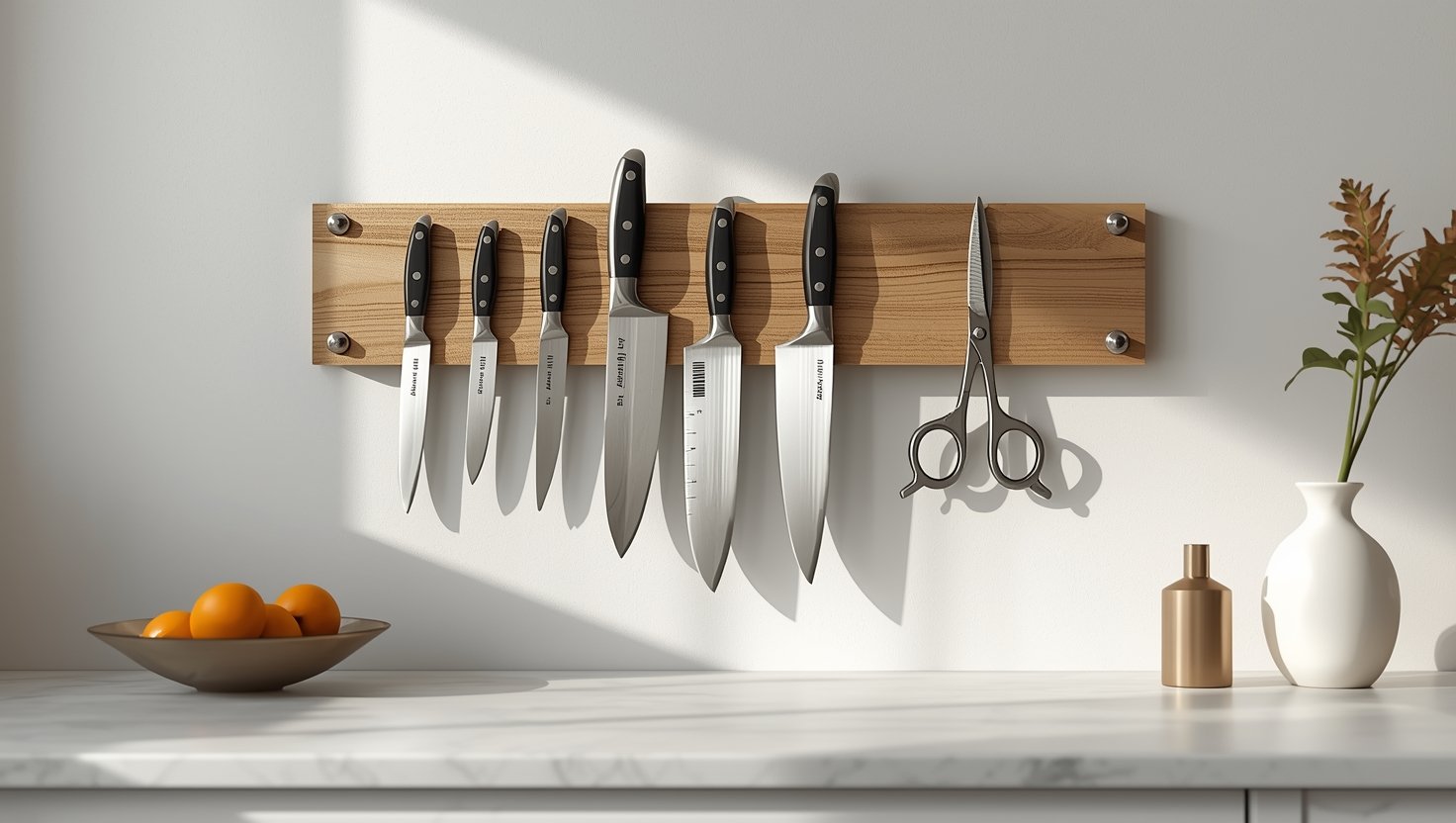
A magnetic knife strip wall is a wall-mounted bar, usually 12 to 24 inches long, embedded with strong magnets. You affix it to a kitchen wall or backsplash, and your knives “float” securely via magnetic pull. Prices start around $15 for basic metal strips, but high-quality wood-faced models typically run $35–$75—worth the premium if you care about blade longevity.
Why does it matter? First, clearing up prime counter real estate is no small thing. Traditional knife blocks often eat up the only sliver of workspace you have next to your sink. In my 90-square-foot kitchen, swapping my block for a wall strip freed space for my French press and cutting board. Second, it’s a much more sanitary option. Knife blocks trap crumbs and bacteria deep inside slots, but an open strip lets you see and wipe every surface.
This upgrade is especially valuable for small apartment kitchens, galley layouts, or family homes where every inch matters. If you meal prep, cook frequently, or are constantly in search of that one chef’s knife, the difference is immediate.
Key Features and How to Use It
The best magnetic knife strip walls offer strong, even magnetization, and enough length for your entire set—plus a cleaver if you’re serious about butchery. Look for a model at least 16 inches long if you keep six or more knives. High-grade neodymium magnets safely grip even heavy blades without slipping or “tipping out.”
Wood fronts (maple, walnut, or bamboo) are much gentler on blade edges compared to steel strips. Metal-on-metal contact can scratch and potentially magnetize your tools, affecting balance over time. A good wooden strip looks polished and helps maintain your investment in good knives.
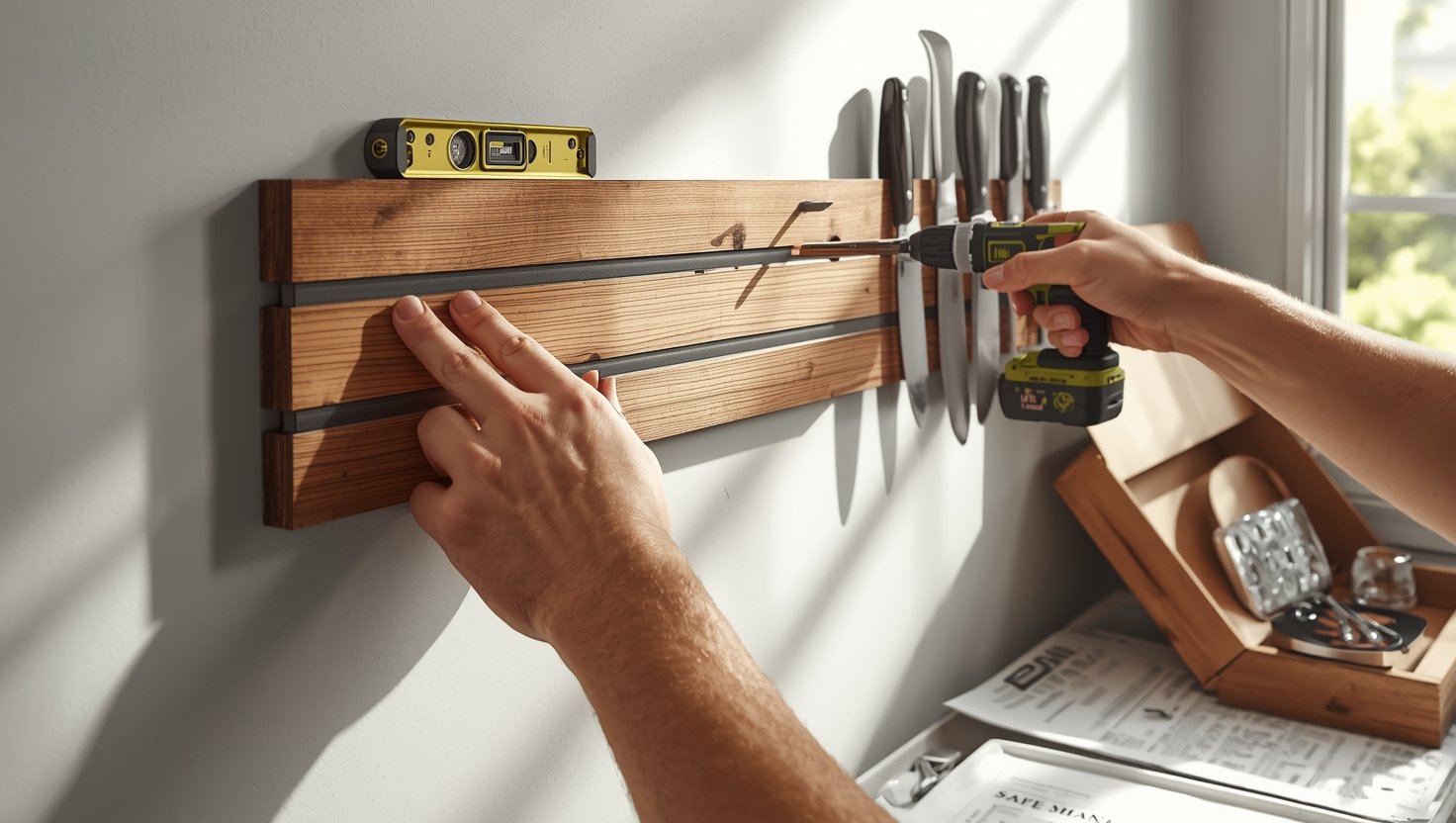
Installation is straightforward. Most modern strips use either screw mounts or heavy-duty adhesive pads. I recommend screwing into wall studs for security—especially if you’ll be hanging anything heavy or integrating with a kitchen wall organizer system or hanging kitchen rail.
Once installed, always attach blades spine-first (never edge-first) and remove them by twisting sideways, not pulling down. This simple motion prevents accidental knicks or damage to the strip’s face. After six months of daily use, even my Japanese gyuto still slides off smooth and sharp.
Routine upkeep is fast: just wipe the strip weekly with a damp microfiber cloth and dry thoroughly. Use a few drops of mineral oil for wood—never use cooking oils, which go rancid and ruin finishes.
Pros, Cons, and Common Issues
Below, I’ve broken down the main strengths and potential headaches you should know about before adding a magnetic knife strip wall to your setup.
| Pros | Cons |
|---|---|
|
|
Research and pros have widely recommended wood-faced magnetic strips over bare metal, primarily to preserve blade edges and prevent unwanted magnetization. Quality matters: reliable brands use graded neodymium magnets and give at least a 1-year warranty (sometimes 5+ years). Bargain bin strips often fail within a few months—knives slide, magnets weaken, or finishes chip.
User nitpicks from Amazon and Reddit complain of adhesive-mounted strips falling off, particularly when overloaded or mounted on glossy tile. If in doubt, always use the included screws and try to hit a stud—even if it means a little extra measuring.
If you need a deeper dive into compatible modern storage (think under-counter ice makers or workstation kitchen sink accessories), consult our cabinet pull-out shelves upgrade for other space-savers worth your time.
For those keen on integrating smart or invisible appliances, see our guide on the invisible induction cooktop trend.
Conclusion
In my own kitchen, the magnetic knife strip wall has outperformed even my most expensive knife block in both space-saving and convenience. If you value an uncluttered workspace, need your tools on display, or run a small or busy kitchen with multiple cooks, I highly recommend giving one a try. Skip it only if you lack any wall space or prefer drawer-only storage. Otherwise, the blend of order and accessibility is hard to beat. Check the latest price on Amazon, and if you want to compare options by blade capacity or warranty, read our full comparison guide before you buy.
FAQ
Will a magnetic knife strip wall damage the blades of my expensive knives?
High-quality, wood-faced strips are gentle on blades, while cheap metal strips can scratch or dull them over time. Always attach knives spine-first and remove them with a twist to avoid scraping. Keep the strip clean and free from grit.
Can I use a wall mounted kitchen storage system for utensils and other tools?
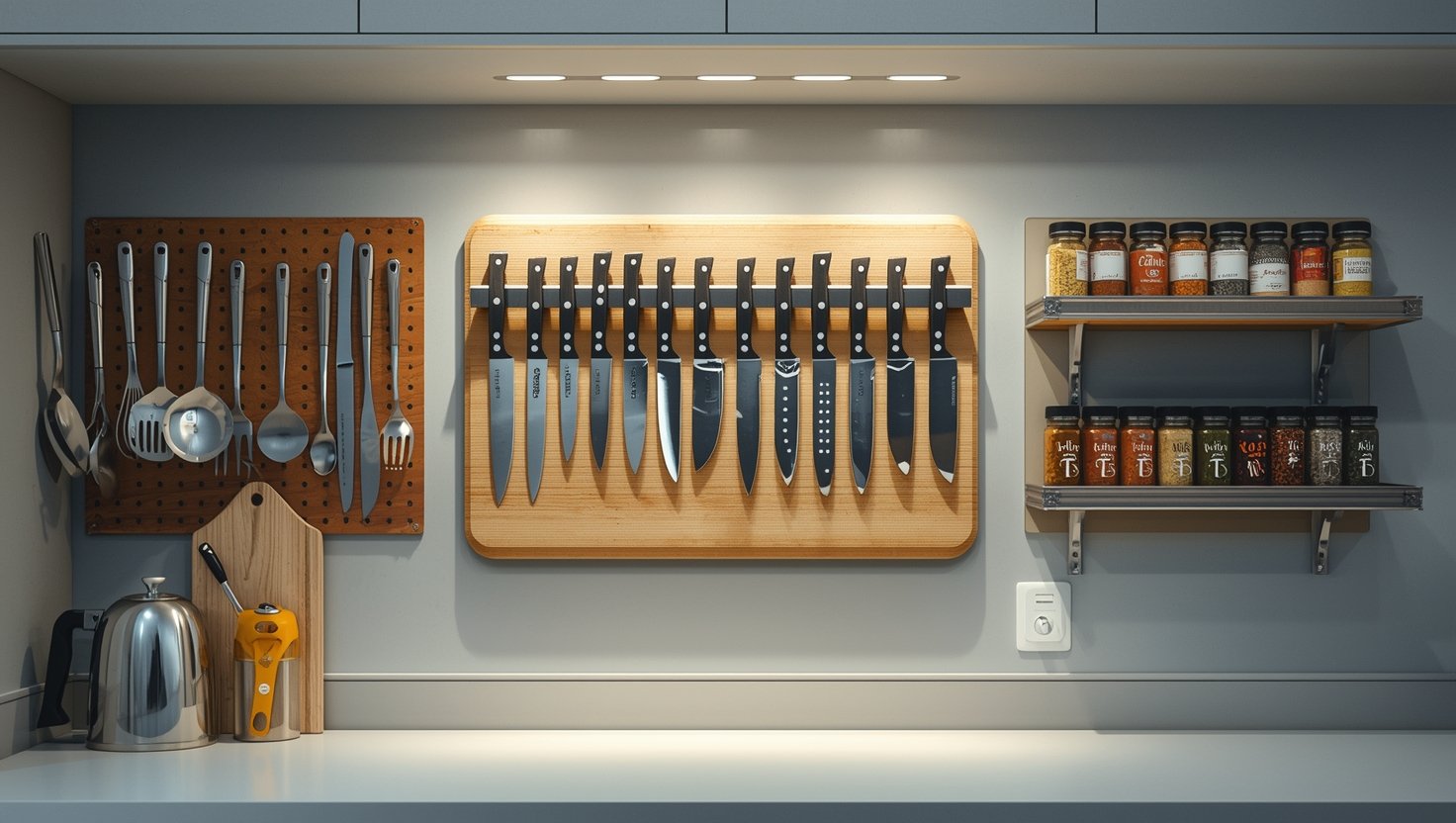
Absolutely. Many users combine magnetic knife strips with a wall mounted kitchen storage system—like hooks, utensil holders, or even a pegboard kitchen organizer—to keep everything visible and within reach.
How strong does the magnet need to be for heavy knives or cleavers?
Look for strips with neodymium magnets, ideally rated for at least 3.5–4 pounds of downward pull per foot. For especially heavy tools, check with the manufacturer or test with the largest knife before committing.
What’s the best way to integrate a magnetic wall spice rack with my knife strip?
Install spice racks above or beside your knife strip so jars don’t block blade handles. Modular racks with magnetic backs work well, letting you adjust placement as your kitchen evolves.
Is there a risk of the magnetic strip demagnetizing my knives?
Extended exposure to strong magnets can leave a faint, mostly harmless magnetization in steel. It typically doesn’t affect daily use. Opt for wood-faced strips and rotate your knives occasionally to minimize risk.