

Introduction
The invisible induction cooktop is changing how modern kitchens look and function. Unlike classic cooktops, these systems hide seamlessly under your countertop. Wondering if an invisible, under-counter induction stove is right for you? Here’s everything you need to know—how it works, installation, best use cases, real-world limitations, and what sets these next-gen kitchen appliances apart.
Key Takeaways
- Invisible induction cooktops deliver seamless, ultra-minimalist kitchen design by hiding powerful burners under your stone countertop.
- Installation and safety are more complex than standard induction hobs, and there is little public technical data on durability and regulatory approval.
- Brands like SKS and others are driving innovation, but real-world user reviews and performance testing are currently lacking.
- Introduction
- The Core Concept: What is an Invisible Induction Cooktop?
- Step-by-Step Guide: Installation & Use
- Advanced Analysis & Common Pitfalls
- Conclusion
- FAQ: Invisible & Hidden Induction Cooktops
The Core Concept: What is an Invisible Induction Cooktop?
An invisible induction cooktop is an advanced cooking surface where the induction elements are installed beneath your kitchen countertop. Unlike traditional units, there is no visible stove on the surface—it is a truly “hidden induction stove under countertop.” Activating the system turns ordinary-looking stone or synthetic material into a smart, powerful, under-counter induction cooking surface.
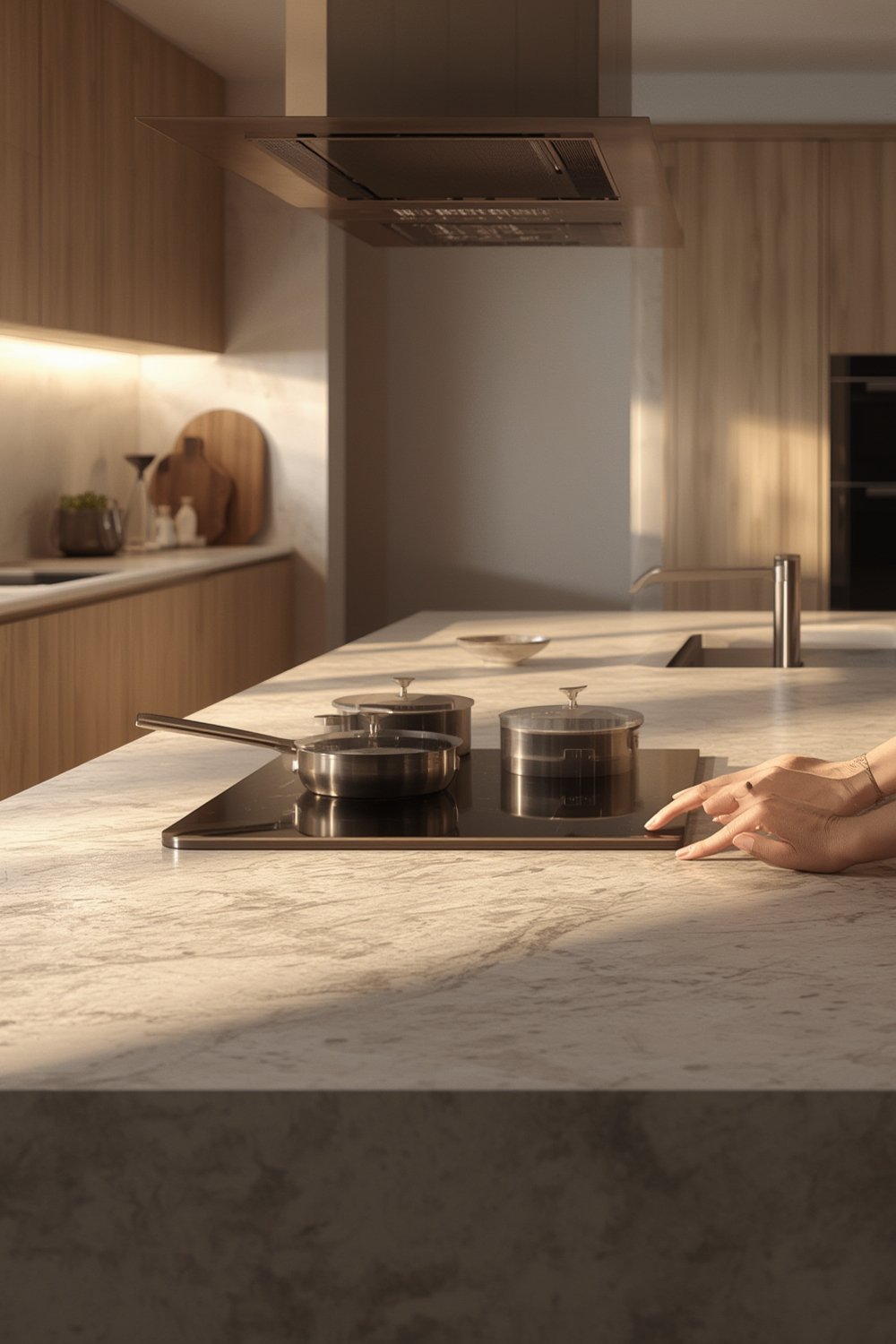
Why are these flush mount induction cooktops so exciting? First, they remove visible appliances for a “disappearing” effect, maximizing workspace. Second, they’re easier to clean, since there are no exposed controls, seams, or burner grates. Third, they support ultra-modern, minimalist aesthetics that homeowners and architects demand for luxury and tech-forward kitchens.
The concept isn’t just futuristic. At KBIS 2026, Signature Kitchen Suite (SKS) showcased their invisible induction prototype, as reported by AOL. Other brands are racing to launch similar solutions, including induction hobs hidden under stone countertops and multi-zone units that disappear when not in use.
How does it work? High-powered induction coils are mounted under specific zones in a stone, composite, or engineered countertop. When you activate the controls (often via touch or remote), the induction coils heat your compatible cookware—while the stone itself remains safe to touch nearby. This “invisible” approach requires compatibility between the induction technology and the countertop material and thickness.
Compared to visible induction appliances, expect sleeker integration, a truly modern look, and the ability to “hide” your cooking surface completely. Yet, the lack of visible cues means using only pots and pans that work with induction. For tips on selecting compatible cookware for induction hobs, see the cookware-for-induction guide.
Step-by-Step Guide: Installation & Use
Ready to add a hidden induction stove under countertop in your space? Here’s what to know for planning, purchase, installation, and use.
- Assess Compatibility: Induction hob hidden under stone countertop units require the right combination of stone (typically engineered quartz or certain granites) and thickness (usually under 30mm). Consult your manufacturer’s technical sheet or installer.
- Choose a System: As of 2026, SKS leads with its invisible induction prototype. Other brands offer under-counter induction cooking surfaces with limited availability. Review certification, power outputs, and zone configuration. Note that SKS’s 36-inch Full-Flex Induction features up to 7,000W boost burners, multi-inductor arrays, and AI water boiling alerts.
- Select a Qualified Installer: Unlike standard flush mount induction cooktops, invisible models require both a skilled appliance technician and a fabricator experienced with induction stone integration. Poor installation may lead to performance loss or damage.
- Prepare Your Kitchen: Dedicate appropriate electrical supply. Most units need 240V/30-50A. Confirm access below the countertop is clear for the unit and cables.
- Install the Appliance: The induction panel is fixed beneath the countertop’s designated “cooking zones.” Controls may be remote, app-based, or accessible via a touch interface on the counter’s edge.
- Initial Testing: Test each zone with induction-ready cookware. For best cookware advice, see Best Cookware for Induction.
- Daily Usage: Only use approved, flat-bottomed pots and pans for best energy transfer. Induction symbols (see our cookware symbols explained) help spot compatibility.
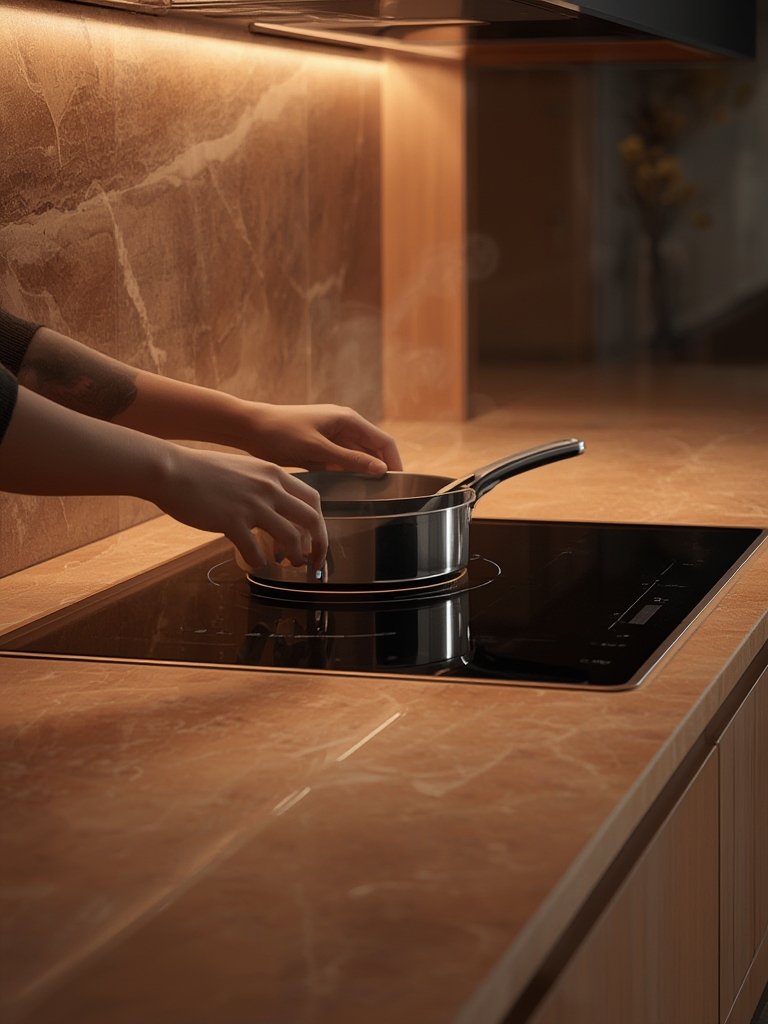
- You may need to adjust usage habits, as zone markers are invisible. Consider subtle guide visuals or a printed kitchen layout as a cheat sheet.
- Keep countertop surfaces clean—spills can obscure or reduce the system’s sensor/touch accuracy.
- Maintenance is minimal, but inspect regularly for any stone discoloration or sensor issues.
For more smart kitchen tech, explore the latest AI oven innovations and next-gen appliances that work seamlessly with induction.
Advanced Analysis & Common Pitfalls
While invisible kitchen appliances look stunning, there are downsides to consider. Here are the most relevant issues and pitfalls, drawing from recent product unveilings and limited technical disclosures at KBIS 2026 events.
| Pitfall / Issue | Details | Potential Solution or Workaround |
|---|---|---|
| Material Compatibility | Many stone types, especially thick granite or marble, may block efficient heating or damage the appliance. | Use only approved stones (often engineered quartz) and stay within manufacturer-specified thickness, usually 1-2 cm for performance. |
| Hidden Zone Confusion | No visible guides means users may forget burner locations, resulting in wasted time or safety risk. | Add subtle markers (UV dots, faint etching, or a reference mat) to provide guidance. |
| Power Transfer Loss | Some energy is lost passing through the stone compared to direct glass induction hobs, possibly slowing boil times or requiring higher power. | Opt for systems with the highest wattage and thinnest countertop permissible for your design. |
| Limited Technical Data | Manufacturers have released minimal specs and virtually no independent durability or efficiency testing. | Seek brands offering warranty and product support; consider waiting for third-party reviews as the category matures. |
| Regulatory Approval | Invisible induction systems may face longer approval timelines as standards catch up with the technology. | Choose products officially certified for your market and install with a qualified, licensed professional. |
Despite impressive announcements—like the SKS Hidden Induction Island System—buyers should be mindful of missing data on real-world reliability, stone discoloration, and the impact on cooking speed compared to standard glass-top induction cooktops. Limited reports suggest SKS’s 36-inch model with a 7,000-watt boost burner is nearly twice as powerful as a standard induction burner (see comparative analysis), but no official benchmarks for invisible models exist yet.
The lack of user complaints or installation feedback may just mean too few are deployed in homes to surface common issues—so proceed thoughtfully. As the market grows, expect more data to emerge.
Cost and maintenance could also pose challenges. Expect premium pricing both for the hardware and specialized installation. For hands-on appliance alternatives, check expert reviews of dual-basket air fryers and the best AI smart ovens.
Conclusion
The invisible induction cooktop delivers unmatched minimalist style and modern cooking capabilities, blending seamlessly under your stone countertop. If you value design, workspace, and advanced technology—and you work with experienced installers—this appliance can elevate your kitchen. But consider the current absence of broad technical data, potential material compatibility headaches, and premium costs before investing heavily.
Stay tuned as the market develops. For now, make sure the invisible induction cooktop you consider is certified, properly installed, and supports your everyday cooking needs. Need help choosing induction-ready cookware? Start with our essential induction cookware guide.
FAQ: Invisible & Hidden Induction Cooktops
What is an invisible induction cooktop and how does it work?
An invisible induction cooktop installs below the countertop, heating your pots and pans directly through the counter using magnetic fields. The surface stays cool nearby, and when not in use, the cooktop is entirely hidden—making it part of a new wave of invisible kitchen appliances.
Can you install a hidden induction stove under any stone countertop?
No. Only certain engineered stones, quartz composites, or thin granites are compatible. Thickness and stone content affect efficiency. Check with your manufacturer and installer before purchase to avoid performance loss or safety issues.
How do invisible induction cooktops compare to regular glass-top induction hobs in performance?
Standard glass induction cooktops offer slightly faster heating efficiency. Invisible types, like those with SKS technology, may lose some power due to the stone barrier. The SKS 36-inch models with 7,000W boost burners are among the highest-powered, but comparative tests for hidden setups are not yet public. For more, view the boil time comparisons.
What are the most common pitfalls or downsides of hidden induction systems?
Common pitfalls include: installing under incompatible stone, struggling to locate invisible zones during cooking, possible stone discoloration over time, and the lack of in-depth user feedback due to the technology’s novelty. Always use certified installers and approved surfaces.
Does cookware compatibility change with flush mount or under-counter induction cooking surfaces?
No—the requirement for induction-ready cookware is the same. Only pots and pans with magnetic bases work. Unsure if your current set meets the mark? See our cookware compatibility guide for details.

[…] and enjoy better taste and texture—especially for vegetables and fish. For those considering a modern kitchen renovation, a combi steam oven is a perfect complement to other innovative appliances. Just be ready for a […]
[…] Look for invisible kitchen appliances specifically designed for sub-counter installation. The SKS invisible induction stove 2026 and several European brands have models launching soon, engineered for hidden […]
[…] For further detail on these specs and to compare them with other modern products (like invisibly integrated induction options), check the Invisible Induction Cooktop Guide. […]
[…] options or get more ideas? Check our review of the HiSense 24-inch smart fridge and the latest invisible induction cooktop trends. Or see which cookware really fits hidden prep […]
[…] truly small kitchen, research companion appliances designed for compact living. Consider adding an invisible induction cooktop or a dedicated induction cookware […]
[…] For induction users, look for pans with a stainless base or induction compatibility logos. Not all ceramic cookware works with modern induction cooktops. […]
[…] note if you’re an apartment dweller with limited space—see our invisible induction cooktop guide for clever space-saving options that pair great with carbon […]
[…] those keen on integrating smart or invisible appliances, see our guide on the invisible induction cooktop […]