
If you have ever opened a cabinet door only to find it completely empty, or stared at a cluttered countertop wondering where to put the toaster, you understand the appeal of hidden kitchen storage 2026. The promise is seductive: a kitchen that looks like a minimalist showroom, with every appliance, spice jar, and pantry item tucked away behind seamless cabinetry. But the reality often involves a large budget, complex installation, and the potential for a design that feels more like a gimmick than a genuine upgrade. This guide is different. We focus on the gap between the Instagram-perfect reveal and the everyday functional reality, helping you invest wisely in the trends that actually work.
As an Amazon Associate, I earn from qualifying purchases.
⚡ Quick Answer
Hidden kitchen storage in 2026 typically costs between $3,000 and $5,000 for a focused project, with premium custom installations reaching $6,000-$8,000. The biggest regret among homeowners is poor accessibility, not the aesthetic. Prioritize features like full-extension slides and color-matched cabinet doors for the best balance of function and resale value.
Key Takeaways
- A targeted hidden storage project in 2026 costs $3,000 to $5,000; avoid full-kitchen gut renovations unless you have $20,000+.
- The number one mistake is poor reachability; design any secret door or pull-out for immediate, intuitive access.
- Cabinet-color-matched doors and dedicated appliance garages offer the highest ROI and lowest resale stigma for 2026 kitchens.
- The built-in coffee station behind double doors is the single most practical and satisfying hidden storage application for most homeowners.
- The $3,000–$8,000 Question
- Why 4 Out of 5 Regretful Owners Blame “The Reach”
- The 2026 “Hidden Pantry Door” Hall of Fame
- The “Invisible Kitchen” Shortcut
- Final Verdict: Treat Hidden Storage Like a Smart Investment
- Frequently Asked Questions
The $3,000–$8,000 Question: What Does “Hidden” Actually Cost in 2026?
The first thing to understand about hidden kitchen storage 2026 is the real price tag. When you see a custom walk-in pantry with pocket doors on social media, it is easy to assume the cost is astronomical. However, a focused project—not a full kitchen gut—is more manageable than you think. In 2026 the typical price tag for adding concealed kitchen storage, such as pull‑out pantry systems, appliance garages, pocket‑door suites, or integrated wine‑plus‑pantry combos, falls between $3,000 and $5,000. Premium custom installations that include full‑extension slides, soft‑close hardware, and hidden lighting can push toward $6,000‑$8,000.
This price band comes from research syntheses across Foxessellfaster, George Cabinetry, and Marfa Cabinets. For context, a full custom cabinet package for a whole kitchen can hit $25,000 just for boxes and doors, with premium hardware and advanced features like pull-outs adding another $5,500. The key takeaway: keep your scope narrow. Focus on one or two high-impact zones, such as a dedicated hidden pantry door or a behind-cabinet coffee station, rather than trying to hide everything. This approach keeps the budget predictable and the functionality high.
Why 4 Out of 5 Regretful Owners Blame “The Reach” (Don’t Make This Mistake)
Here is the core differentiator of this guide: the conversation must shift from “how to hide it” to “how to reach it immediately.” The number one reason homeowners regret their secret kitchen solutions is poor accessibility. This is a common mistake. Many users cite deep or hidden shelves that are hard to reach, wasted square footage that could serve more practical functions, added complexity for cleaning and maintenance, and the perception that hidden storage can feel gimmicky to resale buyers.
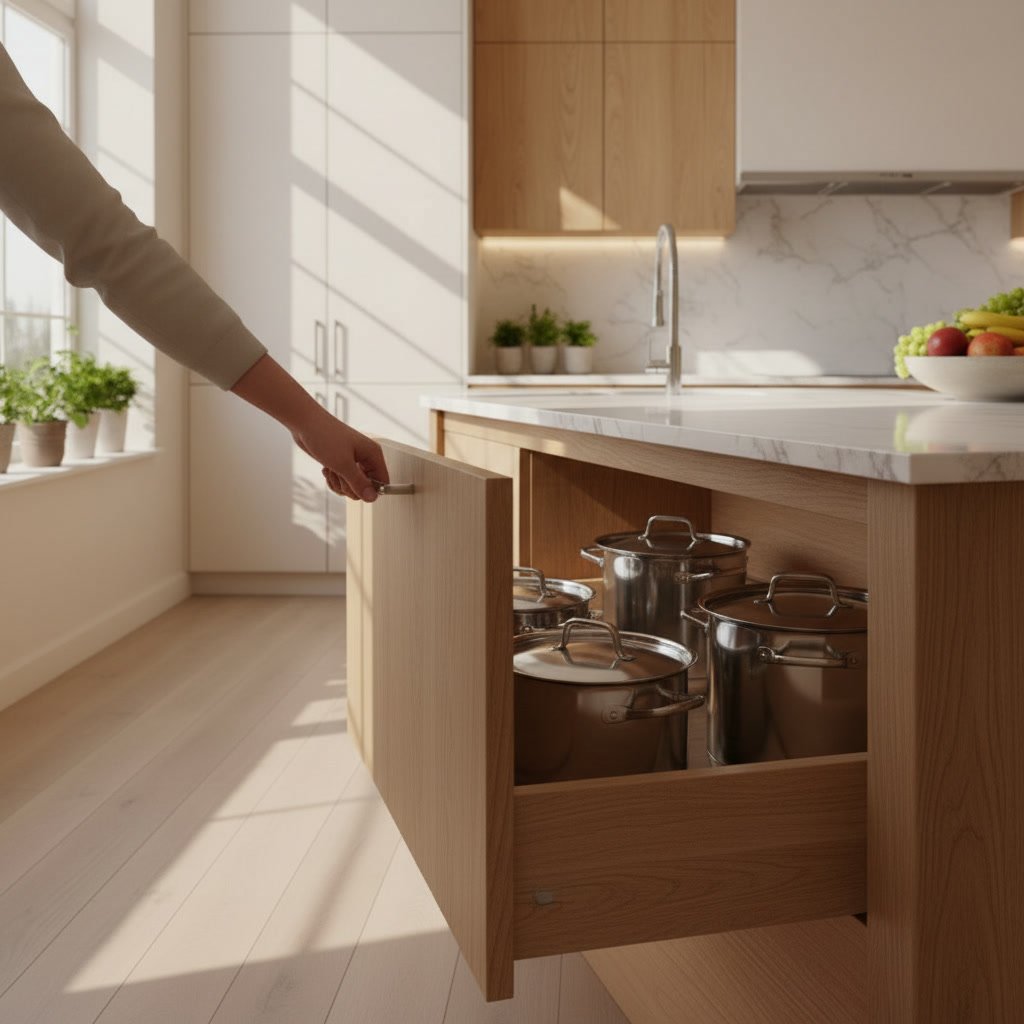
These findings are synthesized from research by House Beautiful, The Coolist, and HomeEdit. The lesson is clear: do not design a concealed kitchen storage system that requires you to stretch, kneel, or move objects out of the way to access a daily-use item. A pull-out pantry system with full-extension slides is always superior to a deep, fixed shelf hidden behind a cabinet door. A pocket door for a walk-in pantry is only valuable if the path to reach it is unobstructed. Think about your daily workflow first, and the aesthetic second. If you cannot grab a can of tomatoes without bending down and moving a basket, you have failed the “reach test.”
The 2026 “Hidden Pantry Door” Hall of Fame (Which Trends are Worth the Money?)
Now for the fun part: the trends. But we are not just listing them. We are ranking them by practicality and resale value. The dominant pantry‑door trends shaping hidden storage this year include cabinet‑color‑matched doors that blend seamlessly into the surrounding cabinetry, space‑saving pocket doors that recess into walls, sleek sliding‑panel or glass‑panel doors that create a hidden passage, lift‑up or roll‑up garage panels for appliances, and minimalist slide‑pantry systems that disappear into a flat wall surface. This list comes from research by Veranda and The Coolist.
Which ones are worth your money? The safest and highest-ROI option is the cabinet-color-matched door. It is essentially invisible to a potential buyer and adds to the overall kitchen cohesion. Pocket doors are excellent for space-saving but require wall modifications, making them a bigger investment. Lift-up garage panels for appliances, like those for toasters or mixers, can feel gimmicky unless they are perfectly integrated with soft-close hardware and a built-in outlet. The slide-pantry system, which looks like a flat wall panel until you push it, is a true hidden pantry door that impresses guests and doesn’t look out of place. Avoid overly complex mechanisms that are prone to failure or that require specific furniture to function.
Kitchen Camouflage Cabinets: The Safe Bet
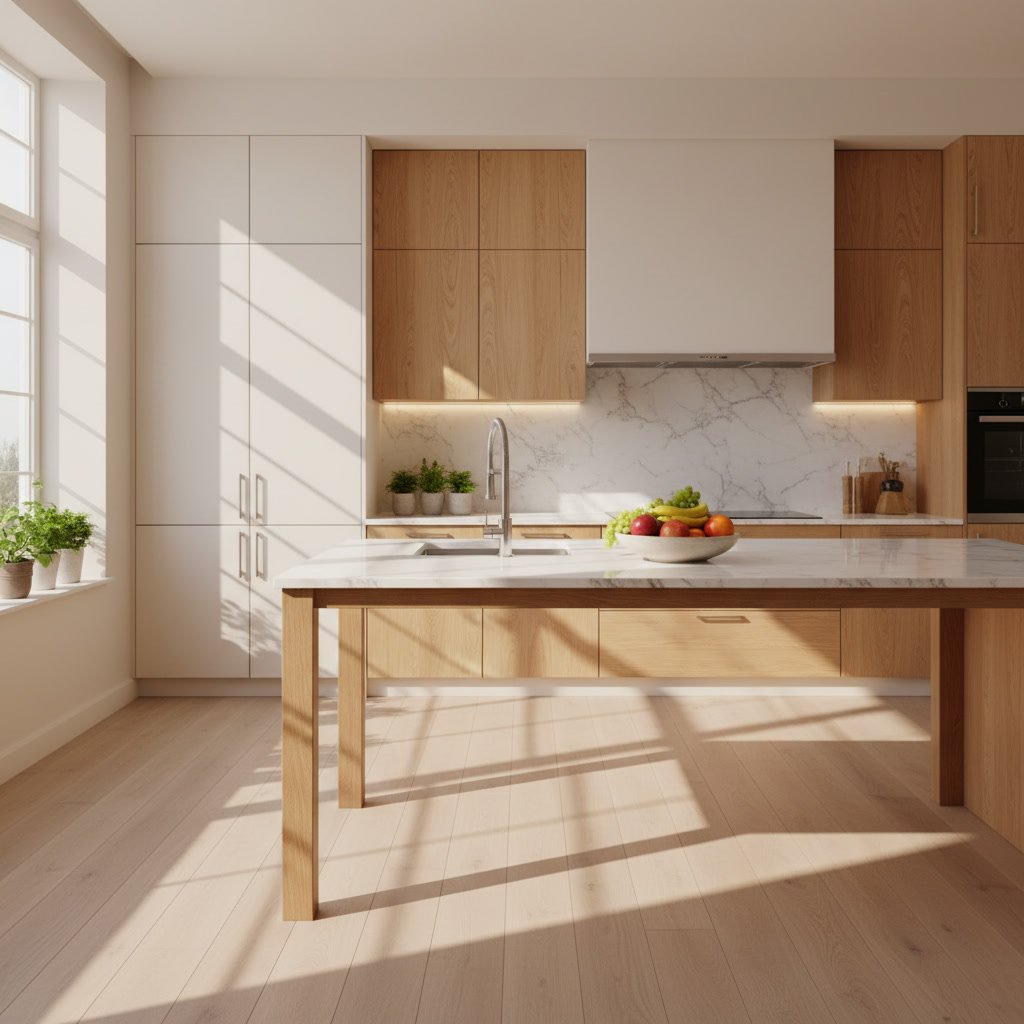
The concept of kitchen camouflage cabinets is at the heart of the hidden storage trend. A door that perfectly matches the surrounding cabinetry is the most cost-effective way to create a concealed kitchen storage solution. It works for pantries, appliance garages, and even small cleaning supply closets. The trick is ensuring the handle or push-latch mechanism is as discreet as the panel itself. Many manufacturers now offer push-to-open latches that eliminate the need for any visible hardware, completing the seamless look.
The “Invisible Kitchen” Shortcut: The Coffee Station That Saves Your Counter (and Your Sanity)
If you are looking for the highest-ROI application of hidden storage, look no further than the built-in coffee station behind double doors. This is not just a luxury; it is a sanity saver for anyone who deals with a cluttered countertop. This setup hides an entire appliance station behind tall cabinet doors that match the rest of the kitchen. When closed, it reads as a continuous wall, with no hint of what sits inside. It keeps daily-use items grouped in one place, reducing movement across the kitchen and keeping the main counter clear.
This specific trend is highlighted in Homedit’s research on the 2026 hidden coffee station trend. Imagine having your coffee machine, toaster, kettle, and even a small grinder all stowed away behind a single set of doors. It is not just about hiding; it is about compartmentalizing the chaos. For a value-conscious renovator, this is a perfect entry point. You need only two tall cabinet doors and a countertop depth of about 24 inches. The result is a dedicated secret kitchen storage zone that feels custom and costs far less than a full walk-in pantry.
Final Verdict: Treat Hidden Storage Like a Smart Investment, Not a Magic Trick
The most important takeaway from this guide is that the magic of the invisible kitchen is not in the hiding, but in the integration. The shift toward invisible kitchens is less about minimalism and more about how space is being used today. As kitchens become fully integrated into living and dining areas, they are expected to blend in, driving a move toward quieter, more cohesive designs. This analysis comes from House Beautiful. The 2026 buyer does not want a kitchen with awkward secret compartments; they want a kitchen that feels whole and purposeful.
So, what is the final verdict on hidden kitchen storage 2026? Invest in solutions that improve your daily access—a pull-out pantry, a color-matched hidden pantry door, or an appliance garage for your coffee station. Avoid anything that compromises reachability or feels like a party trick. For the value-conscious renovator, the best investment is a well-designed behind-cabinet pantry solution that adds genuine functional value and will not scare off future buyers.
If you are ready to start your project, compare products and prices on Amazon. Check the latest price on Amazon.
Frequently Asked Questions
What is the average cost of hidden kitchen storage 2026?
A focused project typically costs between $3,000 and $5,000, with premium custom installations reaching $6,000 to $8,000 for full-extension slides, soft-close hardware, and hidden lighting.
What is the biggest mistake homeowners make with concealed kitchen storage?
The most common regret is poor accessibility. Homeowners often design deep or hidden shelves that are hard to reach, creating wasted space and daily frustration.
Which hidden pantry door trend offers the best resale value?
Cabinet-color-matched doors are the safest and highest-ROI option. They blend seamlessly, add to kitchen cohesion, and do not feel gimmicky to potential buyers.
What is a high-ROI application for secret kitchen storage?
A built-in coffee station behind double doors is the most practical application. It clears countertops and groups daily-use items in one convenient, hidden location.
Does invisible kitchen storage feel gimmicky to resale buyers?
It can, if not done well. The key is integration, not gimmickry. Well-designed, functional hidden storage that prioritizes access is viewed as a valuable upgrade.