

As an Amazon Associate, I earn from qualifying purchases.
⚡ Quick Answer
The best walk in pantry ideas 2026 focus on purpose-driven zoning, layered lighting, and smart integration. A functional walk-in pantry costs between $5,000 and $12,000 for most mid-range projects. The secret to avoiding a clutter cave is installing pull-out drawers, adjustable shelving at 12-16 inches deep, and a dedicated wellness zone for supplements and specialty diets.
Key Takeaways
- Breaking down your pantry into zones (snack, baking, appliance garage, wellness) eliminates the chaos that deep shelves create.
- A walk-in pantry costs $5,000 to $18,000 depending on size, shelving material, and amenities like countertop space or beverage refrigeration.
- Hidden pantry doors are trending as a high-design feature that blends storage with clean kitchen aesthetics.
- Smart inventory sensors and motion-activated LED strips transform a basic pantry into a 2026 lifestyle asset.
- The Budget Question: From $750 to $18,000
- Why Your Pantry Is a Clutter Cave and How Zoning Fixes It
- The 3 Storage Trends Everyone Is Talking About (That You Might Be Missing)
- The Hidden Pantry: A Secret Door as a Status Symbol
- Pros, Cons, and Common Issues
- Conclusion
- Frequently Asked Questions
You close the pantry door and pretend that avalanche of half-empty cereal boxes, mismatched tupperware lids, and dusty spice jars does not exist. That is not a pantry. That is a clutter cave. In 2026, the conversation around walk in pantry ideas 2026 has shifted from “how much can I shove in there” to “how do I make this room work as hard as my kitchen deserves.” The answer is a mix of smart budgeting, purposeful zoning, and a few design tricks that turn a storage closet into a high-performance lifestyle zone.
The Budget Question: From $750 to $18,000
If you are renovating, the first thing you will hit is sticker shock. A walk-in pantry in 2026 can cost as little as $750 for a very basic 25-square-foot retrofit or as much as $18,000 for a fully finished large space with custom cabinetry and appliances. The price spread is not just about square footage. It is about finish level and amenities.
In Mercer County, NJ, builders report reach-in pantry conversions at $1,500 to $5,000, while a full walk-in runs $5,000 to $18,000. Butler pantries with countertops, sinks, and beverage fridges can hit $12,000 to over $45,000. The NKBA recommends a minimum functional walk-in size of 5×5 feet (25 sq ft), but most homeowners land closer to 100 square feet when they commit to the project.
Here is a quick breakdown of what drives cost:
- Shelving system: Wire shelving is budget-friendly at $2,000 to $3,500 for a large space. Melamine or solid wood cabinetry adds $5,000 to $12,000.
- Countertops and cabinetry: Adding a prep surface or sink area significantly raises the cost but also the function.
- Lighting and electrical: Motion-activated LED strips and integrated outlets add $800 to $1,500 but are non-negotiable for a modern design.
The key is to set a realistic budget before you start browsing social media. A $5,000 budget gets you a beautifully organized space with adjustable wire shelving and solid LED lighting. A $15,000 budget lets you add a countertop, cabinet fronts that match your kitchen, and maybe even a small beverage refrigerator.
For more on how a pantry compares to extra cabinetry, check out this guide on walk-in pantry vs extra cabinetry resale value.
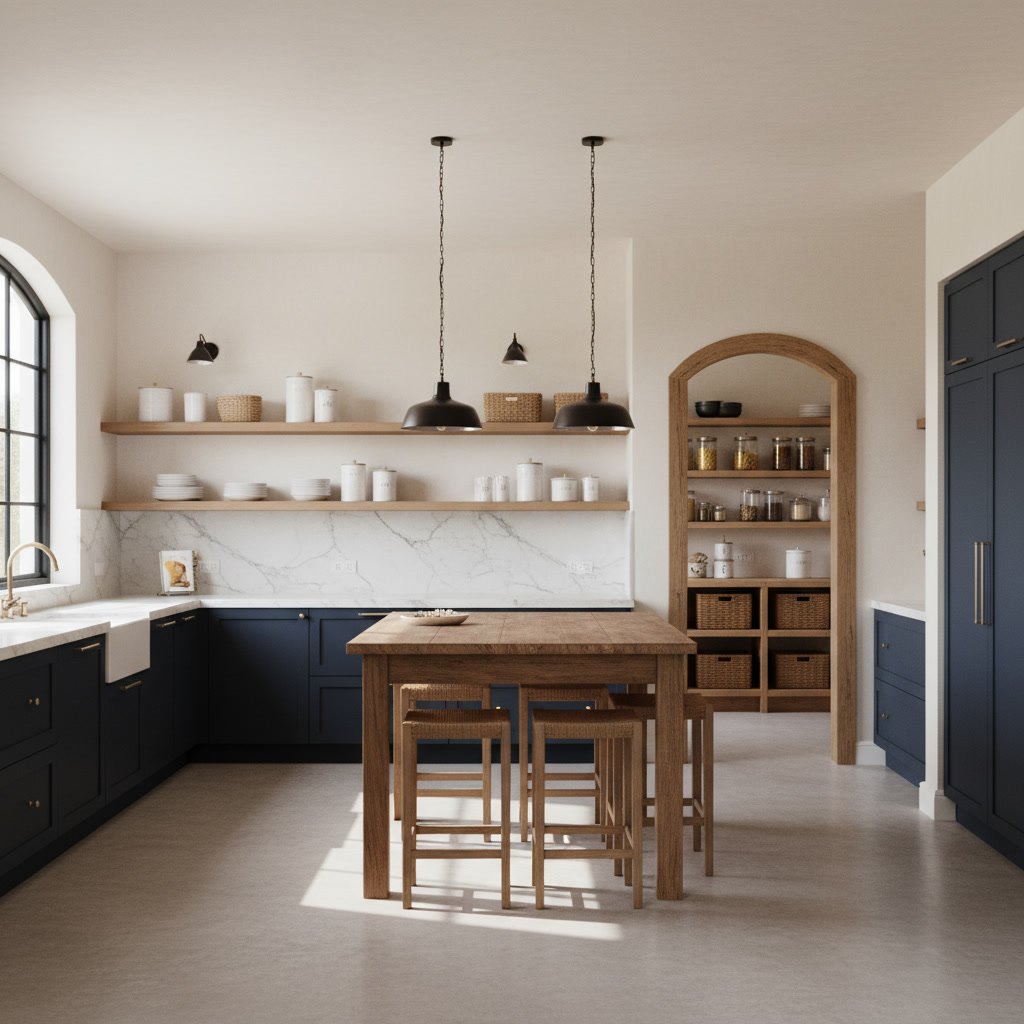
Why Your Pantry Is a Clutter Cave and How Zoning Fixes It
The number one complaint homeowners have about their pantry is that it becomes a dumping ground. The problem is rarely a lack of space. It is a lack of zoning. Mixing breakfast cereal, canned tomatoes, cleaning spray, and dog treats on the same 16-inch shelf is a recipe for chaos.
A modern walk in pantry design solves this by dividing the room into distinct purpose-driven areas. You should never have to dig behind a bag of flour to find the baking soda. Every category gets its own dedicated zone.
Here are the five zones that industry experts recommend for a 2026 pantry:
- Dry goods and baking: Deep drawers for flour, sugar, rice, and pasta. Pull-out shelves for oils and vinegars.
- Canned and jarred goods: Sliding wire baskets or tiered shelving so you can see every label at a glance.
- Snack zone: Lower shelves for kids to reach, plus bins for granola bars, chips, and trail mix.
- Appliance garage: Electrical outlets inside drawers or behind cabinet doors so your toaster, coffee maker, and air fryer stay plugged in but hidden.
- Wellness zone: A dedicated shelf or drawer for supplements, protein powders, and specialty diet items like gluten-free pasta or keto snacks.
Adjustable shelving is the backbone of this system. Standard shelves should be 12 to 16 inches deep. That depth balances visibility with storage density. Deeper than 16 inches and items start disappearing into the dark void. Shallower than 12 inches and you waste vertical space.
For practical examples of pull-out systems and drawer inserts, read our guide on cabinet pull-out shelves upgrade.
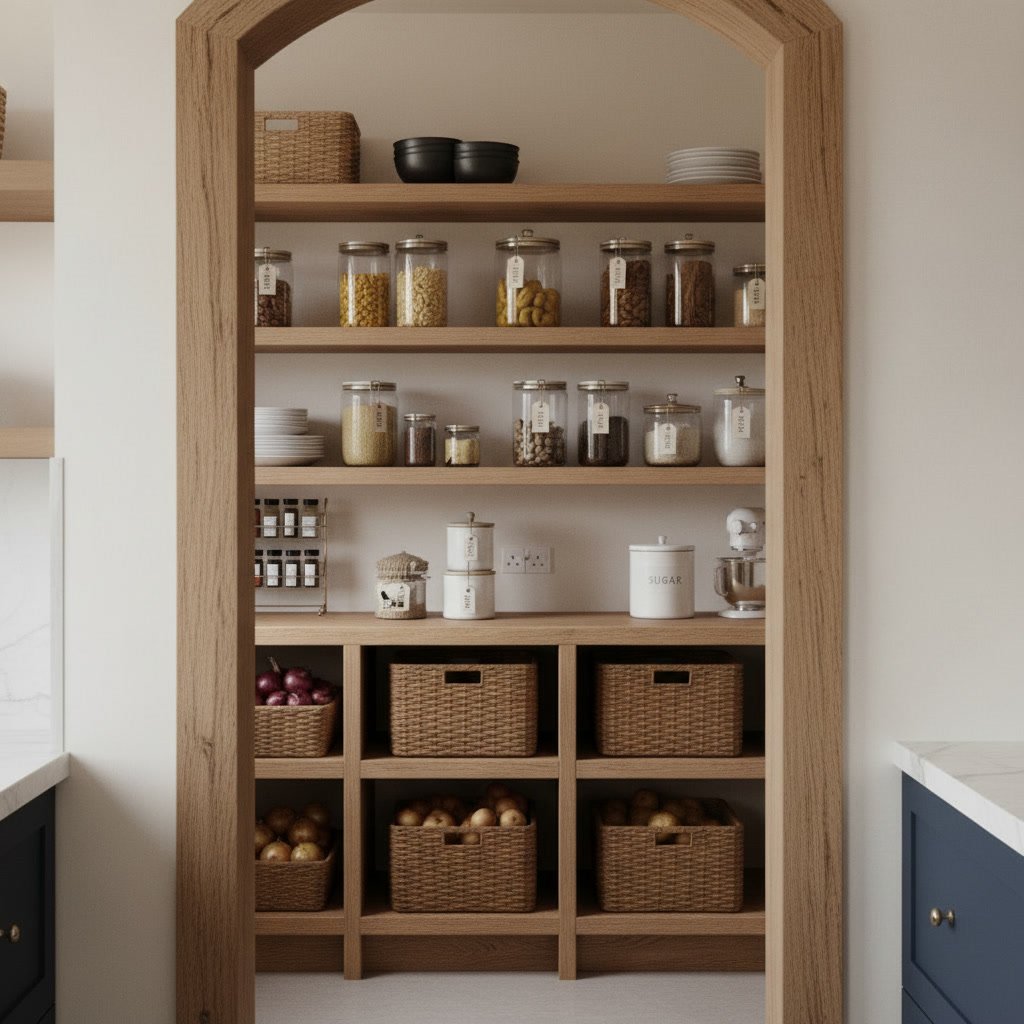
The 3 Storage Trends Everyone Is Talking About (That You Might Be Missing)
Walk-in pantries in 2026 are not just about shelving. The luxury pantry goes beyond basic storage to include features that make daily cooking feel effortless. Here are three trends that separate a standard pantry from a truly modern walk-in.
Zoned Storage Built Around Real Life
Purpose-driven zoning is the biggest trend of the year. It is not just about grouping similar items. It is about understanding how your family actually uses the pantry. A baking enthusiast will need a zone with a stand mixer, rolling pins, and a deep drawer for flours. A busy parent needs a grab-and-go snack station at waist height for kids. A health-focused household will benefit from a wellness shelf with supplements and superfoods visible at eye level.
The Smart Pantry
Integrated technology is moving into the pantry. This does not mean you need a full smart home system. Even a basic setup with motion-activated LED strips that turn on when you open the door makes a massive difference. Some homeowners are adding inventory sensors for staple items like coffee, rice, and pasta, which can be set to auto-reorder through a connected app. Charging outlets built into drawers mean your phone and tablet stay powered while you follow recipes.
The Room Effect
Pantries are moving away from being dark closets with a single bare bulb. Designers are treating them as actual rooms with layered lighting, a flush-mount fixture for ambient light, and under-shelf LED strips for task lighting. This approach makes the space feel inviting rather than like a cave. If you are spending thousands on organization, spending a few hundred on lighting is an easy upgrade that makes everything look better and function smoother.
For more inspiration on lighting options, see this article on kitchen pantry trends for 2026.
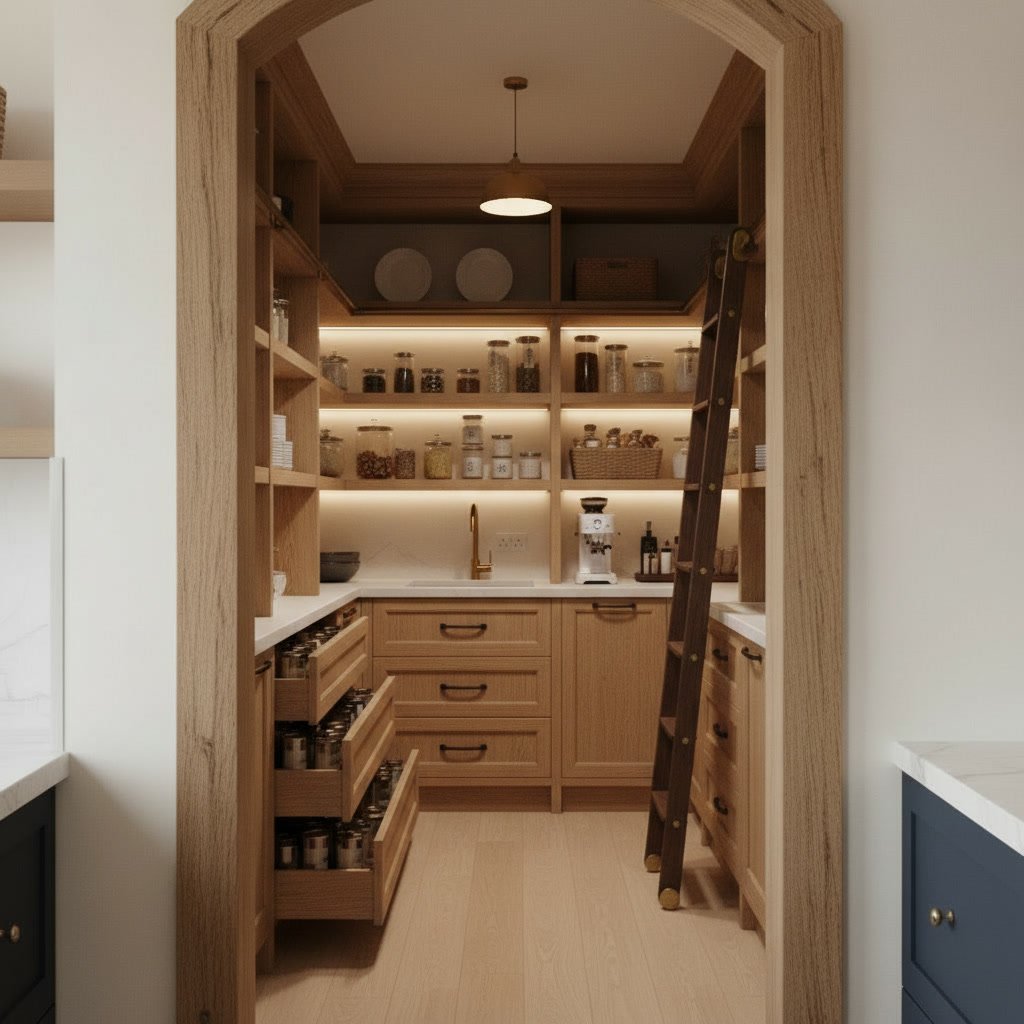
The Hidden Pantry: A Secret Door as a Status Symbol
One of the most visually compelling trends is the hidden pantry. Instead of a standard door that screams “storage,” the entrance is concealed behind cabinetry, a sliding barn door, or a false cabinet front. This creates a clean, unbroken line in your kitchen that makes the space feel larger and calmer.
The visual payoff is huge. Open kitchens with visible pantry doors often look cluttered even when they are tidy. A hidden door creates a “soft luxury kitchen moment” with clean lines and calm energy. You get the function of a massive pantry without the visual noise.
Designers are getting creative with entry points. Some put the pantry entrance inside a mudroom or hallway, making it a pass-through from the garage where groceries arrive. Others use a cabinet front that matches the surrounding kitchen millwork so perfectly that guests would never guess it opens into a 100-square-foot pantry. This is not just about aesthetics. A hidden walk-in pantry can increase resale value. Zillow reports that butler pantries lift sale speed by 4 to 7 percent in certain markets.
A hidden walk in pantry also feeds into the “quiet luxury” trend in kitchen design. Rather than flaunting massive storage, you choose to let your home feel serene. That serenity is exactly what a well-designed kitchen should deliver.
Pros, Cons, and Common Issues
No design choice is perfect. Here is an honest look at the benefits and drawbacks based on what homeowners and builders report.
| Pros | Cons |
|---|---|
| Massive storage capacity minimizes kitchen cabinet clutter | High initial cost, especially with custom cabinetry |
| Zoned organization eliminates the “clutter cave” problem | Takes up square footage that could be used for other rooms |
| Hidden doors boost home aesthetics and resale value | Poor lighting and ventilation lead to food spoilage |
| Smart integration saves time and reduces food waste | Deep standard shelves (18 inches or more) cause items to disappear |
One common complaint is that even after a big investment, pantries can still become chaotic if the zoning plan is not followed every day. That is why pull-out drawers and easy-access features are critical. If you have to bend down and dig behind cans of beans to grab a jar of olives, you will eventually stop maintaining the system.
Poor ventilation is another hidden issue. Pantries that lack airflow can develop humidity problems that cause food to spoil faster. Experts recommend adding a small ventilation fan or ensuring the space has a proper HVAC register.
For a deeper look at how to organize different categories, check out our pantry organization ideas 2026 guide.
Conclusion
Planning your walk in pantry ideas 2026 is about more than just buying shelves. The best designs start with a clear budget, a zoning strategy, and a commitment to making the space feel like a real room rather than a dumping ground. If you invest in adjustable shelving, layered LED lighting, and a smart layout that matches your actual cooking habits, you will never want to go back to a standard cabinet pantry. For those who want the ultimate in quiet luxury, a hidden door that blends into the cabinetry is the finishing touch that elevates function into a design statement.
Check the latest price on Amazon
Frequently Asked Questions
What are the best walk in pantry ideas 2026 for a small space?
For small walk-in pantries, focus on vertical storage with adjustable shelving at 12 inches deep. Use pull-out drawers instead of fixed shelves, and install motion-activated LED strips to eliminate dark corners. Even a 5×5 foot room can hold a surprising amount if you zone it properly and use the full wall height.
How does modern walk in pantry design differ from traditional pantries?
Modern walk in pantry design in 2026 emphasizes purpose-driven zoning, smart integration, and layered lighting. Traditional pantries rely on deep fixed shelves that create clutter caves. Modern designs use dedicated zones for snacks, baking, appliances, and wellness, plus adjustable shelving and concealed doors for a cleaner aesthetic.
What is a butler pantry and how is it different from a walk-in?
A butler pantry is a larger, more elaborate space that typically includes a countertop, prep sink, and often a beverage refrigerator or wine cooler. It functions as a secondary prep kitchen. A standard walk-in pantry is primarily for dry storage. Butler pantries usually start at 48 square feet and cost $12,000 to $45,000+.
How much does a luxury walk in pantry cost in 2026?
A luxury walk in pantry with solid wood cabinetry, stone countertops, integrated appliances, and smart lighting typically costs between $12,000 and $18,000. High-end systems with custom oak interiors, concealed lighting, and specialized appliance niches can exceed $18,000, especially if they include a prep sink or beverage center.
What are the best types of walk in pantry shelving?
For walk in pantry shelving, adjustable melamine or solid wood shelves are best for durability and aesthetics. Wire shelving is budget-friendly and breathable, but can dent cans. Pull-out drawers are essential for lower cabinets to prevent items from disappearing in the back. Standard shelf depth should be 12 to 16 inches for best accessibility.