

If you’ve ever spent 10 minutes searching for pasta sauce behind every bag of chips in your kitchen, you know how stressful a messy pantry can be. Pantry organization ideas are more than inspiration—they’re a practical roadmap when every inch counts and every dollar matters. After transforming my own galley kitchen pantry (and restoring order after countless family “snack tornadoes”), I’ve tested the shelving, bins, and systems that keep small and medium spaces working—on a budget.
As an Amazon Associate, I earn from qualifying purchases.
⚡ Quick Answer
Pantry organization ideas in 2026 start with measuring your shelves and auditing what you store, then investing $700–$1,000 in modular storage solutions tailored to your space. Vertical stacking, clear labeled containers, and zone systems work for both small pantries and walk-ins, while smart features (like pull-out racks and digital labels) boost function without blowing your budget.
Key Takeaways
- Measuring and planning before shopping prevents wasted money on containers that won’t fit or suit your pantry layout.
- Expect to spend about $700–$1,000 for a modular pantry storage solution with expansion options—much less than full custom cabinetry.
- Small pantry organization ideas that truly work use vertical space, door organizers, pull-out racks, and clear, labeled bins.
- Walk-in pantries now feature smart shelving, modular acrylic drawers, built-in lighting, and digital labeling for effortless upkeep.
- Why a pantry plan matters before you shop
- How much will a modular pantry storage solution cost in 2026?
- Quick pantry audit: measure, inventory, and prioritize
- Small pantry organization solutions that actually work
- Walk‑in pantry trends competitors are missing (high-impact, modern features)
- Designing a pantry zone organization system (what to put where)
- Smart shelving layout ideas and fixtures that save space
- Best container types and labeling strategies (styles + sizes)
- Product recommendations and budget tiers (starter, mid-range, luxe)
- Step‑by‑step implementation plan + shopping checklist
- Before/after styling ideas and small photo brief for inspiration
- FAQ
Why a pantry plan matters before you shop
Most pantry organization ideas fail at the first shopping trip. Why? Buying containers before measuring. Over-categorizing until even salsa gets its own bin. Forgetting to label and—or worse—over-labeling to the point that nobody can keep up.
Research consistently finds common frustrations: shelving bins that don’t fit, lost ingredients in deep corners, and endlessly “organized” pantries that unravel in a week. The fix: pause before adding a single thing to your cart. Audit what’s in your pantry first, take clear measurements, then plan your categories and layout. One hour spent upfront saves you hours restocking and hundreds wasted on the wrong bins.
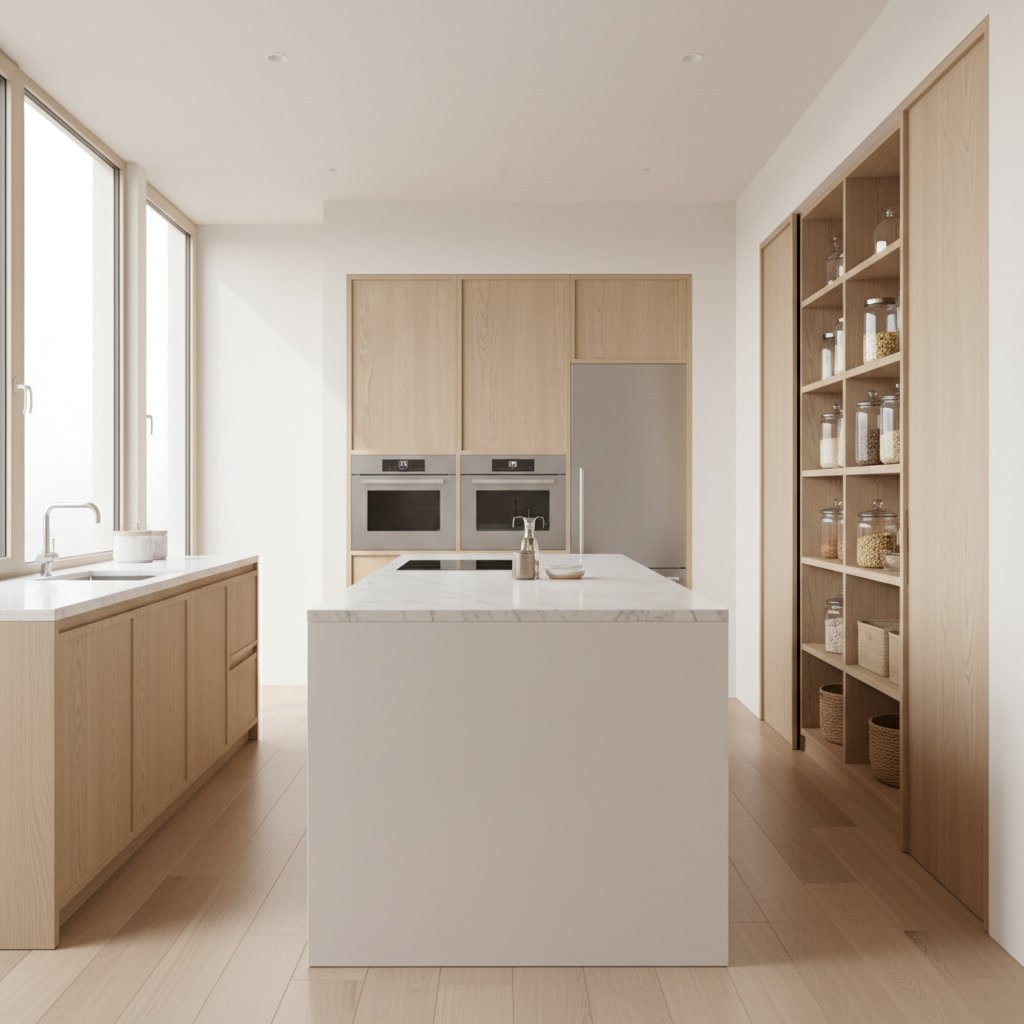
How much will a modular pantry storage solution cost in 2026?
Let’s get real about costs—most folks can’t (and shouldn’t) drop $4K+ on a full custom build. But modern pantry storage solutions are refreshingly affordable compared to years past.
- Starter (single cabinet/module): $350–$400 (source)
- Modular mid-range (2–3 pieces): $699–$1,000
- Larger setups/custom cabinetry: $1,300–$2,600+ (source)
Most homeowners looking for capacity and growth flexibility wind up happiest spending in the $700–$1,000 sweet spot. For that, you can build out an expandable system with features like adjustable shelves, integrated pull-outs, and lighting upgrades.
Full luxury, floor-to-ceiling walk-ins with all the bells run more but are rarely needed for small and mid-size kitchens. Keep your spend proportional to your space and needs.
Quick pantry audit: measure, inventory, and prioritize
Before any purchases, do a ruthless pantry audit:
- Measure every shelf, wall, and nook. Grab a notepad and tape measure. Note depths—most mistakes happen here, especially with deep wire shelves.
- Map out hard-to-reach or dim corners. That’s where sneaky bulk items hide (and where cardboard boxes pile up, making things worse).
- List everything by use: daily grab-and-go? Occasional baking gear? Group by frequency, not just “type.”
- Spot weak points: Tipping shelves, items always buried, or awkward large boxes? Write those down.
According to multiple pantry organization studies, the most common small-pantry troubles are shelves that tip or dump, boxes that eat all your space, and deep/dark corners where you find the mystery can from 2018 (source). Fixing these is the foundation for all small pantry organization ideas that truly last.
Small pantry organization solutions that actually work
If your “pantry” is really a single cabinet, reach-in closet, or one cluttered wall, these are the only small pantry organization ideas that work after the first month:
- Vertical risers & stackable shelf risers: Double shelf space for under $20 using stackable shelf risers. They’re perfect for canned goods, mugs, or even pasta jars.
- door organizers: Screw-mount or adhesive racks on the inside of doors add instant spice or snack storage. I love these for meal-prep snacks packed at 7 a.m. on busy days.
- Slim pull-out shelf kits: For shelves deeper than 12″, use pull-out shelf kits to bring hidden items to you. No more crawling on the floor.
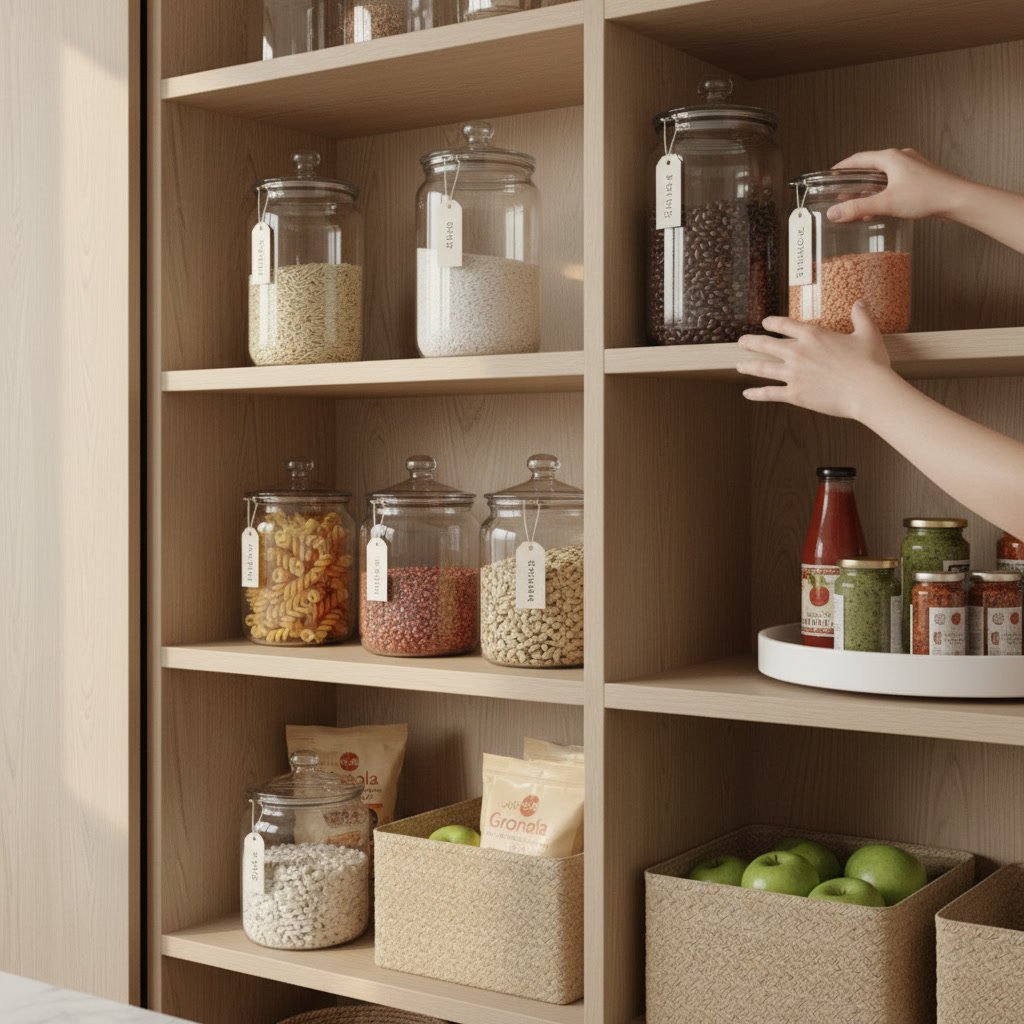
- Clear, labeled pantry containers: Make contents visible and say goodbye to cardboard. I use these airtight sets for flour, cereal, and snacks.
- Avoid over-labeling: Use broad categories (Lunch, Baking, Cans)—not a separate label for every nut or noodle. Too many categories = zero sustainability.
Pro Tip: Always measure shelf height and depth before ordering containers—most big-box sets assume 12″ shelves, but yours could be shallower (speaking from hard-earned experience!).
Walk‑in pantry trends competitors are missing (high-impact, modern features)
Most design blogs gush about walk-in pantries, but the features that actually change your day-to-day are easy to miss:
- Pull-out racks and rotating (LeMans) shelves: These make every inch of a walk-in usable, especially for lower corners or baking staples.
- Modular acrylic drawers: Fully transparent, stackable, and available in all sizes. These keep dry goods, snacks, and even small appliances organized (and visible).
- Built-in LED lighting: Motion-activated means no more dark corners, ever. It’s a minor upgrade that’s life-changing for midnight snackers and pre-dawn meal preppers.
- Hidden work zones: Add a small portion of countertop space, and suddenly your pantry is a meal-prep hub or coffee nook (see coffee station kitchen).
- Inventory tracking and digital labels: Clear containers paired with stick-on QR labels and basic inventory apps let you know when to restock—no more buying seven bags of rice by accident.
According to 2026 trend reports, these features are what most walk-in pantry organization strategies are missing (source).
Designing a pantry zone organization system (what to put where)
If you’ve ever lost the peanut butter for a week, a pantry zone organization system is your fix. Here’s how to set up zones that work, even in tight spaces:
- Eye level: Everyday items—cereal, coffee, grains, easy-grab snacks.
- Lower shelves: Heavy bottles, flour bins, bulk jars.
- Kid-height zones: Healthy snacks, lunch prep, items safe for little hands.
- Baking/cooking zone: All baking supplies grouped together in stackable bins (measuring cups on hooks above).
- Meal-prep/reset zone: A small open shelf or bin for weeknight dinner staples.
The best part? This system adapts to both tiny pantries and sprawling walk-ins. In small setups, use vertical stackers and turntables. In walk-ins, use wraparound shelves, clear drawers, or even dedicated appliance garages (read more).
Setting up clear zones in your pantry, even with a limited budget, boosts speed and sanity when prepping family meals.
Smart shelving layout ideas and fixtures that save space
Whether you’re working with built-in closets or starting fresh, smart pantry shelving layout ideas make the biggest visual (and functional) difference.
- Full-height adjustable shelving: Fits tall cereal boxes and small sauce jars alike—dials in your layout to what you have, not what you wish you had.
- Wraparound shelves: Especially in walk-ins, these prevent dead zones in corners and behind the door.
- Pull-out drawers: Perfect for deep cabinets. You’ll never lose another can of tomatoes to the abyss. Drawers “allow you to pack your pantry full without losing access to items in the far back corner” (source).
- Adjustable risers & under-shelf baskets: Instantly double usable space on every shelf—especially for spices, mugs, and baking supplies.
- Suggested shelf heights: 14–16″ for cereal, 12″ for pasta jars and bins, 6–8″ for cans and condiments.
You don’t need a remodel—strategic fixtures do most of the work. Modular kits and shelf risers let even renters make big changes (find quick wins in our shelf riser guide).
Best container types and labeling strategies (styles + sizes)
The magic of truly functional labeled pantry containers is visibility—so you see what you have and actually use it. Here’s how I break it down after years of testing:
- Clear airtight canisters: Best for grains, pasta, cereal. Look for wide mouths and stackable lids. See top-rated picks.
- Modular acrylic drawers: Use for packets, snacks, baking supplies—especially in deep or hard-to-reach spots.
- Stackable bins & baskets: Great for grouping snacks or produce. Wicker adds visual warmth and can be labeled discreetly.
- Flexible bag dispensers: Hang inside your pantry or on wall rails for storing reusable bags, wraps, and more.
Labeling strategies:
- Permanently printed labels: Great for core staples, but only if your system never changes.
- Erasable chalk or dry-erase labels: My go-to for snacks and “what’s new” bins—keeps clutter down.
- Digital QR or smart labels: Scan to track expiration dates and get inventory reminders. These are increasingly common (and fun for techies!).
A recent trend: Combining clear containers with QR/digital labeling is catching on for serious meal planners, but don’t underestimate a simple (and legible!) handwritten label.
Product recommendations and budget tiers (starter, mid-range, luxe)
I’ve tested dozens of systems over the years, from DIY shelf risers to plug-and-play modular cabinets. Here’s what I truly recommend in 2026:
Entry-level modular cabinet or single module ($350–$400)
- Povison Modern Modular Cabinet—Tight fit for small pantries, simple expansion when you move.
- Stackable shelf riser set—Incredible value and immediate impact for under $30.
Expandable 2–3 piece systems ($699–$1,000)
- Expandable modular pantry system—Standard widths, builds out to a full wall over time.
- Acrylic drawer kit for pantries—Glides easily, packs in more than you’d expect.
Luxe/full-wall setups ($1,300–$2,600+)
- Pull-out pantry rack—Professional-grade visibility in oversized spaces.
- Motion-activated LED pantry lighting—Upgrade for dark corners, especially in walk-ins.
- Smart digital pantry labels—Ideal for families that meal prep or batch shop.
Custom small walk-in builds run $750–$2,000, with larger walk-ins from $2,000–$3,500 (source). Most people find maximum value by starting small and expanding over time.
Step‑by‑step implementation plan + shopping checklist
Whether you’re DIY-ing or hiring pros, a clear step-by-step plan makes your pantry organization ideas stick:
- Audit and measure: Record shelf widths, heights, and depths.
- Purge and group: Remove expired, never-used items. Group and zone what remains.
- Order modules, containers, and fixtures: Pick expandable options that suit your space.
- Install shelving and lighting: Start with the basics, then layer “nice-to-haves.”
- Fit containers and zones: Place bins, baskets, and pull-outs in their final homes.
- Final styling and labeling: Use broad, simple categories for best results.
- Monthly quick check: Toss expired food, shift categories as you go.
- Deep clean every 6 months: Remove everything, wipe down, revisit your plan (source).
Printable Shopping Checklist
- Entry (<$400): Shelf risers, clear bins, door organizer, label maker, measuring tape.
- Mid-range ($700–$1,000): Modular cabinet (2–3 pieces), motion-activated LED strip, stackable acrylic drawers, pull-out rack, erasable labels.
- Luxe ($1,300+): Full wall modular system, integrated countertop or work zone, digital labeling system, custom-fit wicker baskets.
For everything, shop today’s top-rated pantry solutions here.
Before/after styling ideas and small photo brief for inspiration
Yes, function comes first, but nothing matches the satisfaction of a “wow” pantry reveal. For 2026, mood boards are full of:
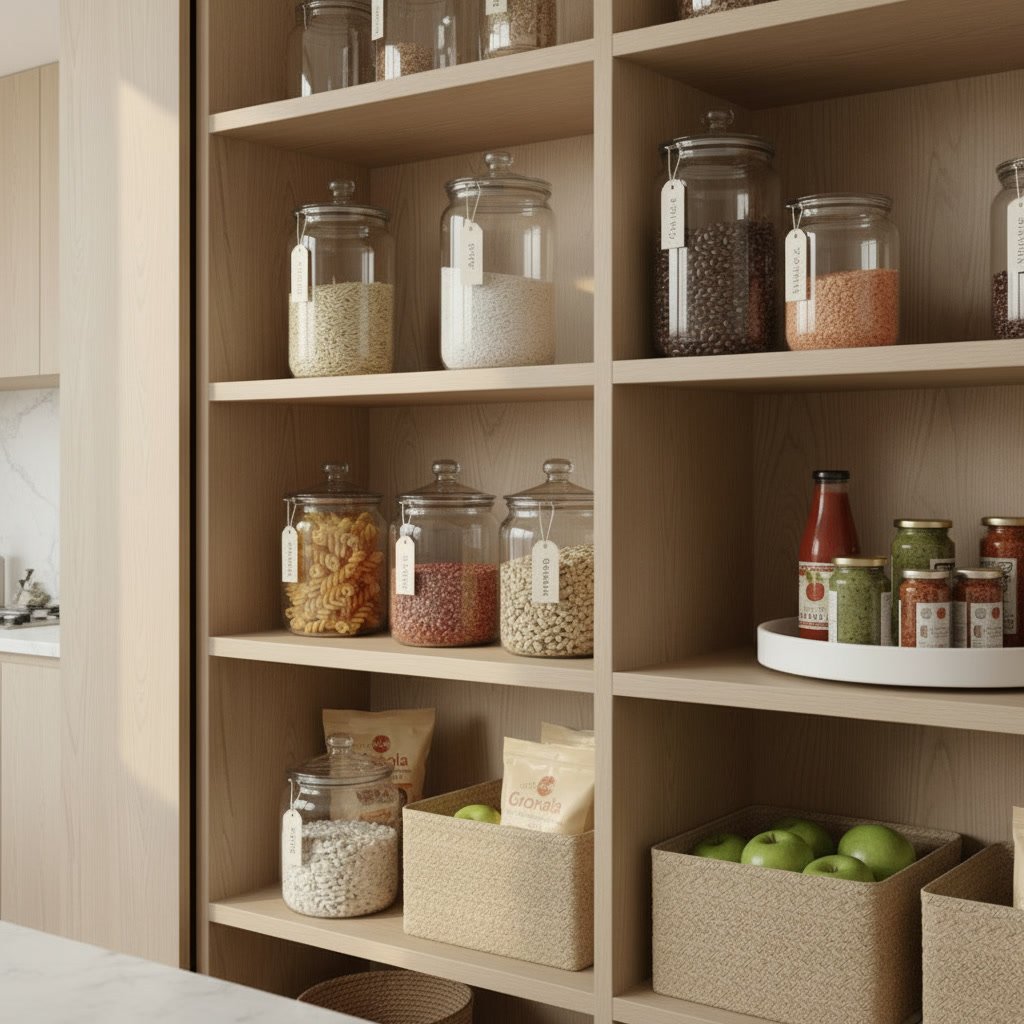
- Soft neutrals and Scandinavian sleek: Use pale paint, wood bins, and clear containers for a minimalist hotel-pantry vibe.
- Warm rustic and heritage-inspired: Add wicker bins, wood accents, and chalkboard labels for a cozy farmhouse look.
- Label-lover setups: Show off your labeling system. Photography close-ups of bins and drawers pop on social.
- Hidden tech details: Subtle LED lighting, digital labels, and integrated charging for walk-in pantries.
Photo brief:
- Wide “before” shot (real clutter)
- Measured layout (painter’s tape on shelves)
- Close-ups of zones and labeled containers
- After: glowing, clean lines with product micro-copy (e.g. “Stackable acrylic drawers, $39, Amazon”)
Recent design trends all circle back to three principles: clean lines, great lighting, and easy access—using drawers that pull out so you can “pack your pantry full without losing access to items in the far back corner.”
FAQ
What are the best pantry organization ideas for small kitchens?
Use vertical space with shelf risers, stackable bins, and door organizers. Remove bulky packaging, stick to broad categories for labeling, and invest in pull-out shelves or acrylic drawers to keep everything visible.
How much does it cost to organize a pantry in 2026?
A functional, expandable modular pantry storage solution costs about $700–$1,000 for most homeowners. Starter kits begin around $350, while full custom walk-ins can reach $2,600+.
What’s the most efficient pantry shelving layout?
Full-height adjustable shelving and pull-out drawers work for any size pantry. In walk-ins, wraparound shelves and under-shelf baskets maximize access. For small spaces, stacking and door organizers add instant capacity.
Are labeled pantry containers really worth it?
Yes—clear, labeled pantry containers prevent food waste and make it easy to see what you have. Just avoid over-labeling; broad categories (like “Snacks” or “Baking”) are easiest to maintain.
How do I keep my pantry organized over time?
Plan a quick monthly cleanup to remove expired items, and do a full reset every 6 months. If your zones or categories stop working, adjust them—organization is a process, not a one-time fix.