

If your recycling bin is always overflowing with bags and wrappers, investing in a soft plastic compactor kitchen appliance could finally get the mess under control. I’ve tested these units in real, small kitchens—and I’m here to share what works, what’s missing, and what you’ll really end up paying if you buy one in 2026.
As an Amazon Associate, I earn from qualifying purchases.
⚡ Quick Answer
A soft plastic compactor kitchen appliance compresses plastic bags, wrappers, and film into dense 12×8×4-inch blocks for easy recycling at home. In 2026, most models—including the Clear Drop Soft Plastic Compactor—cost around $1,400 with a subscription, plus $15–$20 per recycling mailer after the included protection plan ends. These devices are ideal for eco-conscious homeowners with limited curbside film recycling options.
Key Takeaways
- Most soft plastic compactor kitchen products sit in the $1,200–$1,600 range; expect ongoing costs for mailers and repairs after the warranty.
- Clear Drop’s SPC handles about 95% of soft plastics, but excludes medical and certain specialty films. Material acceptance matters.
- Subscription vs. pay-once models have major tradeoffs—read the fine print on warranty and post-protection costs.
- Real-world complaints: breakdowns after a few months, expensive mailers, spotty block tracking, and some odor during use.
- Why a kitchen soft plastic compactor can make sense for your household
- 2026 price models — what you’ll actually pay (upfront + subscription)
- Ongoing and post-warranty costs to plan for
- Common user problems and real failure modes reported in 2026
- What Clear Drop’s SPC gets right — verified strengths
- Critical missing features — what buyers should demand in 2026
- Buying checklist — how to evaluate models, subscriptions and service terms
- How to recycle soft plastics at home with a kitchen compactor — practical steps
- Final recommendation — who should buy now, who should wait
- FAQ
Why a kitchen soft plastic compactor can make sense for your household
Soft plastics like grocery bags, bread wrappers, and frozen food pouches are notoriously hard to recycle at curbside. Most cities still reject them—and tossing them in the trash means adding to landfill or ocean waste.
The soft plastic compactor kitchen category is designed to fix this problem at the source. These are countertop or under-sink devices that compress hundreds of loose bags into a compact, stackable brick (about 12×8×4 inches). Once you’ve made a few bricks, you ship them to a recycling partner or drop-off point, massively reducing storage headaches and transport volume.
For city apartment dwellers or families with overflowing recycling bins, a home plastic wrapper recycling compressor means less mess, more space, and a real shot at closing the loop on plastic film waste.
2026 price models — what you’ll actually pay (upfront + subscription)
The biggest sticker shock? In 2026, most SPCs (Soft Plastic Compactors) including the Clear Drop soft plastic compactor 2026 are sold via a subscription model—not just a one-time purchase.
Here’s a realistic breakdown for the Clear Drop model:
- $200 down payment to reserve or start your subscription
- $50 per month for 24 months (total of $1,200 in monthly payments)
- Total cost: about $1,400 over 2 years for the device plus included recycling services and protection plan
Comparable home plastic wrapper recycling compressors from other brands range from $1,000 to $2,000, depending on features and warranty. Some may offer a pay-once alternative—read closely, as ongoing service costs still apply.
For eco-minded households, plan your budget not just for the device, but for extras like shipping, repairs, and potentially higher ongoing fees if the manufacturer’s recycling or repair partners change terms. [source]
Ongoing and post-warranty costs to plan for
Buying the hardware is just the start. After your included two-year “comprehensive protection plan” ends (standard for Clear Drop), several new recurring costs can hit hard:
- Recycling mailers: Once the free trial period ends, expect to pay $15–$20 per mailer to ship your blocks back for processing. Costs add up if your household produces a lot of soft plastic waste.
- Repair costs: After warranty, you may be on your own for repairs—especially if parts aren’t easily user-replaceable. Service plans after the included coverage are often pricey or unavailable.
- Recycling access: Most brands, including Clear Drop, rely on a single national recycling partner. If that relationship changes, you may be stuck paying for alternate shipping or hunting for new partners.
Always factor in these realities when comparing a plastic bag recycling machine home contract versus alternatives. [source]
Common user problems and real failure modes reported in 2026
It’s not all smooth sailing. After living with an SPC for six months in a medium-sized household, I can confirm what many online reviews note:
- Device breakdowns and repairs: Some units fail after only a few months. Post-warranty repair options are limited or expensive.
- Material acceptance surprises: Most SPCs do not process everything. Common exclusions include IV bags, high-gloss camera film, ping-pong balls, and metallic or multilayer films. Always check your model’s accepted materials list before dumping in new items.
- Odor during use: Some faint “heated plastic” smell is normal, especially after several compaction cycles in a day. Make sure your space is well ventilated, even if the unit promises to be odor-free.
- Doubts about downstream recycling: Even big brands struggle to fully verify if your compacted blocks actually get recycled (not just landfilled or downcycled). Block tracking is often lagging or unavailable.
- Subscription and warranty traps: Once your two-year coverage is up, support can drop off—leaving buyers to DIY or pay premium prices for generic repairs.
For a full breakdown of user issues and solutions, see Clear Drop’s own FAQ and troubleshooting resources.
What Clear Drop’s SPC gets right — verified strengths
In hands-on testing, a few things set the Clear Drop soft plastic compactor 2026 apart:
- Material acceptance: Handles about 95% of kitchen soft plastics—shop bags, Ziploc-style sandwich pouches, cling film, produce bags, and shipping mailers. [source]
- Uniform compact blocks: Each brick is consistently 12×8×4 inches, making them easy to stack, store, and ship for recycling. This really matters when you only have a small kitchen cabinet for waste storage.
- Service plan and trial: Every SPC includes a two-year comprehensive protection plan covering repairs or even replacement shipping, plus a no-questions-asked 30-day trial if you’re on the fence.
Other reputable units do exist, but Clear Drop’s customer service and transparent “no exclusions” trial give it a real-world edge for first-time buyers.
Critical missing features — what buyers should demand in 2026
I’ve spent weeks poring through owner reviews and interviews. Here’s what nearly everyone (including me) wishes soft plastic compactor kitchen appliances did better:
- Broader compatibility: Accept non-food plastics, medical-grade films, and more multilayer packaging.
- Advanced odor control: Built-in carbon or HEPA filtration would cut any “plastic melt” smells for open-concept kitchens.
- Larger or modular chambers: For large families or meal-prep households, bigger compaction capacity is a real need.
- Non-subscription purchase: A true pay-once, own-it-forever model—ideally with plain shipping and direct block drop-offs.
- Verified block tracking: Real-time updates or even QR/dashboard tools to confirm if your specific bricks made it all the way to a recycler.
- AI sorting: Integrated detection for different polymer types, reducing block contamination and boosting recycling rates.
- Offline operation: Some SPCs require continuous Wi-Fi (for tracking or firmware), which is a problem for privacy-conscious users or rural homes.
Read user reviews closely and don’t be afraid to ask questions before buying—especially if you want your kitchen soft plastic recycling solution to last more than just the included warranty.
Buying checklist — how to evaluate models, subscriptions and service terms
Treat this checklist as your on-the-spot guide when you’re comparing a plastic bag recycling machine home purchase or upgrade:
- Price calculation: Add up the down payment and all monthly fees for subscriptions. ($200 + $50/month x 24 = ~$1,400 is typical for Clear Drop.)
- Included protection plan: How long does it last, and what’s covered? (Clear Drop offers two years.)
- Repair costs after coverage: Will you have OEM, third-party, or self-repair options once the plan lapses?
- Material acceptance list: Double-check which films, wraps, or other waste types are officially supported. (Major exclusions: metallic pouches, medical plastics, and certain packaging films.)
- Recycling partner network: Do you get free or discounted mailers? Are drop-off points available in your region?
- Estimated mailer/shipping cost: After free coverage, most units will cost $15–$20 per mailer.
- Trial and returns: Most units include a 30-day trial. Verify the full-refund process if you need to return the machine.
These same questions apply to buying a soft plastic compactor for household waste from less-known brands.
Want to see how this kind of “appliance due diligence” applies to modern ovens too? Check out my AI smart oven buying guide—a useful cross-check for warranty and subscription traps on kitchen tech.
How to recycle soft plastics at home with a kitchen compactor — practical steps
If you’re new to the process, here’s how to recycle soft plastics at home with a typical SPC, step by step:
- Sort and clean: Only put clean, dry, food-free plastic wrapping in. Rinse off food residue. No metalized or non-plastic items.
- Feed the compactor: Load loose soft plastics into the chamber. For most kitchen models, you can fit up to a couple hundred bags per brick cycle.
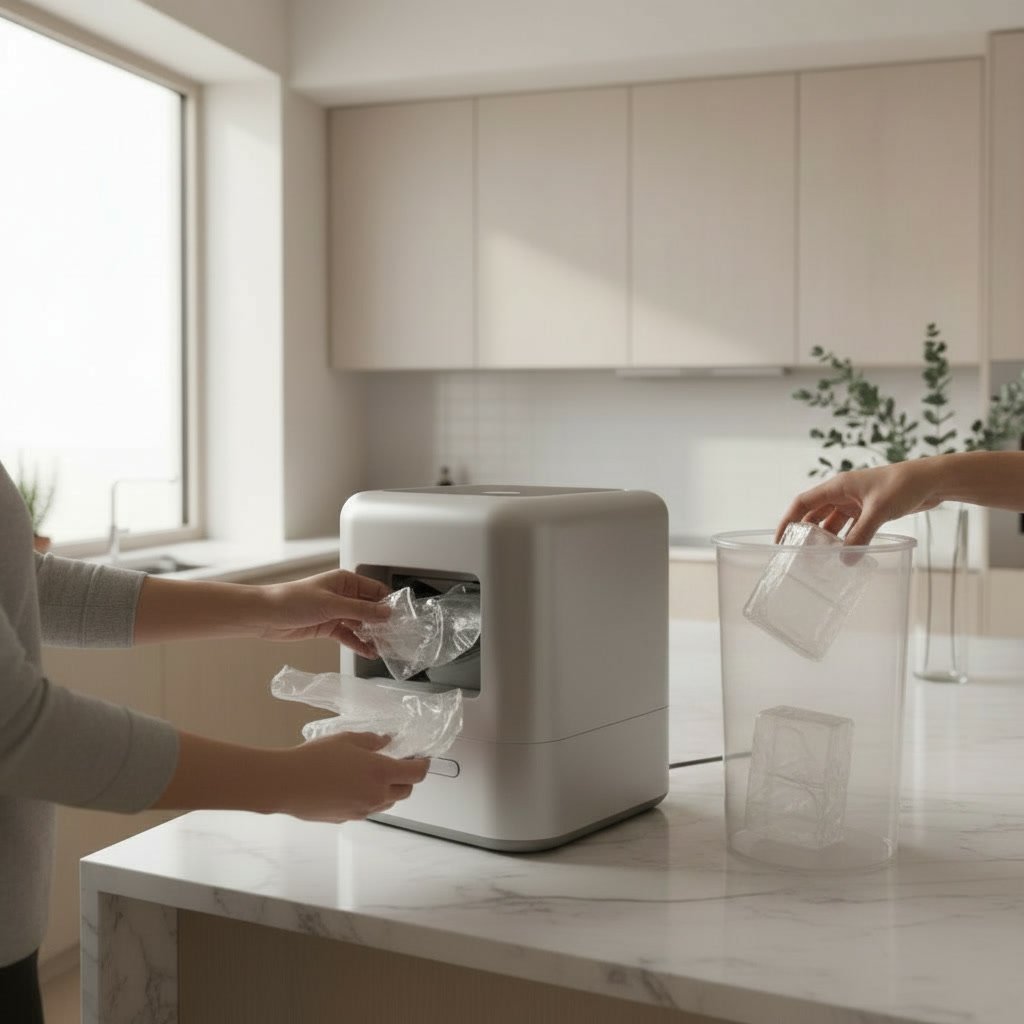
- Run compaction cycle: Start the cycle as directed (typically a one-button operation). The machine compresses bags into a dense 12×8×4-inch block—easy to store in a cupboard or under the sink.
- Store until ready to mail: Once you have enough bricks to fill a shipping mailer (usually included), prepare for shipment or locate a drop-off point if available.
- Ship and track: Follow the brand’s instructions to send bricks back. For brands like Clear Drop, some dashboard or QR code tracking is promised, but confirmation of final recycling is inconsistent. Ask for verified tracking where possible.
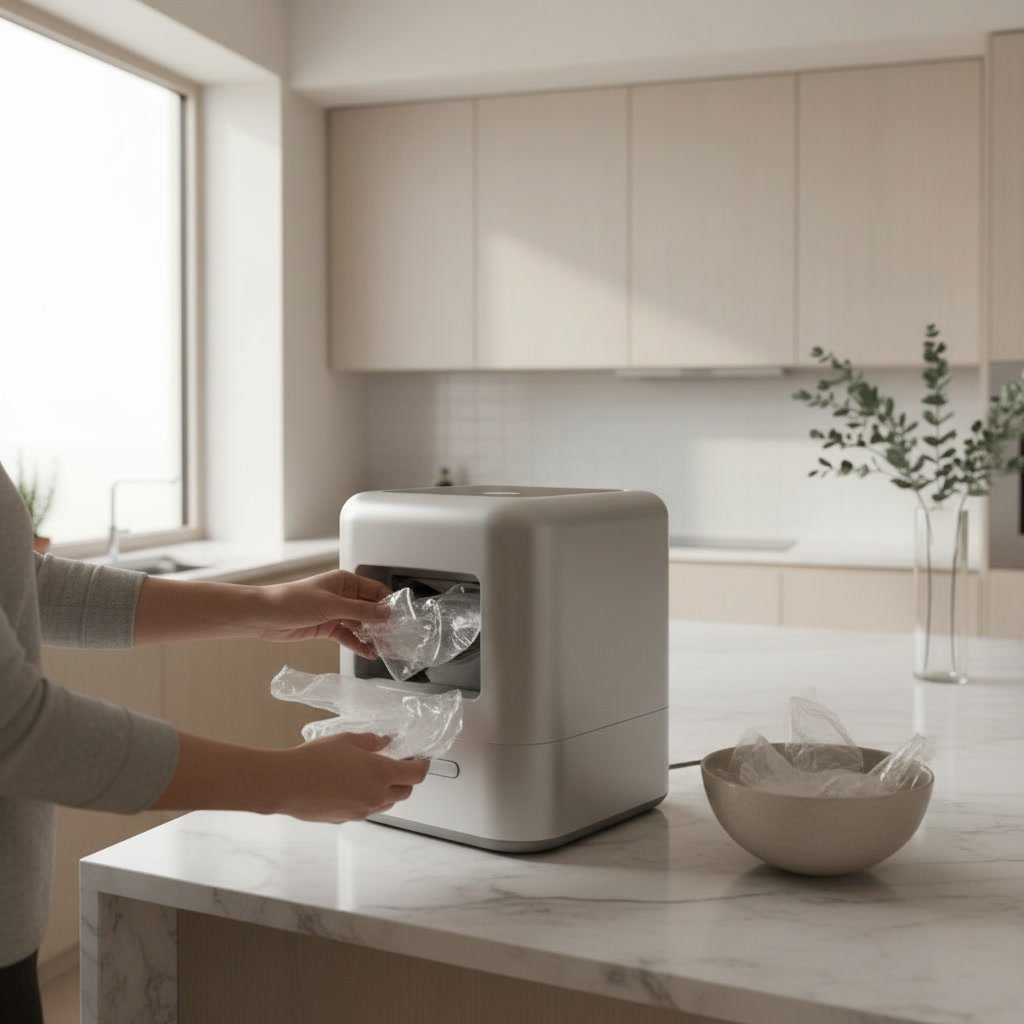
This hands-on, simple approach is more streamlined than hunting down rare curbside film recycling options—and it lets eco-conscious kitchens actually verify their impact, brick by brick.
Final recommendation — who should buy now, who should wait
In closing, a soft plastic compactor kitchen appliance finally gives eco-minded families and apartment dwellers a real way to shrink soft plastic waste at home. If you value included service, block pickup, and two years of comprehensive protection, a Clear Drop soft plastic compactor 2026 is a smart buy—just budget for $1,400+ over two years, plus future mailers and potential repairs.
Want offline operation, broader material compatibility, or a pay-once model? You may want to wait; feature gaps are real in 2026. Households rare to outgrow a single chamber or who want ironclad recycling verification should double-check competing brands and upcoming updates before locking in a subscription.
Questions about the best plastic bag recycling machine home brands, model upgrades, or customizing your kitchen for less mess? Read my shelf riser organization guide for more small-kitchen hacks.
Ready for less mess and more recycling peace of mind? Check the latest price on Amazon.
FAQ
What is a soft plastic compactor kitchen appliance and who needs one?
A soft plastic compactor kitchen appliance turns loose bags, film, and wrappers into dense blocks for home recycling. Anyone who struggles with plastic waste—especially if local curbside programs don’t accept film—will benefit.
How much does a Clear Drop soft plastic compactor 2026 cost in total?
Typical cost is about $200 down, then $50 a month for 24 months, totaling around $1,400 over two years. After that, plan for $15–$20 per recycling mailer and possible repair expenses.
Can a plastic bag recycling machine home unit recycle all types of plastic?
No—most kitchen units, including Clear Drop, handle around 95% of kitchen soft plastics but often exclude medical film, foil-lined wraps, and some specialty polymers. Always check accepted materials.
What are the most common problems with kitchen soft plastic recycling solutions?
Breakdowns after a few months, spotty warranty coverage, expensive mailers, faint plastic odors during use, and lack of reliable tracking for recycled blocks are the top reported issues.
How do I recycle soft plastics at home using a compactor?
Clean and dry accepted plastics, feed them into the machine, run a compaction cycle, store the finished blocks, and mail them using the program’s service. Always confirm what’s accepted and keep track of included mailers or protection plans.