

If you’re meticulously planning a sleek, built-in kitchen, you’ve probably eyed a panel ready refrigerator—that elusive, invisible fridge that blends perfectly with your cabinets. I’ve installed and lived with multiple models during kitchen remodels. Let me walk you through costs, installation traps, and what buyers like us really need to know before pulling the trigger.
As an Amazon Associate, I earn from qualifying purchases.
⚡ Quick Answer
A panel ready refrigerator lets you install custom cabinet panels, making the appliance “disappear” for a true seamless kitchen look. Expect to pay $5,000 to over $13,000 in 2026, plus extra for carpentry and installation. Precise measurements, skillful installers, and careful planning are essential to match your cabinets and avoid common headaches.
Key Takeaways
- Panel ready refrigerators offer a “cabinet-matched” look but require careful planning, expert installation, and extra budget for custom panels and carpentry.
- 2026 price ranges start around $5,000 for entry-level and can exceed $13,000 for premium built-in models with smart features, ice/water, or modular columns.
- Most installation issues come from panel fabrication, leveling, ventilation gaps, and utility routing—have a pro use laser leveling and double-check every alignment.
- Prioritize features like dual-zone cooling, advanced hinges, and remote monitoring in 2026 models; always have an installer and cabinetmaker review ventilation and fit.
- Why choose a panel‑ready refrigerator?
- 2026 price ranges and how to budget
- Common installation headaches (the unique insight) — and how to avoid them
- Installation checklist: measurements, ventilation, utilities, and carpentry specs
- Features to prioritize in 2026 — what leading models offer vs. rivals
- Model types and layout choices: French door, column, and counter‑depth tradeoffs
- Top brands and model pointers for 2026 (how to shortlist)
- Questions to ask your cabinetmaker/installer (ready‑to‑use script)
- Long‑term maintenance, replacement and resale considerations
- Final buying checklist and next steps (CTA)
- FAQ
Why choose a panel‑ready refrigerator?
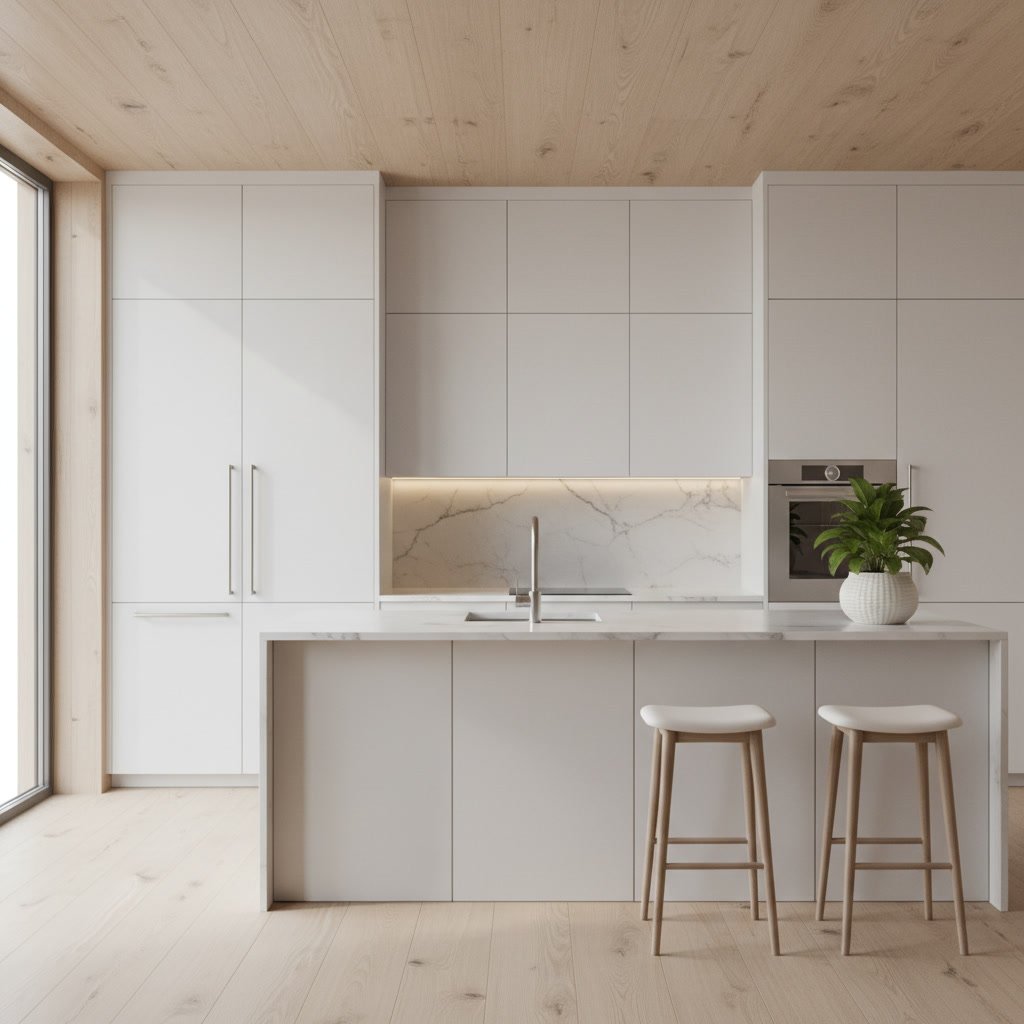
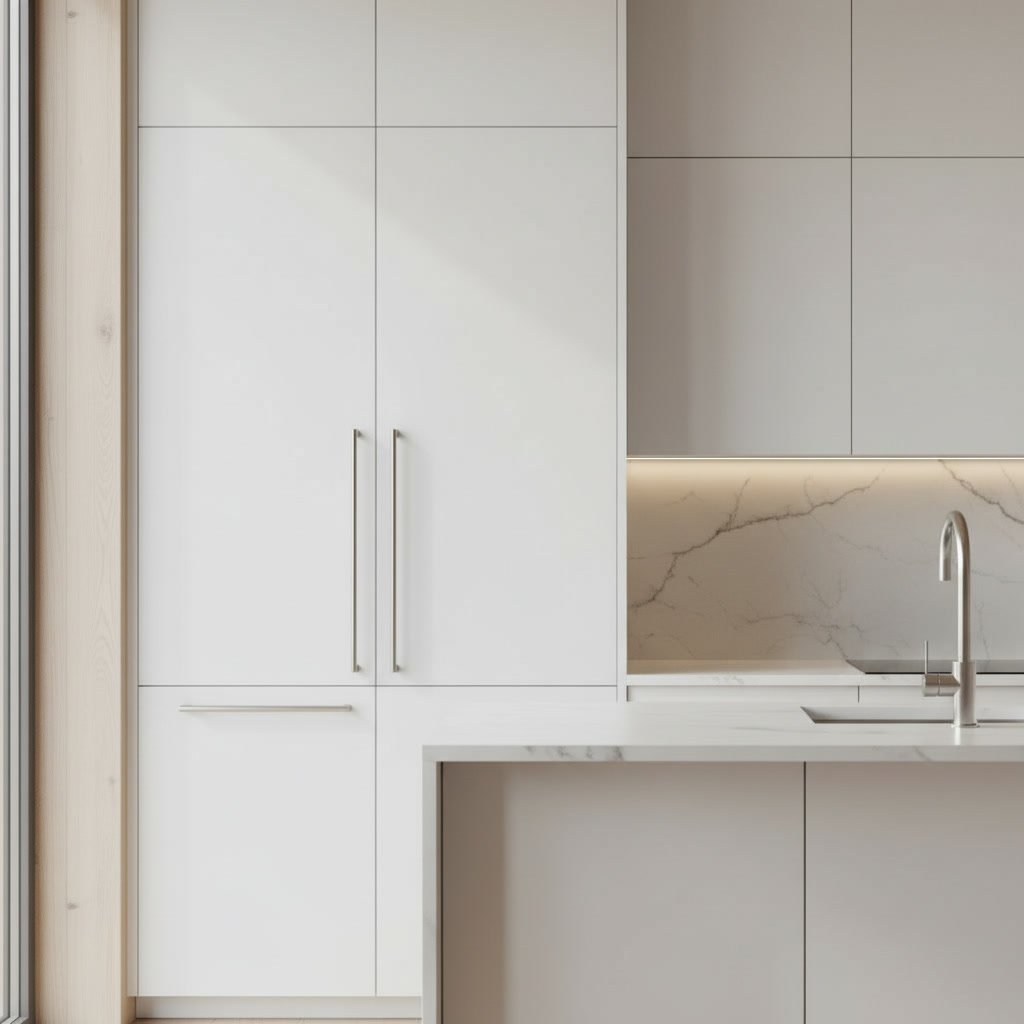
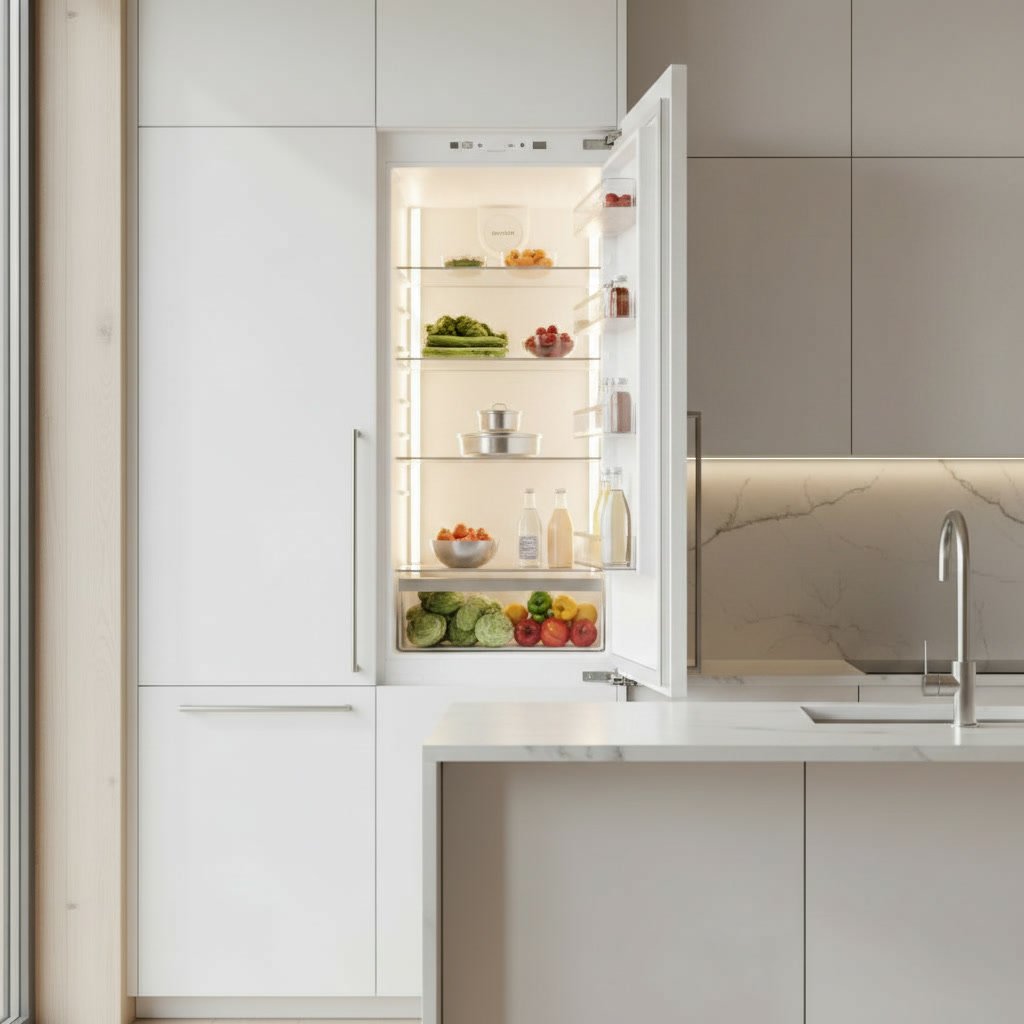
Let’s start with the visual magic. The primary appeal of a panel ready refrigerator is its ability to “disappear” into your cabinetry—an invisible refrigerator kitchen design that gives your space an uninterrupted, minimalist flow. Unlike a freestanding or stainless fridge, a panel ready refrigerator that matches cabinets sits flush, allowing a custom door panel in the same finish and style as the rest of your kitchen.
I’ve demoed both built-in and freestanding fridges, and there’s no comparison in terms of design continuity. Built-ins and panel ready models are specifically engineered to align with existing cabinetry, using mounting points and hinges designed to take heavier, custom panels. According to Consumer Reports, these units let you create a “chameleon effect” that often fools guests into missing the fridge entirely.
If you crave that clean, tailored look—especially in an open-plan or luxury kitchen—a custom panel fridge is the gold standard.
2026 price ranges and how to budget
Let’s talk hard numbers—because sticker shock is real with panel ready refrigeration. In 2026, expect to pay:
- Entry-level built-in models: start around $5,000
- Midrange and most major brands: cluster between $8,000–$12,000
- Premium custom panel units (Thermador, Sub-Zero, modular columns): can exceed $13,000
Those prices are for the appliance only. Add several hundred (even a couple thousand) more for custom panel fabrication, finish carpentry, and skilled installation—especially for a built-in fridge with custom panels 2026 or a counter depth panel ready French door fridge.
The budget swings based on:
- Brand (premium = higher price, better features, longer support)
- Width/capacity (standard 36” up to 60” or modular column sets)
- Panel design complexity and the finish you specify
- Integration features (flush fit, advanced hinges, water/ice in-door, smart tech)
Sample real-world scenario: a 36” Thermador Freedom Series fridge + custom shaker panels + labor and electrical moves set one client back nearly $16,000—but the seamless result was stunning. Many owners who skimp on installation or cabinetry end up regretting it. Budget wisely for the whole package, including contingency for trim work.
More pricing details and sample models are covered by Spencer’s TV & Appliance and Plessers Appliance.
Common installation headaches (the unique insight) — and how to avoid them
Panel ready fridges are finicky. Having installed (and re-aligned) more than a few, I’ve seen what can go wrong. Here are the headaches most buyers underestimate:
- Panel fabrication issues: Panels must be cut to the millimeter, matching your cabinet profile, thickness, and handle style. Veneer and paint finish imperfections really show up. Always use a skilled cabinetmaker familiar with appliance paneling.
- Leveling and door alignment: Even a slight tilt will make panels crooked or cause seals to fail—per installation experts at Coohom. The most common mistakes come from improper leveling, not hinge failures. Smart pros use digital or laser leveling tools.
- Gaps and sealing issues: Too wide a gap looks sloppy, too tight and the door won’t open correctly. Manufacturers often specify a “reveal” (visible gap) for airflow and hinge clearance; ignore this at your peril.
- Electrical and water line routing: If your fridge has in-door water/ice, plan for a cold water line for ice/water and a grounded outlet—ideally on an adjacent wall, not behind the fridge. Many installs hit snags here if planned late.
- Ventilation problems: These fridges need Ventilation clearance of 1–2 inches of ventilation space on top, and ¼–½ inch on each side (per manufacturer specs). Skimp and you risk compressor overheating or reduced lifespan.
I’ve met remodelers who had to rip out brand new cabinets or reorder $1,500 panels because a measurement was off by 1/8”. Don’t become that story. Triple-measure or insist your pro does.
Installation checklist: measurements, ventilation, utilities, and carpentry specs
Hand this checklist to your installer or cabinetmaker before you sign off—or use it yourself. Getting this right means years of hassle-free use and a truly invisible refrigerator kitchen design.
- Cabinet opening dimensions: Match the exact width, height, and depth required by the model (do not assume all 36” or 48” units are alike!). Leave room for door swing.
- Panel thickness and attachment method: Most custom panel fridges accept panels 3/4” to 1” thick. Confirm attachment hardware and whether handles are integrated or externally mounted.
- Hinge access and door clearance: Advanced models (e.g., Thermador Freedom Hinge) swing fully open with zero side gap. Standard hinges need more space; plan built-in cabinetry or gables accordingly.
- Ventilation clearance: Maintain at least 1–2” at the top, 1/4–1/2” at sides (as cited by Gerhard’s Appliances). Never block exhaust vents with panels.
- Electrical outlet and water line: Outlet should be accessible but not interfere with appliance back. Water line for ice/water must reach corner or side connection point—plan for cabinetry cutouts if needed.
- Leveling tolerances: Use a digital or laser level to set the fridge perfectly upright. Double-check after the panels go on, as added weight can shift alignment.
If you’re installing a counter depth panel ready French door fridge, measure not just cabinet opening but door swing path—especially in tight galley layouts.
Features to prioritize in 2026 — what leading models offer vs. rivals
The price jump from “basic built‑in” to “best panel ready refrigerators 2026” is all about features. Premium models don’t just look seamless—they behave like high-end appliances:
- Dual-zone or dual-compressor cooling: Allows flexible settings for fridge and freezer zones (think fresh veggies in one, frozen pizzas in another).
- Smart connectivity: Bosch HomeConnect, JennAir, and Thermador now let you monitor temps, get open-door alerts, or schedule diagnostic checks from your phone.
- No-Frost (frost free) technology: No more manual defrosting or icy buildup hidden behind those custom panels.
- Freedom/Zero-Clearance hinges: Flush with cabinetry, doors open wide even when installed against a wall. Crucial in tight spaces.
- Modular columns: Build your own configuration—separate fridge/freezer/wine columns, all in seamless custom panels.
- Internal ice/water dispensers: Hidden behind the panel, preserving the look without sacrificing convenience.
- Energy efficiency: Leading models achieve higher ratings, important for long-term operating cost and resale value.
Mid/budget models nail the integration and cooling basics but may skip things like Wi-Fi, door alarms, or advanced humidity control. Decide if those smart features are essential—or just nice to have for your daily kitchen workflow.
For readers obsessed with latest smart kitchen tech, check out our guide to fridge cameras for remote grocery checks.
Model types and layout choices: French door, column, and counter‑depth tradeoffs
You aren’t stuck with just one design. Here’s what’s trending for custom installations:
| Type | Pros | Cons | Typical Use |
|---|---|---|---|
| Counter depth panel ready French door fridge | Fridge aligns with cabinets, wide shelving, easy access for platters | Tighter internal space, may limit large freezer storage | Family kitchens, open entertaining layouts |
| Full-depth built-in (side-by-side or over-under) | Maximum capacity, dedicated compartments | Needs deeper cabinets, protrudes if not installed flush | Large homes, bulk shopper households |
| Modular columns with custom panels | Ultimate flexibility, seamless look, ability to mix fridge/freezer/wine | Most expensive, more complex install and cabinet planning | Luxury builds, designer kitchens, wine collectors |
Per research at Aitoro Appliance, even the best counter depth panel ready French door fridge needs precise measurement and pro install to achieve a flush, true built-in look. Don’t expect a slide-in to deliver the invisible effect without pro planning.
Pro tip: For smaller spaces, see our separate review of the best 24-inch smart fridges.
Top brands and model pointers for 2026 (how to shortlist)
Not every brand goes all-in on panel ready integration. Here’s how I categorize the field for 2026:
- Thermador & Sub-Zero: Ultimate integration, smart features, long support, premium pricing ($13,000+ for flagship column sets).
- Bosch & JennAir: High-end spec, slightly less costly, excellent connect features, reliable support. Many models in $8,000–$12,000 band.
- ZLINE, Fisher & Paykel, GE Monogram: Range of sizes, more affordable for simple custom panel projects, but fewer advanced door/hinge tricks.
When shopping, always ask the retailer or designer:
- Can you supply a physical or digital panel template for my cabinetmaker?
- Do you offer a “Freedom Hinge” or similar for flush installation?
- How do doors open when installed next to a wall or another panel?
- Where is the service access area—is it behind the panel or the grille?
- What is your lead time on custom panel fridge orders in 2026?
For high design continuity, Thermador and Sub-Zero set the bar, but don’t overlook Bosch’s HomeConnect lineup. For full reviews and comparisons, visit our kitchen tech guides like smart ovens with built-in cameras or undercounter ice makers for kitchen islands.
Questions to ask your cabinetmaker/installer (ready‑to‑use script)
Print this out—your installer will be impressed (and it’ll save you real money and headaches). Ask:
- How will you attach the panels—screw mount, adhesive, or bracket?
- Can you remove the panels easily if service is needed?
- How do you access the hinge adjustment after install?
- Will you use a laser or digital level to set the fridge base and verify panel alignment?
- What’s your method for setting the upper/lateral ventilation gap?
- How do you plan to route the electrical and/or water lines before cabinetry is installed?
- Does your work or the fridge brand’s support allow for warranty coverage after custom panel installation?
- Will you do a mock-fit (dry fit) of the panels before final finish?
Many “common” issues stem from improper initial install, not hardware failure. The best installers double-check every alignment with a laser level (see real-world QA guides here).
If you’re pursuing a custom panel fridge that truly matches every cabinet detail, insist on a dry-run and get every spec in writing.
Long‑term maintenance, replacement and resale considerations
Planning to stay in your home a decade or want to protect resale value? Here are the plain facts:
- Panel replacement is difficult: If you change your cabinet color/door profile in a remodel, fabricating new panels to fit the old appliance is expensive and can be tricky to color match.
- Part/service access: Unlike a freestanding fridge, some custom installs make it hard for service techs to reach compressor or filter areas. Ensure access panels are accessible without removing cabinetry.
- Energy costs: Newer models are efficient, but air gaps or blocked ventilation can increase consumption. Dust coils seasonally and check panels don’t impede vents.
- Replacement cost planning: If the fridge needs replacing in the future, the next model may not fit existing cutouts or panels. Save original panel blueprints and specs, or order an extra set of raw panels with your initial install.
A panel ready refrigerator delivers top resale value when perfectly integrated, but improper installation or poor long-term planning can create headaches for you and the next owner.
If you love stealth integration, you may also want to explore invisible induction cooktops now trending for 2026.
Final buying checklist and next steps (CTA)
You don’t want to gamble on a high-ticket appliance and find out your panels don’t fit, or a feature you expected isn’t included. Here’s your rapid-fire checklist:
- Clarify your all-in budget: count the fridge, panel fabrication, pro install, and contingency for carpentry tweaks.
- Pick your must-have features: dual-zone cooling, smart connectivity, built-in ice/water, energy efficiency, advanced hinges.
- Use the ready-to-ask installer/cabinetmaker questions above to get quotes.
- Measure twice (get templates), then order your panels and appliance together, not separately.
- Review at least two pro installer bids before hiring—and confirm who’s handling warranty registration after custom paneling.
Remember: panel ready refrigerators are an investment. For the seamless design and resale benefit, the cost is justified—but only if you get the details right.
Ready to see what’s available? Check the latest price on Amazon
FAQ
What exactly is a panel ready refrigerator?
A panel ready refrigerator is designed to accept a custom cabinet panel on its doors, letting it blend in perfectly with the rest of your kitchen cabinetry. This creates an “invisible” look, hiding the appliance behind a cabinet facade.
How much does a built-in fridge with custom panels cost in 2026?
In 2026, most built-in panel ready refrigerators start around $5,000 for entry-level units, with midrange models in the $8,000–$12,000 band, and premium brands exceeding $13,000. Custom panels and installation add extra cost, usually several hundred to a few thousand dollars.
What’s the most common installation problem with a custom panel fridge?
By far the most common issue is improper leveling, which causes crooked panel alignment and sealing problems. Other issues include incorrect panel fabrication, ventilation gaps, and utility misplacement. Always use a laser level and a cabinetmaker experienced with appliance panels.
Can I add a panel ready refrigerator to any kitchen, or do I need a remodel?
Installing a panel ready refrigerator usually requires modifying your cabinetry to fit the specific unit and panel thickness. It works best during a remodel, but with skilled carpentry it’s possible to retrofit into existing kitchens if dimensions allow.
Should I choose a counter depth panel ready French door fridge or modular columns?
Counter depth panel ready French door fridges suit most family kitchens and align well with cabinets, offering a seamless look and easy access. Modular columns provide ultimate flexibility and high-end integration for luxury or custom kitchens, but are more expensive and complex to install.